2026 Best Waste Water Treatment Plant Innovations and Technologies?
As the global population increases, the demand for effective waste water treatment plants rises. According to the World Health Organization, over 80% of wastewater is released untreated. This presents a significant challenge. The importance of new technologies in waste water treatment cannot be overstated. Innovations can help cities manage their water resources better.
Recent studies indicate that advanced filtration and treatment methods can reduce pollutants significantly. For instance, membrane bioreactors can remove more than 90% of contaminants. Still, many facilities struggle with aging infrastructure and budget constraints. The gap between existing technology and actual implementation can be alarming.
Data shows that the investment in waste water treatment plant technologies is growing. Yet, a lack of skilled operators limits the effectiveness of these systems. Proper training and education are necessary for maximizing the potential of these advancements. The journey towards improved waste water management is ongoing. Addressing these challenges is crucial for sustainable urban development.
Innovative Filtration Techniques in 2026 Waste Water Treatment Facilities
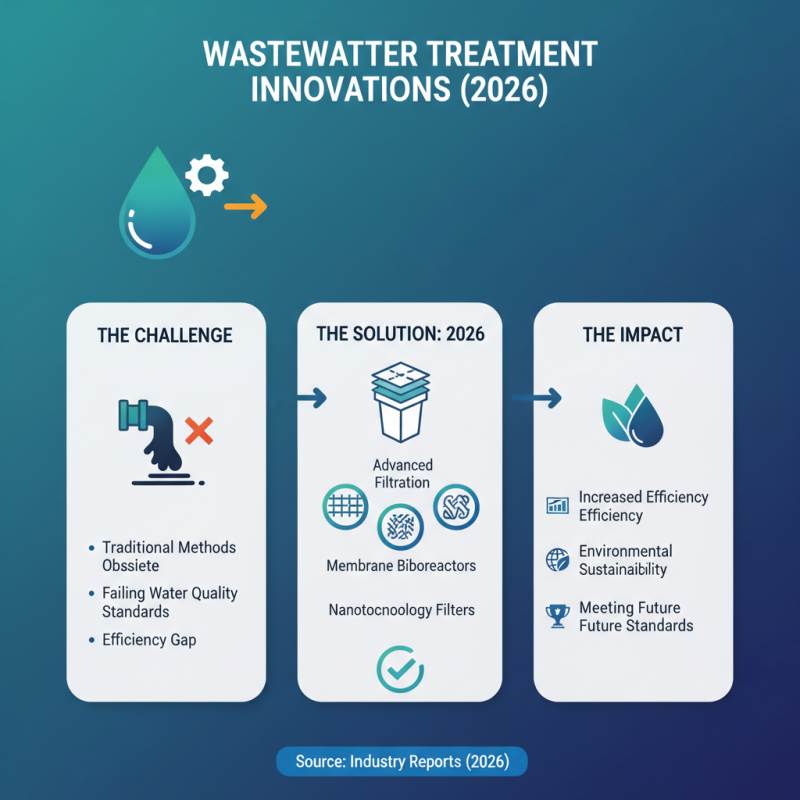
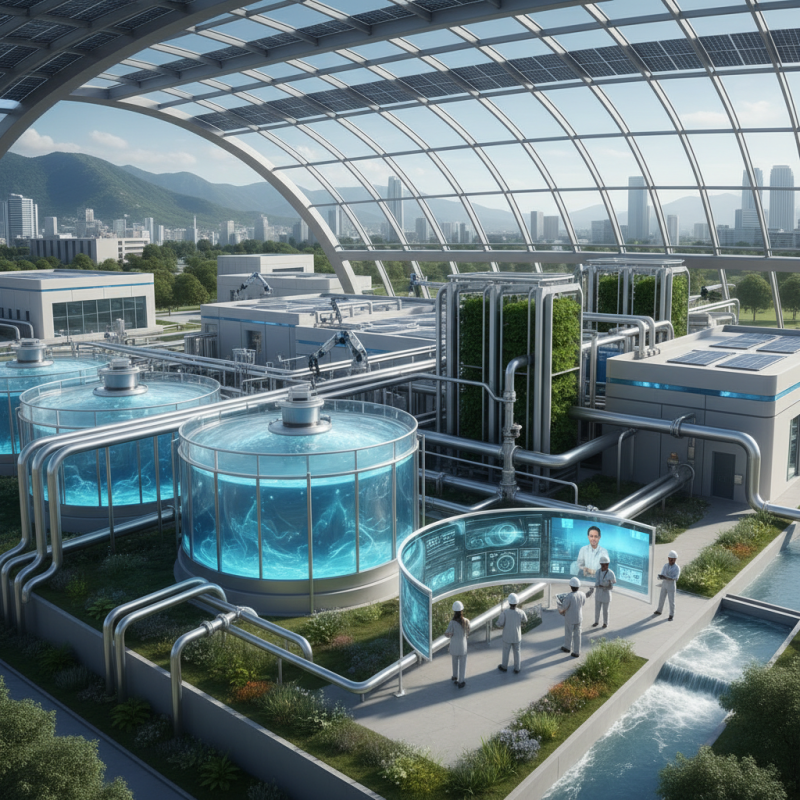
In 2026, wastewater treatment facilities are embracing innovative filtration techniques. These advancements are crucial for enhancing efficiency and sustainability. According to recent industry reports, traditional methods often fail to meet rising water quality standards. This gap drives the search for better solutions.
Membrane filtration has gained traction. It can remove pollutants more effectively, yet it comes with higher operational costs. Some facilities struggle to balance budget constraints with technology upgrades. Additionally, advances in nanotechnology are showing promise. Nanofilters can target micro-pollutants, but scalability remains a challenge.
Another emerging technique is biofiltration. It utilizes natural processes, harnessing microorganisms to treat wastewater. This method reduces chemical usage and lowers environmental impact. However, the variability in biological reactions can complicate consistency. Facilities must continually optimize their processes to ensure reliability and effectiveness. The journey toward innovative filtration is filled with obstacles. Each step taken is a step toward cleaner water and a sustainable future.
Advancements in Membrane Technology for Enhanced Water Purification
Advancements in membrane technology play a crucial role in enhancing water purification processes. Recent studies indicate that membrane systems can achieve purification efficiencies of up to 99%. These systems effectively remove pathogens, heavy metals, and organic contaminants, making treated water safer for consumption. The global membrane market is projected to grow to $35 billion by 2026.
Innovative options like nanofiltration and reverse osmosis are becoming more common. Nanofiltration membranes can separate particles in a size range of 1 to 1000 daltons. However, they also face challenges like fouling and limited lifespan. Addressing these issues requires ongoing research.
In addition to technical advancements, the energy consumption of these technologies cannot be overlooked. Some modern membrane systems boast energy efficiency improvements, reducing operational costs. Despite these advancements, a significant share of plants still relies on outdated technology. Continuous upgrading is essential to meet rising environmental standards and improve water safety.
2026 Best Waste Water Treatment Plant Innovations and Technologies
This chart illustrates the advancements in membrane technology for enhanced water purification, focusing on five key innovations and their impact on treatment efficiency.
Integration of AI and IoT for Real-Time Waste Water Monitoring Systems
The integration of AI and IoT in wastewater treatment systems is transforming the industry. Real-time monitoring offers unprecedented insights into operations. Data shows that facilities utilizing AI can reduce operational costs by up to 30%. This efficiency is critical in managing resources effectively.
Implementing these technologies means constant data collection. Sensors now track water quality parameters directly. For instance, turbidity, pH levels, and chemical concentrations can be monitored continuously. Moreover, predictive analytics anticipates equipment failures before they occur. This minimizes downtime and ensures constant service delivery.
**Tip:** Engage your team in training sessions about these innovations. Awareness is key to utilizing technology effectively.
However, the transition isn't without challenges. Some facilities face integration issues with legacy systems. Adapting existing processes to new technologies requires investment and time. Continuous training for staff is often overlooked, leading to underutilization of advanced tools.
**Tip:** Regularly evaluate the effectiveness of new systems. Gather feedback from operators to optimize performance.
Harnessing AI and IoT can revolutionize wastewater management. Yet, it requires careful planning and commitment to overcome potential hurdles. Balancing tech advantages with human expertise is essential for a successful transformation.
2026 Best Waste Water Treatment Plant Innovations and Technologies
| Technology |
Description |
Benefits |
Integration Level |
Real-Time Monitoring |
| AI-Powered Predictive Maintenance |
Utilizes machine learning algorithms to predict equipment failure, optimizing maintenance schedules. |
Reduces downtime and maintenance costs. |
High |
Yes |
| IoT Sensor Networks |
Deploys a network of sensors to capture data on water quality and system performance. |
Enhances data accuracy and process optimization. |
Medium |
Yes |
| Advanced Filtration Techniques |
Uses nanotechnology and membranes for improved contaminant removal. |
Increases efficiency and water reuse. |
High |
No |
| Real-Time Data Analytics |
Analytics platforms that interpret real-time data collected from treatment processes. |
Facilitates timely decision-making and enhances operational efficiency. |
High |
Yes |
| Automated Process Control |
Integrates AI for real-time adjustments to treatment parameters. |
Optimizes resource usage and enhances treatment effectiveness. |
Medium |
Yes |
Sustainable Energy Solutions for Waste Water Treatment Plants in 2026
In 2026, wastewater treatment plants are embracing sustainable energy solutions. One key focus is harnessing
biogas from organic waste. This can significantly reduce reliance on traditional power sources.
Using this method, facilities can become more energy self-sufficient. However, the process requires careful monitoring
and technology upgrades.
Solar panels and wind turbines are also gaining traction. These renewable sources can complement energy needs at treatment facilities.
Although the initial investment may be high, the long-term savings are promising. Some plants struggle with inconsistent energy production.
This creates potential challenges for steady operations.
Innovations like energy recovery systems are becoming essential. They capture energy from treated wastewater. This energy can
be used internally or fed back into the grid. Still, there are hurdles to overcome. Not all systems are efficient, leading to debates about
their overall effectiveness. Balancing cost and performance remains a critical challenge
as we look towards the future of wastewater treatment.
Emerging Bioreactor Designs for Improved Waste Water Treatment Efficiency
The quest for better waste water treatment has led to innovative bioreactor designs. These advancements aim to enhance efficiency while reducing costs. Traditional treatment methods often struggle with efficiency and pollution levels. New bioreactor designs integrate advanced microbial communities. These communities can break down complex pollutants more effectively.
One exciting trend is the use of membrane bioreactors. These combine biological processes with membrane filtration technology. They provide better separation of solids from liquids, resulting in clearer effluent. However, challenges exist in membrane fouling and maintenance. Continuous optimization is necessary to ensure long-term performance.
Another design focuses on modular bioreactors. These units can be easily scaled up or down based on demand. This flexibility is a significant advantage for municipalities facing fluctuating waste water volumes. Yet, not all systems may achieve the desired performance right away. Testing and refinement are essential for every new design. The road to perfecting bioreactor efficiency is ongoing and requires collaboration across the industry.