7 Types of Transformers Tips for Global Buyers
Choosing among the Types Of Transformers is not a catalogue exercise. It is a decision about voltage, load, location, and the cost of operating equipment for decades. The International Energy Agency’s Electricity 2024 report projects global electricity demand will grow by an average of 3.4% annually through 2026. That growth puts more pressure on grids—and on the transformers that connect generation, transmission, and end users.
Seven categories matter to global buyers: power, distribution, isolation, autotransformers, instrument, dry-type, and oil-immersed units. Their names can overlap because they describe different functions or construction features. A distribution transformer, for example, may also be oil-immersed. Details matter. A nameplate, site temperature, expected load profile, and cooling method can change the right choice.
Transformer engineer John J. Winders, author of Power Transformers: Principles and Applications, offers a useful design perspective: buyers should evaluate a transformer in relation to its operating duty. This is a paraphrase, not a verbatim quotation. Start with the job it must perform. Then compare efficiency, maintenance needs, installation conditions, and supplier documentation. A low purchase price can look attractive. It may not reflect lifetime costs. This guide explains the seven types and gives global buyers practical questions for comparing them. Some specifications still require local engineering review; a general guide cannot replace it.
Transformer Fundamentals: How Electrical Energy Is Converted
A transformer changes voltage through electromagnetic induction. In a conventional unit, alternating current flows through the primary winding and creates a changing magnetic field in the core. That field induces voltage in the secondary winding. Energy crosses the core magnetically, not through a direct electrical connection between the windings. No moving parts.
The turns ratio helps determine the voltage change. If the secondary winding has more turns than the primary, the output voltage is generally higher; fewer turns generally produce a lower voltage. Current changes in the opposite direction, while power is not perfectly conserved because some energy becomes heat, sound, or magnetic loss. A warm core is normal within specified limits, but unexplained overheating deserves investigation.
For global buyers, the operating frequency, rated voltage, load, and installation conditions matter as much as the transformer type. A unit designed for one frequency may run hotter at another, even when its voltage rating seems suitable. Dry-type and liquid-immersed designs also handle cooling and installation differently. Check the nameplate and technical documentation against the actual site requirements. I have seen selection discussions focus heavily on price; that can miss a small but costly mismatch in frequency or load.
Seven Transformer Types and the Roles They Serve
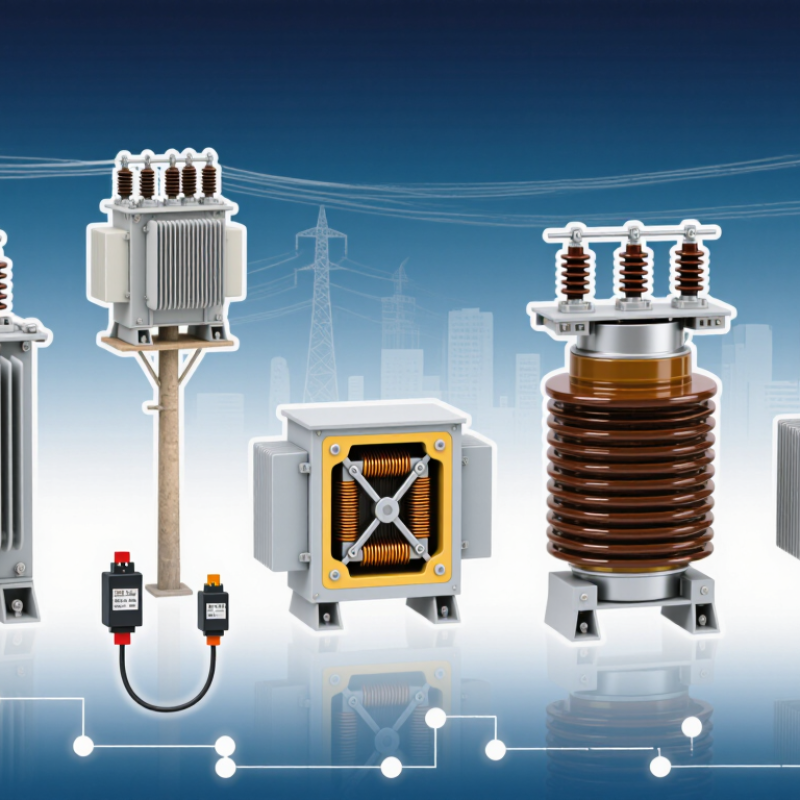
Seven transformer types serve different jobs across a power system. Power transformers move electricity between high-voltage networks, while distribution transformers reduce voltage for buildings and local equipment. Instrument transformers, including current and voltage transformers, provide measurements for meters and protection relays. Isolation transformers separate circuits, which can help limit electrical noise or improve safety in specific installations.
Autotransformers adjust voltage using a shared winding, often where compact size matters. Dry-type transformers use air for cooling and suit many indoor locations. Liquid-immersed transformers use insulating fluid and commonly serve higher-capacity outdoor applications. Details matter. These categories can overlap in real projects, so the list is useful, but not perfect.
The International Energy Agency’s 2023 report, Electricity Grids and Secure Energy Transitions, says annual grid investment must rise to more than $600 billion by 2030. That makes careful transformer selection increasingly important for buyers. Match capacity, voltage, cooling method, installation environment, and expected load; a unit that fits today may not fit future demand. Check loss data and temperature-rise limits in the technical documents. Also confirm site clearances, maintenance access, and compatible protection settings. A missed detail can mean costly redesign.
Technical Specifications, Safety Standards, and Regional Requirements
When comparing distribution, power, dry-type, or oil-immersed transformers, match the rating to the actual load. Check rated voltage, frequency, capacity, impedance, cooling method, and tap range. A 50 Hz unit may not suit a 60 Hz network without manufacturer confirmation. Small details matter. Ask for temperature-rise limits, winding material, enclosure rating, and expected operating conditions. For example, a dusty indoor plant room needs different protection from a ventilated outdoor substation. Confirm dimensions and connection positions too; a unit that fits electrically may not fit through the site doorway.
Safety requirements vary by destination and installation. Verify applicable IEC or national standards with the local utility, inspector, and qualified electrical engineer. Check insulation levels, grounding provisions, short-circuit withstand data, fire protection, and required test reports. Oil-filled equipment may need spill containment and separation from occupied areas; dry-type equipment still needs suitable ventilation and clearances. Do not guess. Regional rules can differ, and a certificate accepted in one market may not satisfy another. Request documentation in the required language and confirm nameplate units, terminal markings, and inspection procedures before shipment. A polished datasheet can still leave gaps, so record unanswered questions and resolve them in writing.
Evaluating Suppliers, Total Costs, and Long-Term Support
7 Types of Transformers Tips for Global Buyers
Evaluating Suppliers, Total Costs, and Long-Term Support
Transformer selection starts with the site, not a sales brochure. Dry-type units may suit indoor locations, while oil-immersed models often serve outdoor or higher-capacity installations. Distribution, power, and instrument transformers also have distinct roles. Ask suppliers to confirm ratings, cooling method, insulation level, and operating conditions against your project documents. Request routine test reports and clear drawings. Ask for proof.
Tips: Compare like with like. Check the quoted scope for accessories, protective devices, spare parts, packing, and commissioning. A lower unit price can hide exclusions. Confirm lead times in writing, and ask how factory acceptance testing is handled.
Look beyond the purchase price. Include freight, installation, expected losses, maintenance, and the cost of replacement parts over the planned service life. Get warranty terms, response times, and local service arrangements in writing. Ask whether technicians can support your installation remotely or on site. Check parts availability, not just promises. Small details matter. I would still leave room for judgment: spreadsheets rarely capture a cramped switch room, delayed access, or unclear handover responsibilities. Share realistic site information early, and assess how carefully each supplier responds.