
7 Best Precision Mold Components Suppliers for Global Buyers
Precision Mold Components rarely attract attention on a finished product. Yet a worn ejector pin, inconsistent guide bushing, or poorly fitted core can disrupt production and increase maintenance needs. For global buyers, supplier choice is not merely a price comparison. It affects fit, tool life, lead times, and the consistency of molded parts.
The market context is substantial, though broad. Fortune Business Insights estimated the global injection-molded plastics market at USD 330.79 billion in 2023 and projected USD 476.46 billion by 2032. This figure covers molded plastics, not mold components alone; it signals the scale of the manufacturing ecosystem rather than component-market demand. Small details matter. John Bozzelli, an injection-molding expert and founder of Scientific Molding, is associated with the useful principle, “Injection molding is a process, not an event.” That perspective helps explain why component quality and supplier support matter throughout a tool’s operating life.
This guide compares seven suppliers for buyers seeking dependable Precision Mold Components across international supply chains. It focuses on practical considerations: product range, machining capability, material and tolerance information, customization, quality documentation, and responsiveness. A polished catalog is not enough. Buyers should verify specifications, request relevant inspection records, and confirm how suppliers handle revisions and urgent replacements. No ranking can replace a project-specific assessment. Use this shortlist as a starting point, then match each supplier’s strengths to your tooling requirements, production volume, and delivery constraints.
What Precision Mold Components Are and Why They Matter
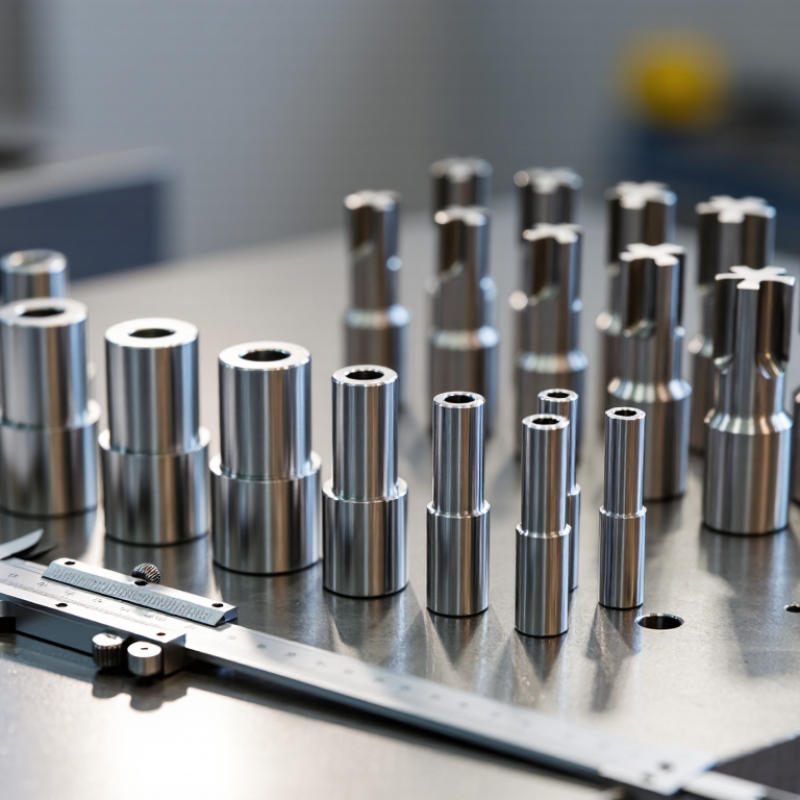
Precision mold components are the engineered parts that guide, shape, cool, and release material inside a mold. Common examples include guide pins, bushings, ejector pins, cores, and cavity inserts. Their dimensions may look small on a drawing, but a slight mismatch can affect alignment, surface finish, or part consistency. Small details matter.
In practical mold work, components face repeated pressure, heat, and motion. A guide pin must stay aligned through many cycles; an ejector pin must move without sticking or marking the part. Material choice, hardness, finish, and dimensional inspection all influence performance. Reliable suppliers should be able to explain their tolerances, inspection methods, and material records in clear terms. Buyers can also request measurement reports for critical dimensions and check whether samples fit the actual tooling.
A drawing can be exact; the real setup rarely is. Machine conditions, assembly, and temperature can change how parts behave, so supplier data should support—not replace—trial fitting and process checks. It is easy to focus only on price. Yet inconsistent components may mean extra adjustments, downtime, or rework. Precise parts help molds run predictably, though they cannot fix every design or maintenance problem.
How Global Buyers Can Evaluate Supplier Quality and Capabilities
Global buyers evaluating precision mold component suppliers should look beyond polished samples. Request inspection reports for critical dimensions, material certificates, heat-treatment records, and calibration evidence. For cavity inserts, verify flatness, hardness, and surface finish against the drawing. A perfect first article can still hide unstable production.
The American Society for Quality’s quality-cost guidance estimates that poor quality may cost organizations 5–30% of sales. This broad range is not specific to mold components, but it shows why documented controls matter. Ask how suppliers monitor process capability, manage drawing revisions, and respond to nonconformances. Review capability data for the dimensions that affect fit and tool life; do not treat one Cpk value as proof of overall quality. Also check engineering response times and whether promised lead times include inspection and corrective-action work.
Tips: Send a clear drawing with agreed measurement points. Ask for a recent batch report, not only a sample-part certificate. Confirm traceability by lot, and discuss what happens when a measurement falls outside tolerance. If records are incomplete, pause before approving production. It may feel cautious, but it can prevent costly rework.
Profiles of Seven Precision Mold Components Suppliers
Precision mold component sourcing involves more than comparing prices. A capable mold-base supplier should show machining tolerances, steel grades, and inspection records. Fit matters. A guide-pin and bushing specialist is worth assessing for surface finish and sliding consistency; small variations can cause visible wear. Hot-runner and cooling-component suppliers need clear dimensional drawings and material traceability. Ask how they check channels before shipment. An ejector-pin and sleeve supplier should offer suitable hardness options and dependable replacement dimensions, not just a large catalog.
A broad-range standard-parts supplier may simplify repeat orders, though its stock levels still need verification. A micro-machining supplier can support small, intricate inserts; request sample measurements and inspect edge quality. An export-focused supplier may coordinate packaging, documentation, and shipment updates for overseas buyers. Useful profiles are backed by evidence: capability lists, sample inspection reports, and specific answers about lead times. A polished catalog is not proof of process control. One limitation remains: online profiles rarely reveal how a supplier responds when a part misses tolerance. Ask about corrective actions before placing a production order.
Comparing Supplier Strengths, Services, and Global Reach
7 Best Precision Mold Components Suppliers for Global Buyers
Comparing Supplier Strengths, Services, and Global Reach
Global buyers should compare precision mold component suppliers by measurable capability, not catalog size alone. Ask for tolerance reports, material certificates, inspection methods, and sample parts. A supplier’s ability to hold a tight fit across repeated orders matters more than a polished product page. According to Grand View Research, the global injection molded plastics market was valued at USD 286.7 billion in 2023, with projected annual growth of 4.8% from 2024 to 2030. This wider market trend makes reliable tooling support important, though it does not measure component suppliers directly. That distinction matters.
Tips: Send the same drawing and acceptance criteria to each candidate. Compare quoted lead times, packaging, export documentation, and response speed. Ask how they handle a rejected part across time zones. A quick reply helps, but it cannot replace clear corrective-action records.
Service depth separates capable suppliers. Some offer grinding, coating, and custom inspection in-house; others depend on outside partners. Neither model is automatically better. Check who owns quality checks and whether shipment tracking is available. Request a sample lot before committing to production. A small test can reveal burrs, inconsistent hardness, or dimension drift. Yet even a careful audit has limits: production conditions may change after approval. Record the agreed specifications and review performance periodically.
7 Best Precision Mold Components Suppliers for Global Buyers
A buyer-focused framework for comparing supplier strengths, services, and global reach.
Suggested evaluation weights: quality and consistency (30%), precision capability (25%), engineering and customization (20%), global logistics and support (15%), and product range (10%). These are editorial weighting recommendations, not measured scores or claims about individual suppliers.
How to Select a Supplier for Your Mold Component Requirements
Selecting a precision mold components supplier starts with the drawing, not the quotation. Check whether the supplier can hold your specified tolerances across the full production run. Ask how it measures critical diameters, flatness, and surface finish. Fit matters. A sample inspection report should show actual readings, not only pass-or-fail marks. Confirm material grades, heat-treatment records, and lot traceability before ordering. ISO’s 2022 Survey reported more than 1.26 million ISO 9001 certificates across 188 countries and economies. Certification indicates a quality management system, but it does not prove that every component meets your drawing.
Review capacity, inspection equipment, and change-control procedures during a technical discussion. Ask for proof. The 2024 Deloitte and MAPI Smart Manufacturing Survey found that 86% of surveyed manufacturing executives viewed smart factory initiatives as future competitiveness drivers. For buyers, digital inspection records can make deviations easier to trace; still, software cannot replace skilled measurement. Request a trial batch and compare its results with your own gauge or coordinate-measuring-machine report. Discuss packaging, replacement-part availability, and realistic lead times, especially for components with tight fits. One uncomfortable question matters: how does the supplier respond when a dimension misses tolerance? A clear corrective-action process may be more valuable than a polished sales presentation. Teams sometimes overfocus on unit price. That can be costly.
7 Best Precision Mold Components Suppliers for Global Buyers – How to Select a Supplier for Your Mold Component Requirements
| Supplier Profile | Best Fit | Key Requirements to Confirm | Quality Evidence to Request | Logistics Checks | Main Trade-Off |
|---|---|---|---|---|---|
| 1. Standard-component specialist | Buyers needing interchangeable catalog items such as guide pillars, bushings, ejector pins, and springs. | Check dimensions, fit classes, material, hardness, surface finish, and compatibility with the mold design. | Request current drawings, inspection records, material details, and documented revision control. | Confirm stock availability, part-number traceability, packing, and replenishment lead time. | Catalog coverage may not include unusual sizes or application-specific modifications. |
| 2. Custom machining supplier | Non-standard inserts, cores, cavities, slides, and components made to customer drawings. | Agree on datums, tolerances, edge conditions, surface finish, material, heat treatment, and inspection method. | Request a drawing review, first-article inspection report, and measurement results for critical features. | Confirm export packaging, delivery terms, customs documentation, and replacement-part policy. | Capability and delivery time can vary with geometry, material, and tolerance demands. |
| 3. High-hardness steel specialist | Wear-resistant cores, cavities, punches, and inserts subject to repeated production cycles. | Specify steel grade, heat-treatment condition, hardness range, distortion allowance, and post-treatment machining needs. | Request material traceability, heat-treatment records, hardness test results, and final dimensional inspection. | Check corrosion protection, handling requirements, and transit protection for finished surfaces. | Additional heat-treatment and finishing steps may affect lead time and cost. |
| 4. High-precision grinding supplier | Components requiring accurately controlled flatness, parallelism, thickness, or cylindrical features. | Identify critical surfaces and datum scheme; state tolerances and surface-finish requirements on the drawing. | Ask for calibrated inspection equipment details and measurement results tied to drawing characteristics. | Confirm whether inspection and protective packaging are included in the quotation. | Tight tolerances can require extra process steps and longer inspection time. |
| 5. EDM-capable supplier | Deep ribs, narrow slots, sharp internal details, and hardened conductive workpieces. | Confirm wire or sinker EDM suitability, electrode strategy where applicable, corner radii, and recast-layer requirements. | Request process capability details, dimensional inspection, and surface-finish verification where specified. | Clarify subcontracted operations, inspection responsibility, and shipment schedule for multi-process work. | EDM may need follow-up finishing or polishing depending on the part function and surface requirement. |
| 6. Polishing and surface-finishing supplier | Optical, textured, or appearance-critical cavity and core surfaces. | Define the finish using an agreed sample, drawing note, or suitable roughness specification; identify protected areas. | Request finish samples or documented checks, plus confirmation that critical edges and dimensions are preserved. | Agree on clean-room or contamination controls if the application requires them, and specify surface protection. | Visual finish acceptance can be subjective unless samples and acceptance criteria are agreed in advance. |
| 7. Integrated mold-component partner | Projects combining design review, machining, heat treatment, finishing, inspection, and coordinated delivery. | Confirm technical ownership, approved drawings, change control, process responsibility, and critical-to-quality features. | Review the quality-management system and request traceability, inspection records, and corrective-action procedures. | Name the delivery contact, confirm Incoterms, shipping documents, and escalation arrangements. | A single point of coordination may simplify sourcing, but process ownership and subcontracting should be transparent. |
Selection note: Supplier profiles above are capability categories, not named or ranked companies. Compare quotations against the same approved drawings, acceptance criteria, inspection requirements, and delivery terms. Standards such as ISO 9001, ISO 286, ISO 2768, and EN 10204 may be relevant where applicable; specify the required standard and edition in the purchase documents rather than assuming compliance.