2026 Best Waste Water Treatment Process Techniques for Sustainable Solutions?
In recent years, the focus on sustainable solutions has intensified. One area that demands attention is the waste water treatment process. With growing populations and increasing water pollution, effective techniques are crucial for environmental health.
Innovative waste water treatment processes have emerged to meet these challenges. Techniques range from traditional methods like activated sludge to advanced systems such as membrane bioreactors. Each process comes with its strengths and weaknesses. For example, while some methods achieve high removal rates, they may require extensive energy input or generate secondary waste.
As technology evolves, it is essential to critically evaluate these processes. Are they truly sustainable? What long-term impacts do they have on ecosystems? Addressing these questions will guide future advancements in waste water treatment. The path to sustainable solutions is complex and filled with uncertainties, but it is a journey worth taking.
Current Trends in Wastewater Treatment Techniques for 2026
As we move toward 2026, wastewater treatment techniques are evolving rapidly. Current trends highlight an increasing reliance on biological processes. Reports indicate that around 60% of treatment facilities are now using anaerobic digestion methods. This shift allows for energy recovery, making the process not only sustainable but also economically viable.
Advancements in membrane technologies are gaining traction. They enhance filtration efficiency while reducing energy consumption. Research shows that membrane bioreactors can improve treatment efficiency by nearly 30%. However, technology adoption isn't without challenges. High costs and maintenance issues remain significant hurdles for many municipalities.
Emerging electronic monitoring systems also show promise. These systems can optimize treatment performance by providing real-time data on various parameters. Yet, not all facilities have embraced this transformation. Resistance to change and funding limitations can slow progress. The industry must address these barriers to leverage the full potential of modern techniques.
Assessment of Biological Treatment Methods: Activated Sludge vs. MBR
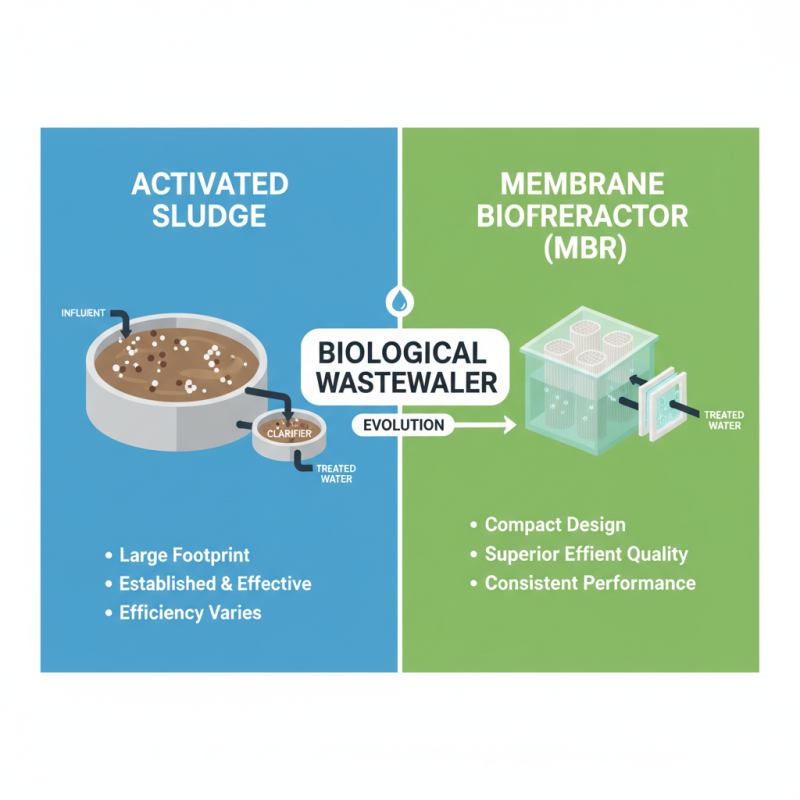
When it comes to biological treatment methods for wastewater, two prominent techniques stand out: activated sludge and membrane bioreactors (MBR). Activated sludge systems rely on a mixture of microorganisms, which digest organic matter in wastewater. This process is well-established and effective, but it often requires large basins and a significant footprint. The efficiency can be inconsistent due to fluctuations in wastewater quality.
In contrast, MBR technology combines biological treatment and membrane filtration in a single unit. It offers a more compact design, which can be particularly advantageous in urban areas with limited space. However, operating MBRs can be complex and requires careful monitoring. Issues like membrane fouling are common. Regular maintenance is needed, which can increase operational costs.
Both methods have their advantages and challenges. Choosing the right one often comes down to site-specific conditions and economic considerations. There is still much to learn about optimizing these processes. Continuous refinement and innovation are essential for achieving sustainable wastewater treatment solutions. More research is needed to better understand the long-term impacts of each method.
Innovations in Advanced Oxidation Processes for Pollutant Removal
The world faces a growing crisis in wastewater management. Innovations in advanced oxidation processes (AOPs) are emerging as effective methods for pollutant removal. AOPs utilize powerful oxidants to break down complex contaminants into simpler, less harmful substances. These techniques can target various pollutants, including pharmaceuticals and industrial chemicals.
One notable approach is the use of ozone combined with UV light. This method generates hydroxyl radicals, which are highly reactive. They can degrade pollutants more efficiently than traditional methods. However, AOPs sometimes require careful handling. The generation of secondary pollutants can occur if not monitored properly. Not every wastewater treatment facility is equipped to implement these technologies effectively.
Another promising technique involves photocatalysis. This method harnesses sunlight, making it cost-effective and sustainable. Titanium dioxide is a common catalyst used in this process. Despite its advantages, issues such as incomplete mineralization can arise, leaving some pollutants untreated. Continuous research is essential to enhance the effectiveness of these processes. The challenge lies not only in technique but also in scaling up for industrial applications.
Comparative Analysis of Membrane Technologies in Wastewater Recycling
Membrane technologies have emerged as promising solutions for wastewater recycling. They offer high efficiency in removing contaminants. According to the Global Water Intelligence report, membrane filtration can reduce suspended solids by 99%. This is crucial for industries struggling to meet stringent discharge regulations.
However, not all membrane technologies are the same. There are microfiltration, ultrafiltration, and reverse osmosis systems. Each has its specific applications and limitations. For instance, reverse osmosis requires significant energy, which raises operational costs. Many facilities grapple with balancing performance and budget.
The uptake of membrane technologies isn't uniform. In some regions, the lack of infrastructure hampers their application. Reports indicate that high initial costs deter investments. Further research is needed to enhance membrane lifespan and efficiency. Exploring innovative materials could lead to better solutions. The journey toward sustainable wastewater treatment is ongoing and complex.
Sustainable Practices: Energy Recovery and Reuse in Treatment Facilities
Wastewater treatment facilities face numerous challenges. Energy recovery is one approach that offers a sustainable solution. Facilities can capture methane produced during the treatment process. This gas can be harnessed for heating or power generation. Utilizing this energy reduces reliance on external sources. However, the technology is not foolproof. Capturing and using methane is complex. It requires careful monitoring and maintenance.
In addition to energy recovery, water reuse is vital. Treated water can be repurposed for irrigation or industrial processes. This practice conserves fresh water and promotes environmental sustainability. Yet, the quality of reused water must meet specific standards. Contaminants and pathogens can still pose risks. Facilities must invest in advanced treatment steps. Balancing cost and effectiveness is often tricky.
Implementing these sustainable practices is not without challenges. Facilities must evaluate infrastructure and processes regularly. Upgrading systems can be a financial strain. Staff may need additional training to excel in new methods. While energy recovery and reuse show promise, continuous improvement is crucial. These efforts contribute significantly to long-term water resource management.