What is a Bridge Rectifier for Alternator Applications?
The Bridge Rectifier For Alternator applications is a pivotal component in modern automotive systems. It converts alternating current (AC) generated by the alternator into direct current (DC). This transformation is essential for charging batteries and powering electrical systems in vehicles. Most cars rely on this technology to ensure reliable performance.
Understanding the function of a bridge rectifier reveals its importance. It consists of four diodes arranged in a bridge configuration. This design allows for full-wave rectification, maximizing efficiency. However, it is crucial to select high-quality components. Poor quality diodes can lead to overheating and reduced lifespan, prompting vehicle issues.
While many manufacturers produce bridge rectifiers, not all offer the same reliability. Proper installation and thermal management are vital to prevent failure. Regular maintenance can enhance the longevity of these systems. Users should be aware of their vehicle's performance, especially during extreme conditions. By doing so, they can ensure their bridge rectifier functions optimally.
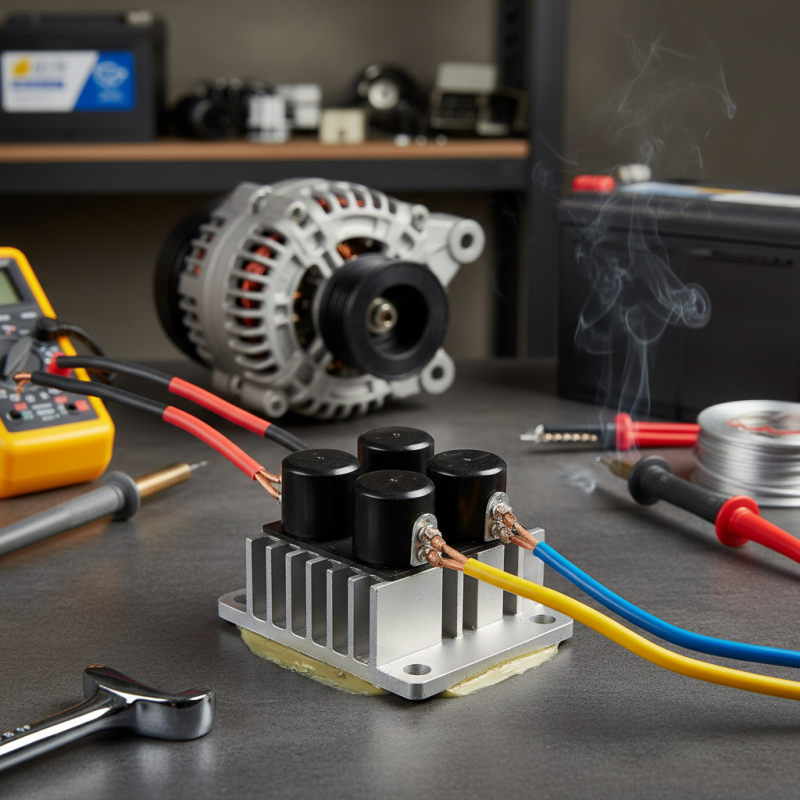
What is a Bridge Rectifier?
A bridge rectifier is a crucial component in many electrical systems. It converts alternating current (AC) into direct current (DC). This conversion is essential for applications that require stable power sources. A bridge rectifier consists of four diodes arranged cleverly. They work together to ensure that the output current stays consistent regardless of the input signal's direction.
When an alternator generates AC power, it needs to be transformed into a usable form. The bridge rectifier allows this transformation efficiently. In practice, you may find it used in power supplies, battery chargers, and solar energy systems. The design is relatively simple, which contributes to its reliability. Those working with automotive systems often rely on it for dependable performance.
While the bridge rectifier is effective, it isn't without challenges. Some factors can affect its efficiency, like heat generation and diode quality. Designers often need to consider these issues carefully. In some cases, the rectifier may require additional components to manage these challenges. This can lead to potential performance trade-offs. Understanding these nuances is important for anyone looking to work with bridge rectifiers effectively.
How Does a Bridge Rectifier Function in Alternator Applications?
A bridge rectifier is essential for converting alternating current (AC) generated by alternators into direct current (DC). In automotive applications, the efficiency of these rectifiers can significantly impact battery life and performance. Studies indicate that using bridge rectifiers can improve energy conversion efficiency by up to 95%. This highlights their critical role in automotive electrical systems.
The function of a bridge rectifier relies on four diodes arranged in a specific way. When AC voltage is applied, two diodes conduct in one half of the cycle and the other two in the reverse half. This allows both halves of the AC waveform to contribute to the output. Consequently, it provides a smoother DC output, essential for sensitive electronic systems in vehicles.
Some challenges with bridge rectifiers include heat dissipation and voltage drops. An increase in temperature can reduce efficiency. For optimal performance, thermal management is vital. Regular assessments and potential upgrades can mitigate these issues, ensuring that the rectifier operates reliably under various conditions.
Key Components of a Bridge Rectifier Circuit
A bridge rectifier is essential in alternator applications, converting AC power to DC. This process is crucial for various automotive and industrial systems. The bridge rectifier consists of four main components: diodes, a transformer, capacitors, and a load.
Diodes are critical in this circuit. They allow current to pass in one direction while blocking it in the reverse. In a bridge configuration, two diodes conduct during each half-cycle of AC. This ensures that the output is a unidirectional flow of current. According to a report from the International Electrotechnical Commission, effective diode selection influences the efficiency of rectification significantly. The right choice can enhance output performance by up to 40%.
Transformers step down voltages and protect circuits from surges. Capacitors help smooth the output voltage. However, they require careful sizing. Overestimating capacitance can lead to inefficiency and wasted energy. Proper design needs expertise in electronics. Over time, failure rates in components such as diodes can reach up to 20% in harsh environments. This figure highlights the necessity of regular maintenance and monitoring in industrial settings. Understanding these elements creates a robust and reliable bridge rectifier circuit for alternator applications.
Advantages of Using a Bridge Rectifier in Electrical Systems
A bridge rectifier is a crucial component in electrical systems, especially for alternator applications. It consists of four diodes arranged in a bridge configuration. This design allows it to convert alternating current (AC) into direct current (DC) efficiently. One of its primary advantages is its ability to handle both positive and negative halves of an AC waveform, ensuring a smoother output. This characteristic is vital for reliable power supplies in vehicles and industrial machinery.
Using a bridge rectifier offers a significant increase in efficiency. Traditional rectifiers may waste energy during the conversion process. In contrast, bridge rectifiers reduce this waste, improving overall system performance. They deliver a steady voltage, which is essential for sensitive electronics. Moreover, bridge rectifiers are relatively compact, making them ideal for tight spaces where larger components cannot fit.
However, users should be aware of potential drawbacks. Poor heat dissipation can lead to component failure. Likewise, underestimating load requirements can cause issues. It is crucial to understand the specific needs of your system. Proper calculations and considerations during installation can prevent future problems. Taking these steps ensures that the bridge rectifier performs optimally in your electrical setup.
Common Applications of Bridge Rectifiers in Automotive Alternators
Bridge rectifiers are essential in automotive alternators. They convert alternating current (AC) generated by the alternator into direct current (DC), which is crucial for powering electrical systems in vehicles. According to industry reports, about 75% of a car's electrical needs rely on the output from the alternator.
In automotive applications, bridge rectifiers improve efficiency. They can handle high voltage levels, typically up to 1000V, and are designed to manage thermal challenges. With advancements in semiconductor technology, newer models provide better performance and reliability. However, overheating remains a concern. It's vital to ensure proper heat dissipation and thermal management strategies are in place.
Bridge rectifiers also support electric systems, including lighting, infotainment, and engine management. The ability to produce a stable DC output enhances system reliability. Studies indicate that defects in rectifiers can lead to system failures. The automotive industry might need to rethink current designs to minimize such risks and improve longevity.
What is a Bridge Rectifier for Alternator Applications? - Common Applications of Bridge Rectifiers in Automotive Alternators
| Application | Description | Benefits |
| Automotive Charging Systems | Converts AC generated by the alternator to DC for battery charging. | Efficient power conversion, ensures battery longevity. |
| Power Supply Units | Used in power supplies to convert AC to low-voltage DC. | Stable output, suitable for sensitive electronics. |
| Electric Vehicle Chargers | Integral in charging stations converting AC to DC for EVs. | Supports fast charging, enhances charging efficiency. |
| Generator Systems | Used in generators to rectify output power for various applications. | Provides reliable DC power from generator output. |
| Motor Control Circuits | Used to convert AC signals into DC for controlling motors. | Improves control and efficiency of motor operations. |