Top Wheel Cover Injection Molding Manufacturers in China?
Choosing among China’s top Wheel Cover Injection Molding manufacturers takes more than comparing quoted prices. A wheel cover must fit securely, resist impact, and maintain a consistent surface finish across production runs. Small details matter. Mold design, resin choice, cooling layout, and process control can all affect warpage, clips, and visible sink marks. A polished sample is useful, but it cannot prove long-term consistency by itself.
Quality expert W. Edwards Deming wrote, “It is not enough to do your best; you must know what to do, and then do your best.” That principle applies to supplier evaluation: ask how a factory verifies dimensions, manages tooling changes, and records production results. This guide will help readers compare manufacturers by engineering capability, material knowledge, tooling experience, quality checks, communication, and delivery performance. Request evidence where possible, such as inspection records, sample measurements, and clear mold-maintenance plans. Not every supplier excels. A low quotation may also leave important assumptions unclear, so confirm cavity count, surface requirements, packaging, and ownership of tooling before comparing offers. There is no single best factory for every project. The right choice depends on the wheel design, target volume, required finish, and support needed after launch. A careful shortlist can reduce avoidable surprises, though no checklist replaces a production trial.
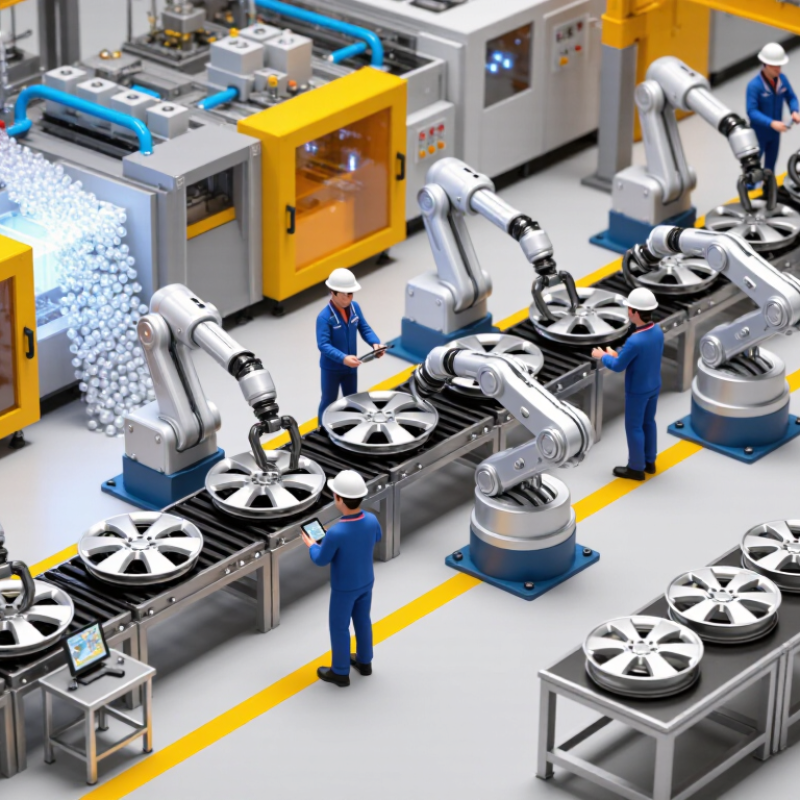
Wheel Covers in China: Product Types and 2023 Vehicle Production of 30.16 Million
China produced 30.16 million vehicles in 2023, creating a substantial market for molded exterior components. Wheel covers are among the visible parts that help protect steel wheels and shape a vehicle’s appearance. The production figure signals scale, but it does not equal wheel-cover demand: some vehicles use alloy wheels, while others have different trim configurations.
Common types include full-face covers, which span most of the wheel’s outer surface, and smaller center caps that cover the hub area. Full covers often use injection-molded polypropylene for its low weight and practical impact resistance. Decorative finishes can add visual detail, but clips and retaining rings must still hold securely through vibration, temperature changes, and repeated wheel servicing. Small fit problems matter.
For manufacturers, China’s vehicle volume supports demand across passenger cars and commercial vehicles, yet specifications vary by model and wheel size. A well-designed mold needs consistent wall thickness, controlled shrinkage, and carefully placed gates to reduce warping or visible flow marks. These details are easy to underestimate. Production volume alone cannot guarantee quality; sample fitting, dimensional checks, and road-use feedback remain important. One limitation is that public vehicle totals do not show how many units require wheel covers, so demand estimates need more specific product data.
China Vehicle Production, 2019–2023
China produced approximately 30.16 million vehicles in 2023. This chart shows annual vehicle production, providing market context for wheel-cover demand; it does not represent wheel-cover production or sales.
Material and Design: Polypropylene Grades, Fitment, and Automotive Test Requirements
Wheel-cover performance starts with the polypropylene grade, not the mold price. Homopolymer PP offers stiffness and crisp detailing, while impact copolymer grades better tolerate curb knocks and cold-weather impacts. Talc-filled PP can reduce shrinkage and improve dimensional stability, but excess filler may make clips brittle. Fit matters. Ask suppliers for resin-grade traceability, shrinkage data, and cavity-to-cavity measurements. PlasticsEurope’s Plastics—The Fast Facts 2023 reports 400.3 million tonnes of global plastics production in 2022. That broad figure does not predict wheel-cover performance, but it highlights why consistent material documentation matters across large supply chains.
Design the clips and retaining ring around the actual wheel geometry. Small variations in spoke depth can cause looseness, rubbing, or difficult installation. A useful validation plan checks retention force, repeated installation, thermal cycling, UV weathering, water exposure, and impact at low temperatures. ISO 4892 weathering methods and ISO 179 impact testing can inform material screening; vehicle makers may add application-specific acceptance limits. Ask molding suppliers to share test conditions and sample results, not just pass statements. One imperfect point: a lab coupon cannot fully reproduce a cover’s stress concentrations or wheel-speed vibration. Full-wheel trials remain important. Compare warpage, balance, clip damage, and rattling after testing before approving production.
Injection Molding Benchmarks: Typical PP Melt Temperatures of 200–280°C
For Chinese wheel-cover manufacturers, polypropylene melt temperature is a process window, not a fixed machine setting. A practical benchmark is 200–280°C, consistent with the broad PP processing ranges in Rosato et al.’s Injection Molding Handbook. The lower end can suit easy-flowing grades and thin sections; glass-free exterior covers often need enough heat to fill ribs and mounting features cleanly. That rule is imperfect. Resin grade, screw design, residence time, and regrind content all shift the result.
A barrel display does not confirm the actual melt temperature. Measure purged material with a calibrated probe, then check for unmelted pellets, silver streaks, and edge flash. At the low end, a cold melt may leave short shots around clips. Near the upper end, long residence can increase odor, discoloration, or degradation risk. The Society of Plastics Engineers’ injection-molding references emphasize matching processing conditions to the resin and part geometry; the handbook’s temperature guidance should be treated as a starting point, not a guarantee. Record melt temperature, cycle time, and defects for each trial. A small adjustment may help, but the mold’s cooling balance can still be the real problem.
Comparing Chinese Manufacturers: IATF 16949, Tooling Capacity, and Quality Control
Comparing wheel cover injection molding manufacturers in China takes more than checking a certificate. IATF 16949 can indicate a structured automotive quality system, but it does not prove every production line performs equally. Ask for the certificate scope, site location, recent audit findings, and examples of corrective actions. Details matter.
Tooling capacity is equally important. Review mold design ownership, in-house machining, cavity layout, and expected tool life against your annual volume. Request a trial report showing fill balance, cycle time, dimensional results, and surface defects on the actual wheel-cover resin. A large press list looks impressive, yet machine tonnage alone says little about stable output. Some suppliers may outsource mold repair; that is not automatically a problem, but response time should be clear.
Tips: Send the same drawing and resin specification to each supplier, then compare first-off samples and control plans. Check measurement records for clip fit, warpage, gloss, and color consistency. Visit the production line if possible. Paperwork can look neat. Real parts tell more.