How to Choose a Wheel Diamond Cutting Machine in 2026
Choosing a Wheel Diamond Cutting Machine in 2026 is less about buying the fastest model and more about matching its capabilities to real production needs. A machine that cuts thin wheel sections may not suit thick, abrasive materials or long shifts. Start with the workpiece: note its material, diameter, thickness, and required edge quality. Then compare cutting capacity, spindle speed, feed control, and machine stability. Small details matter. A vibration felt through the table can become a rough edge or inconsistent cut.
Ask suppliers how the machine performs under conditions close to yours. Request sample cuts, and inspect the finish under good lighting. Check how coolant is delivered, how dust and debris are managed, and how quickly routine components can be reached for maintenance. Confirm that guards, emergency stops, and operating instructions are clear. These are practical checks, not brochure extras. A specification sheet can look reassuring and still leave questions about daily use.
The right choice also depends on operator experience, available floor space, service access, and the cost of consumables. Compare total operating costs, not only the purchase price. If possible, test the machine with your own material and record cycle time, cut consistency, and setup effort. Results may differ from a supplier’s demonstration. That is worth remembering. This guide outlines the key checks, questions, and trade-offs to consider before selecting a Wheel Diamond Cutting Machine for your workshop or production line.
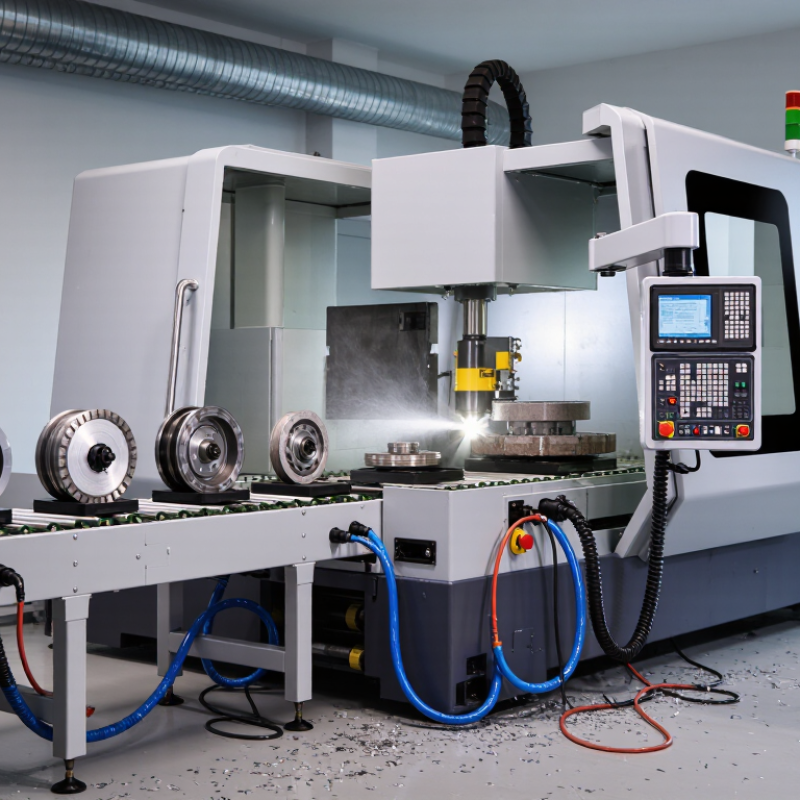
Identify the Materials, Wheel Types, and Cutting Tasks You Need to Handle
A wheel diamond cutting machine should be chosen around the material on your bench, not just its advertised cutting depth. Granite and dense ceramics need a wheel suited to hard, brittle stock. Glass usually calls for a finer edge and careful control to limit chipping. Check the wheel maker’s material guidance; diamond wheels are not automatically suitable for every metal, especially ferrous alloys, where heat can shorten wheel life. Small detail, big difference.
Next, match the wheel type to the finish and pace you need. A continuous rim often gives a cleaner edge on tile or glass, while segmented rims help move heat and debris during heavier stone cutting. Turbo rims can balance speed and finish, though results vary with the material. Bond matters too: metal, resin, and vitrified bonds wear differently. A wheel that lasts longer may cut more slowly.
Think through the actual task: straight cuts, repeated production, deep passes, or delicate trimming. Confirm wheel diameter, arbor size, machine speed range, and permitted wet or dry use before buying. For dusty or heat-sensitive work, water delivery can improve cooling and help control dust, if the machine is designed for it. Test on a scrap piece first. I have seen a technically suitable wheel leave a rough edge when feed pressure was too high. Let the cut stay steady, and inspect the edge under good light.
Compare Machine Designs, Power Ratings, and Cutting Capacity
Choosing a wheel diamond cutting machine starts with the wheel, not the brochure. Record the largest diameter, width, and offset you expect to handle, then compare them with the machine’s stated capacity. A compact bench-style design saves floor space and suits a steady flow of standard passenger wheels. A larger CNC unit may handle heavier wheels and broader size ranges, but it needs room and careful setup. Fit matters. Check chuck support, guarding, and whether an operator can load a wheel smoothly without forcing it.
Compare motor power with spindle speed and feed control instead of assuming the highest rating is best. Larger workpieces may need more power reserve, while a fine finish depends on stable rotation and controlled tool movement. Ask for the rated cutting diameter and width, then check those figures against your own wheel samples. Measure twice. Power ratings can refer to the spindle motor or the machine’s total input, so confirm what each figure means. During a demonstration, watch for vibration, chatter, or uneven bright bands. Capacity on paper matters, but maintenance access and tooling changes affect daily work too. No machine fits every shop.
Check Diamond Blade Compatibility, Cooling, and Safety Features
A wheel diamond cutting machine is only useful when its blade matches the job. Check the blade diameter, arbor size, and maximum rated speed against the machine manual. The blade’s permitted speed must meet or exceed the machine’s operating speed. Also confirm the rim or segment design suits the material and cut depth. A blade that fits physically may still be unsuitable.
Small details matter. For wet cutting, inspect how water reaches both sides of the blade, and check that the pump can maintain a steady flow. A weak stream can leave visible heat marks and more dust. Make sure the table drains well; gritty slurry can collect around the workpiece. For dry cutting, use a blade approved for dry operation and suitable dust extraction. Do not assume one blade handles every material equally well.
Safety features deserve a hands-on check. Look for a secure blade guard, a stable table, an accessible emergency stop, and clear instructions for changing blades. Before each job, inspect the blade for damage and confirm the workpiece can be held firmly. Wear suitable eye and hearing protection. No checklist catches every awkward cut. I would leave room in the budget for better extraction or water control, even if that means choosing a simpler machine. The trade-off is not always obvious in a showroom.
Evaluate Accuracy, Controls, Maintenance, and After-Sales Support
Choosing a wheel diamond cutting machine in 2026 means checking accuracy under real production conditions, not just reading brochure tolerances. Ask for a test cut on your wheel material, then measure runout, edge finish, and repeatability across several pieces. A clean first cut is not enough. Confirm that the machine’s controls let operators adjust feed, speed, and cutting depth without confusing menus. Saveable recipes can help reduce setup variation between shifts.
Maintenance and support affect output long after installation. Check how quickly common wear parts can be replaced, whether service instructions are clear, and what response time the supplier commits to. The U.S. Department of Energy’s Operations & Maintenance Best Practices guide estimates predictive maintenance can save 8–12% compared with preventive maintenance, and 30–40% compared with reactive maintenance. These are broad facility estimates, not guarantees for a cutting machine. Still, accessible fault logs and service support can make early maintenance easier. I would also ask who handles calibration; that detail is easy to overlook.
Tips: Bring a sample wheel and request repeat cuts. Ask for a written parts list, training plan, and service response time. If operators cannot explain the control screen after a short demonstration, reconsider. Good specifications matter, but the daily workflow can still feel awkward.
How to Choose a Wheel Diamond Cutting Machine in 2026 - Evaluate Accuracy, Controls, Maintenance, and After-Sales Support
Use this scorecard to compare machines under the same operating conditions. The weights are a suggested buyer framework, not an industry standard. Confirm all specifications, acceptance limits, and service commitments in writing before purchase.
| Evaluation Area | What to Check | Evidence to Request | Practical Decision Rule | Weight | Score (1–5) |
|---|---|---|---|---|---|
| Cutting accuracy and repeatability | Ask how the machine measures wheel position and controls cutting depth. Check stated repeatability, runout measurement method, dimensional inspection method, and achievable surface finish. | Written specification sheet; inspection records from a sample cut; demonstration using a representative wheel and the intended cutting process. | Compare measured results with your required tolerances. Verify results over repeated cuts; do not rely on a stated resolution alone as proof of finished-part accuracy. | 30% | — |
| Controls and workflow | Review the operator interface, setup steps, program storage, adjustment controls, alarms, and the availability of manual or assisted operation where needed. | Live demonstration; sample operating procedure; details of program backup, user access, supported languages, and operator training. | Have an intended operator run a representative job. Confirm that setup, correction, and recovery from common alarms are clear and documented. | 20% | — |
| Maintenance and consumables | Check routine cleaning and lubrication tasks, access to service points, tool and fixture requirements, calibration needs, and expected consumables. | Maintenance schedule; consumables list; recommended tooling and fixture details; calibration instructions; estimated routine service time. | Confirm that maintenance tasks can be completed by available staff and that required tools, consumables, and calibration services are accessible. | 20% | — |
| After-sales support | Review warranty coverage, technical support hours, response and escalation process, spare-parts availability, installation, and operator or maintenance training. | Written warranty terms; service contact and escalation details; parts list and lead-time information; installation and training scope. | Record response-time commitments, exclusions, travel charges, and parts terms in the quotation or service agreement. Treat verbal assurances as unconfirmed. | 20% | — |
| Safety and site fit | Check guarding, emergency stops, operating instructions, electrical requirements, footprint, access for loading, and provisions for chips or dust generated by the process. | Safety documentation; installation and utility requirements; machine layout; risk-assessment information; demonstration of safety devices. | Confirm that the machine can be installed and operated safely at your site and that applicable local requirements are addressed before commissioning. | 10% | — |
| Total weighting | 100% | — | |||
Scoring guide: 1 = does not meet requirements; 2 = significant gaps; 3 = meets essential requirements; 4 = meets requirements with useful advantages; 5 = clearly demonstrated and well documented. Set project-specific accuracy and acceptance limits before comparing suppliers.
Compare Total Ownership Costs and Verify the Machine Before Purchase
How to Choose a Wheel Diamond Cutting Machine in 2026
Compare the full ownership cost, not only the quoted price. Include diamond tooling, electricity, cooling water, labor, maintenance, and expected downtime. The U.S. Department of Energy’s Improving Motor and Drive System Performance: A Sourcebook for Industry reports that motor-driven systems account for about 68% of U.S. manufacturing electricity use. That figure is not a machine-specific estimate, but it shows why measured power use matters. Ask the supplier to document energy consumption under your actual cutting conditions. NIST’s life-cycle costing guidance also supports comparing costs across a machine’s service life, rather than relying on purchase price alone.
Before ordering, run a sample using your own wheel, material, and target thickness. Record cycle time, edge quality, kerf width, and power draw. Check spindle runout, guarding, cooling flow, and how quickly routine parts can be replaced. Request a written acceptance test with agreed tolerances. A polished demonstration on a different material proves little. Still, shop-floor results can vary; leave room for that uncertainty in your cost estimate.
Tips: Bring representative workpieces and measure the finished cuts yourself. Ask for service and tooling prices in writing. Small details matter. Compare at least two years of consumables and planned maintenance, then check whether local technicians can support the machine. A low quote may still win, but only if the verified output fits your production needs.