How to Choose Industrial Curtain Walls for Your Facility
Industrial Curtain Walls are often treated as a simple way to divide a factory floor. In practice, the right system can influence temperature control, noise, dust movement, workflow, and staff safety. A curtain beside a welding cell faces different demands from one separating a loading bay from an assembly area. Details matter.
Choosing well begins with observing the facility in use. Measure each opening, note traffic patterns, and identify exposure to heat, sparks, washdown, or moving equipment. Then compare material, thickness, overlap, mounting hardware, visibility, and access options against those conditions. A clear PVC panel may preserve sightlines, while an opaque or reinforced curtain may better suit a rougher zone. There is no universal best choice.
This guide explains how to match Industrial Curtain Walls to operational needs, assess practical specifications, and plan installation and maintenance. It also highlights questions to ask suppliers, such as whether replacement parts are available and how stated performance is verified. Product descriptions can sound convincing. Verify the details. A site walk-through often reveals constraints a catalog misses, including uneven floors, overhead services, or a forklift’s turning radius. Some decisions remain trade-offs: easier access can mean more air exchange, and heavier materials may require stronger supports. The aim is not a perfect barrier on paper, but a dependable solution that fits real work. Recheck assumptions before ordering. That may sound obvious, but rushed measurements can create avoidable problems. This introduction sets up a practical selection process grounded in conditions your team can observe.
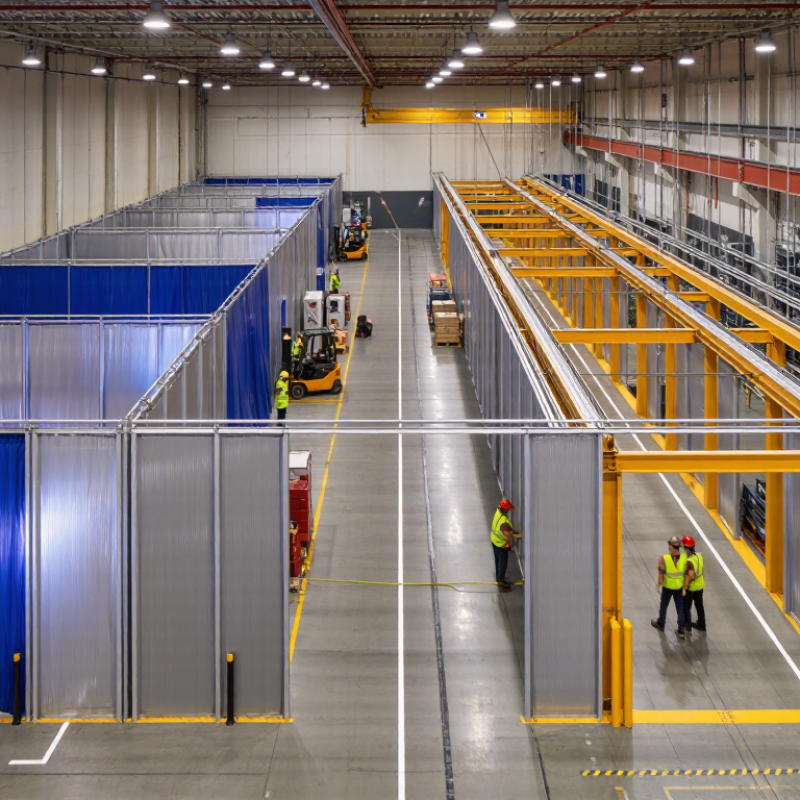
Identify the Facility’s Needs and Operating Conditions
Before comparing industrial curtain walls, map how each area is actually used. Watch a normal shift, not just an empty floor. Note forklift routes, pedestrian crossings, door openings, and where pallets pause. Start with the work. A curtain beside a welding station may need different heat and spark resistance than one separating a packing line. Record temperature extremes, humidity, washdown frequency, and any dust or airborne debris. Guessing from a room label is easy—and often wrong.
Measure each opening at several points; older buildings are rarely perfectly square. Measure twice. Record ceiling obstructions, support structure, and the space carts or equipment need to pass. Decide whether staff need clear sightlines, frequent walk-through access, or a more contained barrier. Transparent panels can improve visibility, but glare and scratches may reduce it over time. That trade-off deserves a site check.
Operating conditions shape material and hardware choices. A damp process area can challenge seams, tracks, and fasteners, not just the curtain fabric. Consider how often the wall will move, who will maintain it, and whether cleaning agents affect its surface. Ask workers where the current setup slows them down; their answer may complicate the plan. It should. Compare those observations with the facility’s safety and maintenance requirements, then confirm dimensions and mounting details before ordering. A small mismatch can leave a stubborn gap or block a route that needs to stay clear.
How to Choose Industrial Curtain Walls: Identify Facility Needs and Operating Conditions
OSHA permissible noise exposure duration by sound level
Use measured sound levels and exposure durations to assess whether acoustic curtain walls may help control noise between work areas. OSHA’s limits below are permissible exposure levels for the specified durations; curtain walls do not replace required hearing protection or other controls.
Assess Curtain Wall Materials, Designs, and Performance
Industrial curtain walls help divide work zones without building permanent partitions. Their materials should match the conditions on the floor. PVC-coated fabric can suit areas needing frequent wipe-downs, while heavier reinforced panels may better tolerate repeated contact from carts or equipment. Check how seams, edges, and viewing windows are constructed. A strong panel can still fail at a weak attachment.
Design affects daily use. Sliding panels save swing space, while overlapping sections can reduce drafts and stray light. For washdown areas, consider how water drains and whether hardware resists corrosion. In hot or noisy zones, ask for tested thermal or acoustic performance rather than relying on material descriptions alone. Site measurements matter; a small gap can carry dust or sound. A mock-up is useful, though it may not capture every shift condition.
Tips: Compare samples under actual lighting and cleaning routines. Ask for performance data tied to your opening size and operating conditions. Check attachment points, track clearance, and replacement access. One detail is easy to miss: staff may leave a curtain partly open when movement feels awkward. Observe the workflow before choosing.
Check Safety, Building Code, and Installation Requirements
Industrial curtain walls can separate welding cells, wash areas, and storage zones, but selection starts with the hazards behind the barrier. List expected exposures: sparks, heat, splashes, moving equipment, and frequent cleaning. Match the curtain material and viewing panels to those conditions. A clear panel may improve visibility, yet it can become cloudy or brittle if cleaners or heat are incompatible.
Check applicable building and fire codes before ordering. Requirements vary by location, occupancy, and the curtain’s role, so confirm details with the authority having jurisdiction and your facility’s safety professional. Ask for current test documentation for flame resistance, and verify that the rating applies to the exact material and configuration. A label alone is not enough. Also consider egress, sprinkler coverage, ventilation, and whether the curtain could obstruct alarms or emergency equipment.
Installation deserves equal attention. Measure floor-to-beam height, track length, and clearance around doors, ducts, and machinery. Confirm that the supporting structure can carry the track and curtain, especially where panels are opened often. Poorly placed supports can sag; small details matter. Specify secure anchoring, safe operating hardware, and a layout that workers can inspect and clean. Plans are sometimes incomplete at this stage. Review a site sketch with the installer, then walk the finished area with operators before routine use.
Compare Costs, Durability, and Maintenance Needs
When comparing industrial curtain walls, look beyond the quoted price. A lower-cost system may use thinner fabric or simpler track hardware, which can mean more frequent repairs in a busy loading area. Ask for the fabric weight, tear resistance, and temperature range, then compare those specifications with your actual conditions. Forklift traffic, welding sparks, and washdown routines create very different demands. A curtain near a dock may need flexible panels that tolerate repeated movement; a partition beside a hot process needs suitable heat resistance. A low quote can be misleading.
Durability also depends on installation and daily use. Check how panels attach to the track, whether seams can be repaired, and how easily a damaged section can be replaced without removing the whole curtain. That matters. For maintenance, ask what cleaning agents are safe and whether the track needs routine lubrication. Dust buildup can make a sliding curtain harder to move, while neglected fasteners may loosen under repeated use. Estimate labor as well as replacement parts. I would not assume the longest warranty means the lowest lifetime cost; actual repair access and downtime deserve a closer look. Keep a simple inspection log, even if it feels excessive at first.
Select a System and Plan for Installation and Upkeep
Choosing a curtain system starts with the work happening behind it. Map forklift routes, door openings, washdown zones, and heat sources before selecting clear PVC strips, insulated panels, or welding screens. Measure the opening at several points; floors and beams are rarely perfectly level. Small gaps matter. The U.S. Energy Information Administration’s 2018 Manufacturing Energy Consumption Survey reports that manufacturing used 26.4 quadrillion Btu of first-use energy. That figure is not a curtain-savings estimate, but it shows why facilities should check temperature control and airflow at busy openings. Compare material thickness, visibility, chemical exposure, and any required fire-performance documentation. Ask the supplier for test records that match the actual material and intended use.
Plan installation around production traffic, not just the wall dimensions. Specify anchor types, track height, overlap, and clearance for moving equipment. Keep exits, sprinklers, and service panels accessible. BLS reported 2.4 recordable cases per 100 full-time workers across private industry in 2023; this broad rate is not specific to curtains, but reinforces the value of safe access and installation planning. Schedule fitting during a low-traffic window, then inspect the first operating shift for snagging or obstructed sightlines. For upkeep, assign a named person to check torn strips, loose tracks, cloudy panels, and damaged fasteners on a regular schedule. Wipe surfaces with cleaners compatible with the material, and replace damaged sections promptly. I would still question a maintenance interval chosen only from habit; dust, impact, and washdown frequency can change it.