
How to Choose the Best Metal Polishing Machine?
Choosing the right Metal Polishing Machine can determine whether a surface looks premium or merely acceptable. In a working shop, the difference appears clearly: one panel leaves a uniform reflection, while another shows swirl marks near the edge. The decision also affects labor time, abrasive consumption, rework, and operator safety. A machine that seems inexpensive may become costly after several months of maintenance and inconsistent results.
Industry research supports the need for careful selection. Grand View Research identifies automation, precision finishing, and rising demand for treated metal components as major equipment-market drivers. MarketsandMarkets also reports continued growth in the global metal finishing market, supported by automotive, aerospace, electronics, and industrial manufacturing. These reports offer useful direction, although their market estimates and category definitions differ. That difference deserves attention. A projected market trend cannot replace a production trial.
A reliable evaluation begins with the workpiece. Consider stainless steel, aluminum, brass, or hardened steel. Each material reacts differently to pressure, heat, compound type, and abrasive speed. Part geometry matters too. Flat sheets, tubes, castings, and intricate components rarely need the same polishing method. Experienced buyers should compare cycle time, surface roughness, access around corners, dust control, noise, and training requirements. Request sample testing whenever possible. Measure the finish with documented procedures, not visual judgment alone. No machine is perfect. Even advanced automation can produce defects when tooling, consumables, or settings are poorly matched. The best choice balances finish quality, production volume, maintainability, energy use, and total ownership cost.
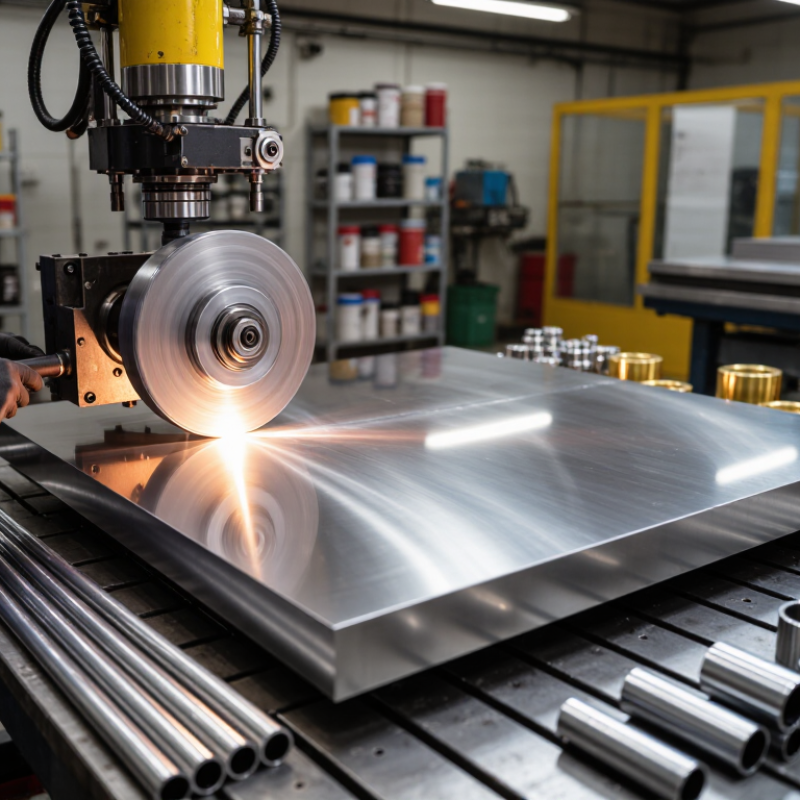
Define Your Metal Polishing Requirements and Desired Finish
How to Choose the Best Metal Polishing Machine?
Define the required finish before comparing machine specifications. A mirror finish may require several abrasive stages, while a uniform satin finish needs controlled brushing. Specify surface roughness using Ra or Rz values, following ISO 21920 measurement principles. Gloss alone can mislead. A panel may look bright under warm lighting but fail inspection under neutral light.
Measure the workpiece carefully. Record its metal type, dimensions, edges, holes, and production volume. Thin stainless-steel sheets can distort under excessive pressure. Small components may need a rotary system, while long profiles often require continuous-feed equipment. According to Grand View Research, the global metal finishing market was valued at approximately USD 112.6 billion in 2023. This scale reflects rising demand for repeatable surface quality, not simply faster machines.
A practical trial is essential. Use the intended abrasive, coolant, pressure, and feed speed during testing. Check Ra, visual uniformity, cycle time, and abrasive consumption. Industry experience shows that a lower-cost machine can become expensive when rework increases. Dust collection also deserves attention, especially during dry polishing. The U.S. National Institute for Occupational Safety and Health emphasizes controlling airborne contaminants through engineering measures. Do not trust one sample. Test several batches. The first specification is often wrong. Revisit it after production data reveals actual defects, labor time, and maintenance needs.
Compare Polishing Machine Types and Their Applications
How to Choose the Best Metal Polishing Machine?
Compare Polishing Machine Types and Their Applications
Choosing a metal polishing machine starts with the workpiece, not the machine’s advertised speed. Shape, material, surface condition, and production volume all matter. A rotary tumbler suits small parts with rounded edges, such as fittings, fasteners, and cast components. Its barrel creates steady contact with abrasive media. However, delicate surfaces may suffer from unwanted impact marks.
Vibratory machines process larger batches with less aggressive movement. They work well for deburring and smoothing mixed metal parts. Belt polishing machines offer better control on flat sheets, tubes, and welded frames. Operators can adjust belt grit and pressure near corners. The finish becomes more consistent. Still, uneven hand pressure can create visible lines.
For precision components, centerless or CNC polishing systems provide repeatable results. These machines fit shafts, cylindrical parts, and parts requiring strict tolerances. In workshop trials, checking heat buildup is essential. Excessive friction can discolor stainless steel and weaken a thin edge. I once selected a machine based mainly on output speed. That decision increased rework. A slower setting produced a cleaner finish.
Compare sample pieces before purchase. Measure roughness with suitable instruments, then inspect the surface under bright angled light. Confirm dust collection, emergency stops, guarding, and media compatibility. A reliable supplier should explain maintenance intervals, tooling limits, and operator training. These details often matter more than a polished sales specification.
Evaluate Machine Specifications, Capacity, and Compatibility
Choosing a metal polishing machine starts with measurable specifications, not attractive features. Check spindle speed, motor power, abrasive size, stroke range, and pressure control. These figures determine whether the machine can remove burrs or create a fine reflective finish. A machine running at 3,000 rpm may polish small stainless-steel parts efficiently, but it can overheat thin sheets.
Capacity must match daily production. Record the largest diameter, length, weight, and batch quantity before comparing models. The International Energy Agency reports that electric motor systems consume roughly 50% of global electricity, making motor efficiency a practical cost concern. Also inspect cycle time and idle consumption. Fast is not always economical.
Compatibility deserves careful testing. Match the machine with the metal hardness, surface shape, abrasive type, coolant, and dust-extraction system. Aluminum, carbon steel, and stainless steel can require different compounds and contact pressures. The U.S. Department of Energy notes that compressed-air leaks can waste 20–30% of compressor output, so pneumatic requirements should be measured rather than guessed. Request test coupons using your actual parts. A perfect spreadsheet still misses vibration, operator access, and awkward loading. I would not pretend every specification transfers cleanly to the workshop. Small errors here can produce uneven edges, excessive rework, and damaged surfaces.
How to Choose the Best Metal Polishing Machine? - Evaluate Machine Specifications, Capacity, and Compatibility
| Machine Type | Typical Motor Power | Working Capacity | Suitable Workpiece Size | Common Metal Applications | Typical Finish | Key Compatibility Factors | Recommended For |
|---|---|---|---|---|---|---|---|
| Bench Polisher | 0.25–1.5 kW | 1 workpiece at a time; manual loading | Small parts up to approximately 300 mm | Stainless steel, aluminum, brass, copper, mild steel | Bright polishing, deburring, light buffing | Check spindle diameter, wheel diameter, rotation speed, and available workspace | Small workshops, maintenance areas, and prototypes |
| Single-Disc Floor Polisher | 1.5–4 kW | 1 medium or large workpiece; manual operation | Flat sheets, panels, and frames up to approximately 1,500 mm | Stainless steel panels, architectural metal, large fabricated parts | Directional satin finish or high-gloss finish | Confirm disc diameter, adjustable handle height, dust control, and operator access | Large flat surfaces and flexible repair work |
| Belt Polishing Machine | 2.2–7.5 kW | Continuous belt operation; medium production volume | Flat bars, tubes, profiles, and parts up to approximately 600 mm wide | Stainless steel, aluminum, carbon steel, titanium | Uniform satin, grain, blending, and edge finishing | Evaluate belt width, belt length, abrasive grit range, contact wheel hardness, and tracking system | Long parts, weld blending, and consistent linear finishes |
| Centerless Polishing Machine | 5.5–22 kW | Continuous processing; high production volume | Round bars and tubes, commonly 5–200 mm in diameter | Stainless steel tubing, round bars, hydraulic components | Uniform cylindrical finish with controlled surface roughness | Check diameter range, feed speed, wheel configuration, coolant system, and straightness requirements | High-volume cylindrical components |
| Robotic Polishing Cell | 3–15 kW process motor, plus robot power | 1 part per cycle; programmable batch production | Small to large parts, depending on robot reach and payload | Castings, automotive parts, sanitary components, complex fabrications | Repeatable satin, blending, deburring, and mirror polishing | Assess robot payload, reach, fixture accuracy, tool-changing options, sensors, and safety enclosure | Complex shapes, repeatable processes, and reduced manual labor |
| Vibratory Finishing Machine | 0.75–11 kW | Approximately 50–1,000 L bowl or tub volume | Small to medium parts; batch loading | Aluminum, zinc, brass, steel, stainless steel, and non-ferrous alloys | Deburring, edge radiusing, burnishing, and mass finishing | Match bowl volume, media type, part-to-media ratio, processing time, and separation method | High quantities of small components with batch processing |
| Barrel Finishing Machine | 0.75–7.5 kW | Approximately 20–500 L barrel volume | Small parts that can tolerate tumbling contact | Fasteners, fittings, stamped parts, small castings | Deburring, cleaning, burnishing, and general brightening | Confirm barrel lining, load percentage, media compatibility, part fragility, and unloading method | Cost-effective batch finishing of durable small parts |
| Electropolishing System | 5–100 A/dm² process current; power depends on tank size | Tank-based batch processing; commonly 50–2,000 L | Small to large conductive components, subject to tank dimensions | Stainless steel and other suitable conductive alloys | Micro-smoothing, brightening, and improved cleanability | Verify alloy suitability, tank dimensions, rectifier capacity, ventilation, chemical handling, and wastewater treatment | Specialized finishing where hygiene or corrosion resistance is important |
| CNC Surface Polishing Machine | 3–15 kW spindle power | 1 programmed workpiece per cycle; medium production volume | Typically up to 1,000 × 2,000 mm, depending on table size | Mold steel, stainless steel, aluminum, brass, and precision components | Controlled surface finish with repeatable tool paths | Check axis travel, spindle speed range, tool compatibility, workholding, software, and measurement capability | Precision parts, molds, and repeatable finishing programs |
Selection note: Actual performance depends on alloy hardness, starting surface roughness, abrasive type, contact pressure, operator skill, cooling method, and required surface roughness. Always compare the machine’s working envelope and electrical requirements with the workpiece and production conditions.
Assess Abrasives, Automation, Safety, and Maintenance Features
How to Choose the Best Metal Polishing Machine?
A polishing machine should match the abrasive, material, and required surface finish. Test several abrasive grades on the actual alloy, not a showroom sample. Hard stainless steel may need staged cutting and buffing. Softer aluminum can load the wheel quickly. Record cycle time, compound use, surface roughness, and rejected parts. A glossy finish is not enough.
Automation deserves careful judgment. Automatic pressure control can improve consistency, while sensors can detect wheel wear and part position. The International Federation of Robotics reported 541,302 industrial robots installed worldwide in 2023. That figure shows strong automation demand, but it does not guarantee a return on investment. Calculate labor savings against programming, training, tooling, and downtime. A semi-automatic machine may be wiser for varied, low-volume work. I would question any supplier promising zero operator involvement.
Tips: Inspect guarding, emergency stops, dust extraction, and noise levels before purchase. OSHA emphasizes machine guarding and exposure control around rotating equipment. Check whether abrasive changes need special tools. Review maintenance intervals, spare-part access, lubrication points, and diagnostic records. ISO 12100 supports risk assessment during machine design. Keep a simple log for vibration, motor temperature, belt condition, and finish quality. Small omissions become expensive. The maintenance plan may look practical, yet operators can still skip it during peak production. Schedule visible checks at shift start.
Calculate Total Cost and Select the Best Polishing Machine
Choosing a metal polishing machine starts with total cost, not the purchase price. In a workshop, I have seen low-priced units require frequent belt changes, extra abrasives, and longer setup time. List the machine price, delivery, installation, electricity, tooling, maintenance, and operator training. Then estimate output per hour. A machine polishing 80 parts daily may cost less than one producing 40, even with a higher invoice. Measure your real workload. Not brochure capacity.
Match the machine to the metal type, part size, surface condition, and required finish. Stainless steel may need different wheels and compound control than aluminum. Check motor power, speed adjustment, dust collection, guarding, and spare-part availability. Ask suppliers for sample trials using your actual parts. Record cycle time, abrasive use, rejection rate, and surface consistency. These figures make comparisons more reliable. I would also calculate a three-year cost per finished part. It exposes hidden expenses. My first estimates are rarely perfect.
Tips: Create a spreadsheet with best-case, normal, and worst-case costs. Include downtime and wasted parts. Leave room for electricity price changes. If floor space is limited, include relocation or ventilation work. A smaller machine can be cheaper overall, but only if it meets your quality target. Review the figures with an experienced operator before buying. Their practical warning may prevent an expensive mistake.