How to Choose the Right Die Casting Mold Supplier
Choosing a Die Casting Mold supplier is not simply a price comparison. The supplier affects part consistency, production uptime, and the cost of later changes. John Campbell, a respected casting researcher, is often associated with this principle: “The quality of a casting is determined by the quality of the liquid metal.” It is a useful reminder, though the mold also shapes how reliably that metal fills and cools.
Look beyond a polished sample or a short delivery promise. Ask how the supplier reviews part geometry, gate locations, cooling channels, venting, and expected cycle conditions. Request examples of similar projects, inspection records, and a clear plan for mold trials. A capable partner should explain trade-offs in plain language, not hide them behind impressive equipment photos. Specific details matter: who owns design revisions, how wear surfaces are maintained, and what happens when trial results miss the target?
The lowest quote can become expensive. Still, a high price alone proves little. Compare technical responses, communication, machining capability, and after-sales support against your production needs. Ask for named contacts and realistic lead times. Check whether the supplier can share measurable results, such as dimensional consistency across trial shots. Then check again. Buyers sometimes focus on steel grade and overlook repair access or spare inserts. That is easy to miss. The right choice is a supplier willing to question assumptions, document decisions, and improve the mold when evidence calls for it. No supplier can promise a flawless first trial; a reliable one can show how problems will be found and corrected.
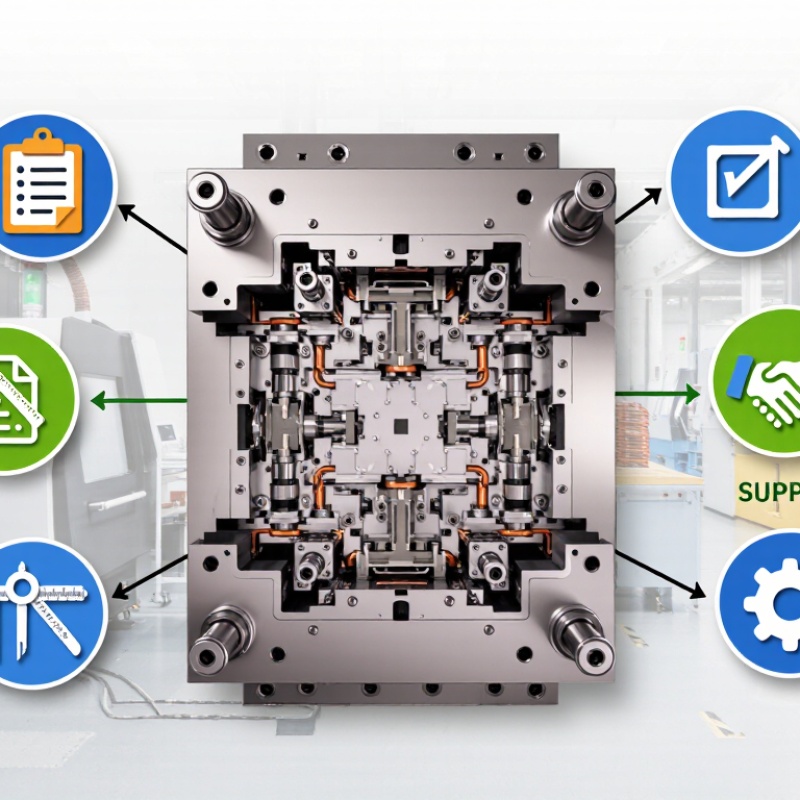
Define Your Die Casting Mold Requirements
Before contacting a die casting mold supplier, define what the part and production line actually require. Specify the alloy, part dimensions, wall thickness, target tolerances, and surface finish. Include expected annual volume and the planned casting machine’s clamping force and shot capacity. Share drawings in a clear, current revision. A common planning gap is overlooking side actions, deep ribs, or thin sections that complicate mold design.
Describe how the mold will be cooled, vented, and maintained. Ask suppliers to explain their approach to tool life, spare inserts, and wear-prone areas. Confirm how they will inspect the mold and sample castings, including which dimensions will be measured. These details help compare proposals beyond price and delivery time. Some requirements may change after trials; note that possibility early.
Tips: Send a 3D model and a dimensioned drawing. Flag critical dimensions clearly. Keep it practical. If a requirement is still uncertain, mark it as provisional and ask the supplier to identify its impact on tooling, cycle time, and cost. That conversation can reveal assumptions before steel is cut.
How to Choose the Right Die Casting Mold Supplier - Define Your Die Casting Mold Requirements
| Requirement Dimension | Information to Define | Example or Planning Guidance | Why It Matters When Selecting a Supplier |
|---|---|---|---|
| Casting alloy | Specify the alloy designation, applicable specification, and any required material properties. | For example, identify whether the part is aluminum, zinc, or magnesium alloy and state the required alloy standard. Do not use “aluminum” alone when a specific grade is needed. | Alloy choice affects metal temperature, die material and cooling design, filling behavior, and casting properties. |
| Part geometry and CAD data | Provide the latest 3D CAD model, 2D drawing, revision level, and any restricted or critical areas. | Common exchange formats include STEP and Parasolid; confirm the preferred native format with the supplier. Mark shut-off surfaces, parting line preferences, and areas that cannot be modified. | Complete, controlled design data helps the supplier assess manufacturability, tooling layout, and potential casting risks. |
| Part size and weight | State overall dimensions, projected area where available, and target casting weight. | Include units and identify whether the stated weight is for the casting alone or includes runners and overflows. | These inputs help determine machine capacity, die envelope, clamping-force needs, and handling requirements. |
| Dimensional tolerances | Separate general tolerances from critical dimensions and identify datum references. | Use the drawing to flag dimensions that affect fit, function, sealing, or assembly. Agree on the inspection method for each critical feature. | Tighter tolerances can require more careful tooling design, process control, machining, and inspection. |
| Annual volume and program life | Provide expected annual demand, peak demand, total program quantity, and forecast changes if known. | Distinguish prototype or launch quantities from steady-state production volumes. | Production volume influences cavity count, automation, tool-life expectations, maintenance planning, and total project cost. |
| Cavity and output needs | State the required parts per cycle and any preferences for single-cavity or multi-cavity tooling. | For a multi-cavity die, specify whether all cavities must produce interchangeable parts and whether balanced output is required. | Cavity layout affects die size, filling balance, cycle time, quality consistency, and the production capacity of the tool. |
| Surface finish and appearance | Identify cosmetic faces, texture or gloss requirements, allowable marks, and any coating or finishing process. | Specify the inspection area and viewing conditions for appearance-critical surfaces. A finish requirement should be stated on the drawing or agreed specification. | Appearance requirements can affect die surface preparation, vent placement, gate location, and post-processing choices. |
| Porosity and integrity | Define the functional requirements for pressure tightness, leak testing, structural loading, or internal integrity. | State the test method, pressure or load conditions, acceptance criteria, and whether machining or heat treatment is planned. | These requirements guide gating, venting, vacuum options, process controls, and the supplier’s proposed validation plan. |
| Machining and inserts | List required machining operations, datum strategy, threaded features, and any cast-in or installed inserts. | Identify which features are cast to size and which are machined. Include insert material, location, retention method, and inspection needs. | Early coordination helps avoid conflicts between the die design, casting layout, machining fixtures, and final part tolerances. |
| Tool life and maintenance | Set the expected shot-life target, planned maintenance approach, and requirements for spare or replaceable components. | Ask the supplier to state the assumptions behind any tool-life estimate, including alloy, production conditions, and maintenance intervals. | Tool life depends on operating conditions and upkeep; clear expectations make lifecycle cost and production planning more transparent. |
| Machine and facility constraints | Provide any required machine interface, maximum die dimensions, tie-bar spacing, shot-system constraints, and available utilities. | If the tool must run at a specific facility, share the machine specifications and confirm compatibility before design approval. | Physical and process compatibility helps prevent late changes to the die, cooling connections, or production plan. |
| Quality and documentation | Define inspection plans, material documentation, traceability, sample requirements, and approval milestones. | State which records are required, such as dimensional reports, material certificates, process documentation, or capability studies, where applicable. | Clear quality requirements allow the supplier to plan measurement methods, controls, and deliverables from the start. |
| Schedule and milestones | Specify target dates for design review, tool design approval, first samples, validation, and production launch. | Identify review and approval responsibilities on both sides, and allow time for sampling, corrections, and revalidation. | A realistic schedule helps the supplier plan design, tool manufacture, trials, and corrective actions without overlooking approval time. |
Planning note: The examples are general guidance, not universal acceptance limits. Confirm alloy standards, tolerances, testing criteria, tool-life expectations, and production assumptions in the part specification and supplier quotation.