How to Choose Water Treatment Equipment in 2026?

Choosing water treatment equipment in 2026 requires more than comparing prices, flow rates, or polished brochures. The right system must match the water source, contamination profile, operating pressure, energy supply, and maintenance capacity. A rural well may need iron removal and disinfection. A food-processing plant may require membranes, ultraviolet treatment, and strict monitoring. The same equipment cannot solve both problems.

Peter Gleick, hydrologist and co-founder of the Pacific Institute, has stated, “Access to water is a basic human right.” That principle should influence every purchasing decision. Reliable water treatment equipment protects public health, supports production, and reduces avoidable environmental pressure. Buyers should request laboratory testing before selecting filters, reverse osmosis units, softeners, dosing systems, or ultraviolet reactors. Guesswork becomes expensive quickly. It can also create unsafe water.

Look closely at the details. Can operators replace cartridges without specialized tools? Are spare parts available locally? Does the system record conductivity, turbidity, pressure, and disinfectant levels? A lower purchase price may hide high energy use or frequent membrane replacement. A sophisticated system may also fail when staff cannot maintain it properly. That part is easy to overlook.

No system is perfect.

This guide examines practical selection criteria for 2026, including efficiency, automation, compliance, lifecycle cost, and resilience. It also questions common buying habits. More technology does not always mean better treatment. Sometimes, a simpler design, supported by accurate testing and disciplined maintenance, delivers safer and more dependable results.
How to Choose Water Treatment Equipment in 2026?

Water Treatment Equipment: Purpose, Scope, and Core Technologies

How to Choose Water Treatment Equipment in 2026?

Choosing water treatment equipment in 2026 starts with purpose, not a catalog. A municipal plant may need pathogen control and stable flow. A food facility may prioritize hygiene, traceability, and low chemical residue. A small building often needs compact treatment, simple controls, and safe maintenance access. Begin with a water analysis. Test turbidity, hardness, metals, nutrients, microbes, and seasonal changes. Source water determines the treatment scope. Well water behaves differently after heavy rain. Experience matters here. A single sample can mislead.

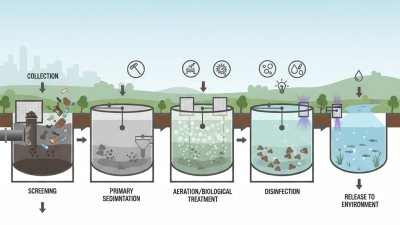
Core technologies solve different problems. Screens remove larger debris. Coagulation and sedimentation reduce suspended particles. Media filtration polishes the stream. Activated carbon can reduce taste, odor, and some organic compounds. Membrane systems address dissolved salts and fine contaminants, but they need careful pretreatment. Ultraviolet treatment can control microorganisms without adding residual chemicals. Disinfection choices depend on contact time, water quality, and operating conditions. No technology works alone in every setting.

A dependable selection also considers flow rate, recovery, energy use, sludge handling, calibration, and spare parts. Operators need clear alarms and readable records. Equipment should match local skills, approved materials, and applicable safety requirements. I have seen systems underperform because maintenance space was treated as an afterthought. That mistake is expensive. Performance claims should be checked against independent test data, site trials, and measured results. Some assumptions will fail. A pilot test may reveal scaling, pressure loss, or changing feed quality before full installation.

Assessing Water Quality, Treatment Goals, and Regulatory Requirements

How to Choose Water Treatment Equipment in 2026?

Equipment selection should begin with measured water quality, not a sales catalogue. Test raw and treated water for turbidity, hardness, pH, nitrate, arsenic, microbes, and emerging contaminants. Collect samples at different times, including after heavy rain. One sample can mislead. The WHO/UNICEF Joint Monitoring Programme reported that 2.2 billion people lacked safely managed drinking water in 2022, showing why reliable treatment decisions remain essential. Measure before buying.

Define the treatment goal precisely. Drinking water, industrial process water, and water reuse require different performance targets. Record daily flow, peak demand, pressure, temperature, and discharge limits. A membrane system may reduce dissolved salts, but it can create concentrated waste streams. Ultraviolet treatment can control microbes, yet it does not remove chemicals. The choice is rarely perfect. I would question any design based only on average flow.

Regulatory review must happen before equipment is specified. The WHO Guidelines for Drinking-water Quality provide risk-based health guidance, while local authorities set enforceable limits and monitoring duties. In 2024, the US Environmental Protection Agency established limits of 4.0 nanograms per litre for PFOA and PFOS in public drinking water. That level demands sensitive laboratory testing and validated treatment performance. Check permits, reporting schedules, operator requirements, and future limits. A cheaper system may become expensive when compliance testing, maintenance, energy, and replacement media are included.

How to Choose Water Treatment Equipment in 2026?

Assess water quality first, then match treatment goals with applicable regulatory requirements. The chart below shows selected WHO drinking-water guideline values for common chemical contaminants, expressed in mg/L.

Lower guideline values require more sensitive treatment and monitoring. Equipment selection should also consider pH, turbidity, microbial contamination, flow rate, seasonal variation, and the legal requirements of the installation location. Reference: World Health Organization, Guidelines for Drinking-water Quality.

Matching Treatment Equipment to Capacity, Contaminants, and Water Sources

How to Choose Water Treatment Equipment in 2026?

Choosing water treatment equipment starts with capacity, not catalog features. Estimate average flow, peak demand, operating hours, and future expansion. A small facility may need 10 cubic meters per hour today, but seasonal demand can rise sharply. Oversizing also creates problems. It can increase energy use, chemical waste, and maintenance costs.

Water quality determines the treatment path. Test turbidity, hardness, iron, manganese, salts, organic matter, and microbial indicators before selecting equipment. A surface-water source may require coagulation, filtration, and disinfection. A deep well may need iron removal, softening, or dissolved contaminant control. Do not rely on taste or appearance. Clear water can still contain serious contaminants.

Source conditions matter daily. Agricultural areas may experience changing nitrate levels after heavy rain. Coastal sites may face higher salinity during dry periods. Use laboratory results from different seasons when possible. Match equipment to the required output, not just the incoming water. This includes pumps, membranes, filters, tanks, dosing systems, and monitoring instruments.

I have seen projects fail because operators received complex equipment without practical training. Keep controls understandable. Plan for spare parts, cleaning, safe chemical storage, and routine testing. A pilot test can reveal pressure loss and fouling risks before installation. It costs time, but replacement costs more. No design is perfect. Local water conditions may change faster than the original specification.

How to Choose Water Treatment Equipment in 2026? - Matching Treatment Equipment to Capacity, Contaminants, and Water Sources

Water Source Typical Capacity Common Water-Quality Challenges Recommended Treatment Train Key Equipment Critical Design Checks Typical Applications
Municipal Potable Water 0.5–50 m³/day
Small commercial or residential systems
Residual disinfectant, taste and odor, suspended particles, hardness, and occasional lead or copper from plumbing. Sediment prefiltration → activated carbon → optional softening or reverse osmosis → final disinfection where required. Cartridge filter Carbon filter Water softener RO system Verify incoming pressure, chlorine level, hardness, daily peak demand, and local drinking-water requirements. Offices, restaurants, apartments, and light commercial facilities.
Municipal Potable Water 50–1,000 m³/day
Medium and large facilities
Variable turbidity, disinfectant residual, organic compounds, hardness, alkalinity, and seasonal taste or odor. Automatic multimedia filtration → activated carbon when needed → softening or membrane treatment → UV or controlled chemical disinfection. Multimedia filter Carbon vessel Ion exchange UV system Size for peak hourly flow; provide backwash water, drainage, chemical storage, and sampling points. Hotels, hospitals, schools, food-service facilities, and commercial buildings.
Well Water 1–500 m³/day
Boreholes and private wells
Iron, manganese, hydrogen sulfide, hardness, low pH, turbidity, arsenic, nitrate, and microbiological contamination. Aeration or oxidation → contact tank → iron and manganese filtration → softening or specific contaminant removal → disinfection. Aeration unit Oxidation filter Greensand-type media UV or chlorination Test raw water before selecting media. Iron, manganese, pH, alkalinity, sulfide, arsenic, and nitrate strongly affect design. Rural homes, farms, workshops, and decentralized facilities.
Surface Water 10–100,000+ m³/day
Rivers, lakes, and reservoirs
High and variable turbidity, algae, natural organic matter, pathogens, color, suspended solids, and seasonal contamination. Screening → coagulation and flocculation → clarification or dissolved air flotation → media filtration → disinfection. Bar screen Coagulation system Clarifier Rapid sand filter UV or chlorine Use jar testing and seasonal sampling. Plan for peak turbidity, algae events, sludge handling, and pathogen control. Public water supplies, irrigation schemes, and industrial intake systems.
Rainwater 0.5–100 m³/day
Dependent on roof area and rainfall
Roof debris, suspended solids, microorganisms, bird droppings, low alkalinity, and possible metals from roofing materials. First-flush diversion → storage tank → sediment filtration → activated carbon when needed → UV or chlorination. First-flush diverter Storage tank Sediment filter UV unit Separate potable and non-potable lines. Protect tanks from light and insects, and maintain a reliable disinfection barrier. Toilet flushing, irrigation, laundry, and treated potable use where regulations permit.
Brackish Water 5–10,000 m³/day
Total dissolved solids commonly above freshwater levels
Elevated salinity, hardness, silica, boron, suspended solids, and scaling or fouling potential. Pretreatment filtration → cartridge filtration → antiscalant or pH control → brackish-water reverse osmosis → remineralization and disinfection. Media filter Cartridge filter BWRO system Chemical dosing Confirm feed TDS, temperature, recovery target, silica, hardness, and concentrate-disposal requirements. Drinking water, process water, hotels, agriculture, and remote communities.
Seawater 10–100,000+ m³/day
Large desalination applications
High salinity, suspended solids, organic matter, marine organisms, biofouling, scaling, and corrosion risk. Intake screening → dissolved air flotation or ultrafiltration where required → cartridge filtration → seawater reverse osmosis → remineralization and disinfection. Intake screen UF pretreatment SWRO system Energy-recovery equipment Evaluate intake type, feedwater temperature, silt density index, recovery, energy consumption, and brine discharge permits. Municipal supply, islands, coastal industries, and emergency water systems.
Industrial Process Water 10–5,000 m³/day
Demand varies by process and operating schedule
Variable hardness, silica, suspended solids, dissolved metals, organics, oil, microbial growth, and high-purity requirements. Equalization → clarification or filtration → softening or demineralization → RO → electrodeionization or polishing where high purity is required. Equalization tank Clarifier RO system EDI or mixed-bed polisher Define conductivity, silica, hardness, TOC, particle count, and required product-water quality before equipment selection. Boilers, electronics, laboratories, pharmaceuticals, and manufacturing.
Cooling-Tower Makeup Water 10–10,000 m³/day
Based on evaporation, blowdown, and system cycles
Hardness, alkalinity, silica, suspended solids, corrosion risk, scaling, and biological growth. Pretreatment filtration → softening or RO where required → corrosion and scale control → biocide program → side-stream filtration. Multimedia filter Softener RO system Side-stream filter Calculate cycles of concentration, evaporation losses, blowdown rate, and allowable silica or conductivity. Commercial buildings, power facilities, data centers, and factories.
Wastewater Reuse 10–50,000+ m³/day
Depends on collection and reuse demand
Organic load, suspended solids, nutrients, pathogens, pharmaceuticals, salts, and variable wastewater composition. Screening → biological treatment → secondary clarification or membrane bioreactor → tertiary filtration → UV or advanced oxidation → RO when salinity reduction is needed. Fine screen Biological reactor MBR or tertiary filter UV/AOP Match treatment to the reuse class. Monitor BOD, COD, TSS, nitrogen, phosphorus, E. coli, turbidity, and conductivity. Irrigation, industrial reuse, cooling, toilet flushing, and indirect potable projects.
Microbiological Risk Any capacity
Requires risk-based design
Bacteria, viruses, protozoa, and biofilm formation; risk increases with untreated surface water and poorly protected storage. Particle removal followed by validated disinfection using UV, chlorination, ozone, or a suitable combination. UV reactor Chlorine dosing Ozone system Contact tank Disinfection performance depends on UV transmittance, turbidity, dose, contact time, temperature, and residual maintenance. Drinking water, reclaimed water, healthcare, hospitality, and food processing.
High Hardness and Scaling 0.5–10,000 m³/day
Sized according to peak flow and regeneration schedule
Calcium and magnesium hardness, alkalinity, silica, and deposits on heaters, membranes, boilers, and piping. Cation-exchange softening → optional RO or lime softening → pH and alkalinity adjustment where needed. Ion-exchange softener Lime softener RO system Antiscalant dosing Check hardness units, sodium limits, brine disposal, regeneration frequency, silica, and downstream pressure requirements. Boilers, laundries, hotels, food production, and membrane pretreatment.
Iron, Manganese, and Hydrogen Sulfide 1–2,000 m³/day
Requires laboratory-based media selection
Metallic taste, staining, black or yellow deposits, odor, turbidity, and fouling of downstream equipment. Oxidation by air, chlorine, ozone, or another approved oxidant → contact time → catalytic or media filtration → final disinfection. Air stripper Oxidation tank Catalytic filter Backwash system Measure dissolved versus particulate iron, manganese, sulfide, pH, alkalinity, and oxidant demand. Well-water systems, food facilities, laundries, and industrial utilities.
Nitrate or Arsenic Concern 1–5,000 m³/day
Requires source-specific treatment validation
Dissolved nitrate or arsenic that may not be removed by conventional sediment or carbon filtration. Nitrate-selective ion exchange or RO for nitrate; activated alumina, iron-based adsorption, coagulation, or RO for arsenic, depending on chemical form and pH. Selective ion exchange Adsorption vessel RO system Chemical pretreatment Test nitrate, arsenic species, pH, competing ions, and treated-water requirements. Plan for regenerant or spent-media disposal. Private wells, rural systems, food processing, and regulated drinking-water supplies.
Planning note: Capacity figures are typical planning ranges rather than fixed equipment limits. Final selection should be based on representative raw-water testing, peak and average demand, required treated-water quality, local regulations, operating conditions, wastewater or concentrate disposal, maintenance access, and total life-cycle cost.

Comparing Performance, Costs, Maintenance, and Energy Efficiency

Choosing water treatment equipment in 2026 starts with the water, not the catalogue. Test source variability across seasons, including turbidity, hardness, organics, microbes, and temperature. A system rated for 100 cubic meters daily may fail during a holiday peak. Ask for verified removal data under comparable conditions. Laboratory results matter, but pilot trials reveal pressure loss, noise, and actual recovery. Small details matter.

Compare performance using treated-water quality, recovery rate, throughput, and energy consumption per cubic meter. A low purchase price can hide pretreatment, replacement media, chemicals, and wastewater disposal. Build a five-year cost model with electricity tariffs and labor included. Request every assumption in writing. They are often optimistic. Energy savings may come from lower pump pressure, but aggressive recovery can increase scaling and cleaning frequency. No model predicts every maintenance event.

Maintenance should fit the site’s skills and schedule. Check access around membranes, sensor calibration intervals, spare-part availability, and alarm records. Operators need clear instructions, not a thick manual. Choose equipment that records flow, pressure, conductivity, and energy use. These readings help detect fouling before water quality drifts. Still, automation is not self-care. A neglected sensor can make modern equipment appear reliable while producing questionable data. Have an independent engineer review the design, test results, and service plan before installation.

Planning Installation, Monitoring, Upgrades, and Long-Term Operation

How to Choose Water Treatment Equipment in 2026?

Planning should begin with the water, not the equipment catalogue. Test seasonal changes in turbidity, hardness, pH, metals, microbes, and flow. Measure twice. A winter sample may differ sharply from a summer sample. Record average demand, peak demand, pressure, available space, drainage, and electrical capacity. Experienced engineers use these details to match treatment stages with actual risks. Oversizing can waste energy, chemicals, and service time. Undersizing can damage water quality and shorten equipment life.

Installation planning must include safe access, pipe routing, bypass lines, sample ports, and floor drainage. Leave room. Operators need space to replace media, inspect valves, and read instruments without awkward climbing. Monitoring should track pressure loss, flow, conductivity, disinfectant levels, and critical quality indicators. Set alarm limits before commissioning. Calibrate sensors on a written schedule, then verify readings with independent tests. A dashboard looks impressive, but poor data can still guide poor decisions.

Long-term operation depends on trained people and clear records. Log inspections, cleaning, calibration, chemical use, faults, and corrective actions. Choose components with available maintenance support and documented performance data. Plan upgrades around changing regulations, production volume, energy prices, and water quality. Modular equipment may reduce disruption later. The first plan is rarely perfect. Review it after three months of operation, when real maintenance patterns become visible. Sometimes a simpler system performs better because staff can understand and maintain it consistently.