How to Choose Waste Water Treatment Equipment?

Choosing wastewater treatment equipment is not a catalog exercise. It is a decision about what enters your plant, what must leave it, and how reliably the system can perform between inspections. A food-processing facility with greasy, variable flows faces different demands from a hotel handling mostly domestic wastewater. The details matter: peak flow, suspended solids, available floor space, operator skills, and discharge targets all shape the right choice.

Dr. Bruce Rittmann, an environmental biotechnology expert, has emphasized a useful principle: wastewater can be a resource, not merely a disposal problem. That perspective helps buyers look beyond a machine’s purchase price. Compare treatment performance, energy and chemical use, maintenance needs, spare-parts access, and the supplier’s commissioning support. Ask for operating data from sites with similar wastewater, not just a polished brochure. A compact system may fit neatly beside a pump room, yet struggle when influent quality swings sharply.

The best waste water treatment equipment is not always the largest or most automated option. It is the equipment matched to real operating conditions, with room for monitoring and future changes. Be cautious of guarantees that lack clear test conditions. And be honest about uncertainty: samples taken during one quiet week may not represent the wet season or a production surge. A careful selection begins with measured flows and representative wastewater analysis, then weighs lifecycle costs against the treatment goals. That work can feel slow. It is often cheaper than replacing the wrong unit.
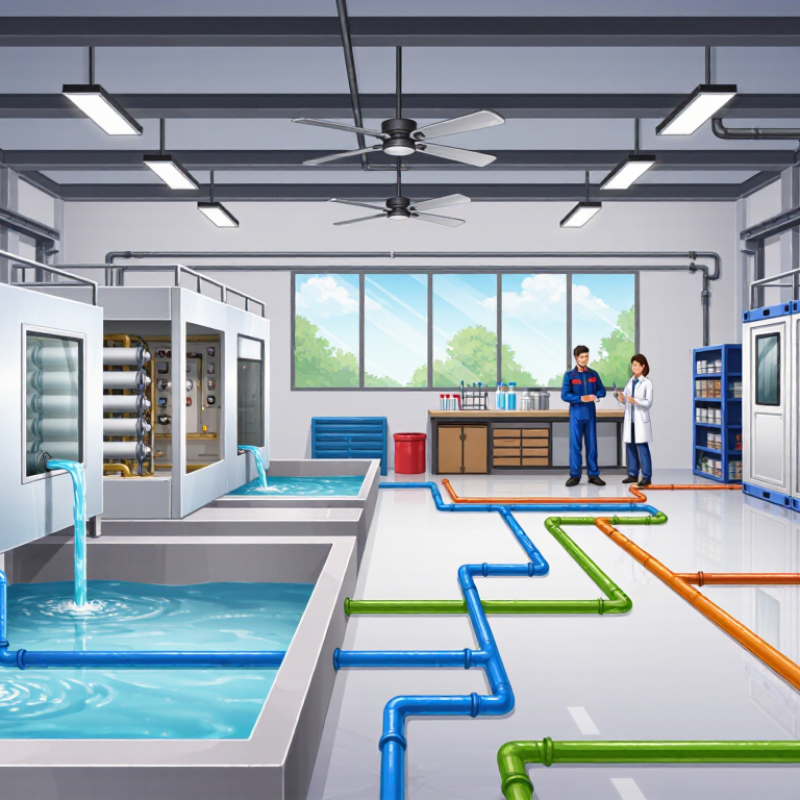
How to Choose Waste Water Treatment Equipment?

Define the Wastewater Treatment Goals and Required Output Quality

Choosing wastewater treatment equipment starts with a clear definition of the water you need to produce. Identify its intended use, discharge destination, and required limits for suspended solids, organic matter, nutrients, or other relevant pollutants. Requirements differ between reuse, sewer discharge, and surface-water discharge. Check applicable permit conditions and confirm them with a qualified wastewater professional.

Measure influent quality across different operating days, not just during one convenient sampling period. Flow and pollutant levels can shift after cleaning, rain, or production changes. Tips: Record daily flow, pH, and key pollutant levels. Keep sampling notes, including unusual operating conditions. These details help prevent equipment from being sized around an unrepresentative sample.

Translate the target output into measurable design criteria, then compare treatment processes against those criteria, available space, operator skills, and sludge handling needs. Ask suppliers for performance data under conditions similar to yours, and consider a pilot test when results are uncertain. Test before committing. A single target number can hide seasonal variation; that is easy to overlook, and I would revisit the assumptions before finalizing the design.

Analyze Wastewater Flow, Composition, and Operating Conditions

Choosing wastewater treatment equipment starts with a flow profile, not a catalog. Record average, peak-hour, and wet-weather flows across representative weeks. Note shift changes, cleaning cycles, and seasonal production; daily averages can hide damaging surges. A single grab sample can mislead. Collect composite samples and test pH, temperature, suspended solids, organic load, nutrients, oils, and metals where relevant.

The U.S. EPA’s Nutrient Control Design Manual (2010) lists typical raw municipal BOD5 concentrations of 110–350 mg/L. It gives typical total suspended solids concentrations of 100–350 mg/L. These ranges are useful references, not predictions for industrial wastewater. UN-Water’s 2024 Progress on Wastewater Treatment report found that 42% of domestic wastewater generated globally in 2022 was not safely treated. The figure shows why sound treatment planning matters, but it cannot size a particular facility.

Compare measured loads with operating conditions: footprint, staffing, power reliability, temperature swings, and discharge or reuse targets. Check whether grit, fibers, fats, or cleaning chemicals could foul pumps, membranes, or biological processes. Ask for performance data under both peak-flow and low-load conditions, not only the design average. Leave room for uncertainty. Sampling may miss unusual batches, so repeat tests after production changes and compare results with flow-meter logs before fixing tank volume or equipment capacity.

How to Choose Wastewater Treatment Equipment

Analyze wastewater flow, composition, and operating conditions

This illustrative 24-hour profile shows flow varying from 18 to 52 m³/h and influent COD from 220 to 430 mg/L. Flow peaks help guide pump, screen, and equalization-tank sizing; COD levels help assess organic loading and biological-treatment capacity. Actual design should use site-specific sampling and operating data.

Match Treatment Processes to the Wastewater Characteristics

How to Choose Waste Water Treatment Equipment?

Match Treatment Processes to the Wastewater Characteristics

Start with the wastewater, not the equipment catalogue. Measure flow, pH, suspended solids, organic load, oils, and nutrients across different shifts. A single grab sample can mislead; repeated, flow-aware sampling gives a more useful picture. Numbers matter. If flows swing sharply, an equalization tank can smooth peaks before downstream treatment. Screens and grit removal protect pumps when wipes, fibers, or sand are present.

Choose each process for a specific contaminant. Settling can remove heavier solids, while dissolved air flotation may suit wastewater with floating oils or fine particles. Biological treatment can reduce biodegradable organic matter, but changing pH or toxic compounds may disrupt the microbes. Nutrient removal needs its own process controls. Filtration can polish remaining particles, and disinfection may be needed when treated water is reused or discharged under applicable requirements. Treat these choices as a starting point, not a final design; pilot tests can reveal problems that lab samples miss.

Tips: Compare average and peak flow, check seasonal changes, and ask how equipment handles cleaning and sludge. Keep records. A simple process diagram often exposes gaps early.

Compare Equipment Capacity, Efficiency, and Compatibility

Choose treatment equipment against measured average and peak flows, not a single design-day estimate. Peak flow matters. UN-Water’s Progress on Wastewater Treatment: 2021 Update reports that 42% of household wastewater was not safely treated in 2020, about 113 billion cubic metres. That scale shows why capacity assumptions matter. Check seasonal inflows, solids, and pollutant loads, then confirm the unit can handle short surges without bypassing treatment.

Compare energy use per cubic metre alongside removal performance for the pollutants your site actually receives. The U.S. EPA’s 2013 Energy Efficiency in Water and Wastewater Facilities notes that water and wastewater utilities use roughly 3–4% of U.S. electricity. A unit with strong removal figures may still cost more to run if aeration or pumping demand is high. Ask for test conditions behind quoted efficiency; figures from different flow rates are not directly comparable.

Compatibility is practical, not just a connection on a drawing. Check footprint, pipe elevations, corrosion exposure, controls, operator skills, and how sludge will be handled. A compact system may fit the room but leave little access for cleaning screens or replacing a pump. No comparison is perfect. I would treat laboratory results cautiously until they match the site’s variable influent and operating schedule. Small details matter.

Assess Installation, Maintenance, Safety, and Lifecycle Costs

How to Choose Waste Water Treatment Equipment?

Assess Installation, Maintenance, Safety, and Lifecycle Costs

Start with the actual site, not a catalog. Measure doorways, ceiling clearance, pipe routes, and space for lifting equipment. Check whether foundations can handle the load and whether installation will interrupt treatment. A unit that fits on paper may block access to a valve. Small details matter. Ask operators to review the layout before purchase; they often spot maintenance problems that design drawings miss.

Maintenance needs to be practical. Check service intervals, local technician availability, spare-parts lead times, and how quickly sensors can be calibrated. For safety, inspect guarding, electrical isolation points, chemical connections, and access to confined or wet areas. These details affect daily work, not just commissioning. The U.S. EPA’s 2022 Clean Watersheds Needs Survey estimated $630 billion in wastewater infrastructure needs over 20 years. That figure covers broad infrastructure needs, not equipment alone, but it shows why purchase price is an incomplete measure.

Compare lifecycle costs over the equipment’s expected service life. Include energy, labor, consumables, sludge handling, repairs, and eventual replacement. Request assumptions behind supplier estimates and test them against your plant’s operating hours and wastewater conditions. Estimates can still miss the mark. Keep a contingency for unexpected wear, especially where grit, corrosion, or variable flows are present. A cheaper unit may cost more when routine access is awkward or parts take weeks to arrive.

How to Choose Waste Water Treatment Equipment? — Assess Installation, Maintenance, Safety, and Lifecycle Costs

Compare common wastewater treatment equipment by site requirements, routine upkeep, operational hazards, and the main factors that influence ownership costs.

Equipment Typical Function Installation Considerations Maintenance Needs Key Safety Considerations Lifecycle Cost Profile Often Suitable When
Coarse and fine screens Remove rags, plastics, and other debris to protect downstream pumps and process equipment. Allow access for screenings handling and disposal; check channel dimensions, approach flow, and bypass arrangements. Clean or inspect the screen and screenings conveyor; check rakes, seals, drives, and differential-level instruments. Guard moving parts and isolate equipment before clearing a blockage. Screenings may present biological and sharps hazards. Usually modest energy demand; costs are influenced by automation, screenings washing and compaction, disposal, and labor. Nearly all plants, with screen opening and capacity selected for the influent and downstream equipment.
Grit removal equipment Separate sand, gravel, and other dense inorganic particles that can cause abrasion or accumulate in tanks. Requires suitable channel or tank hydraulics, access for grit removal, and space for washing or dewatering equipment where used. Inspect pumps, air systems or mechanical drives, grit classifiers, and wear surfaces; remove accumulated grit as required. Manage confined-space, fall, and lifting hazards around tanks; use lockout procedures for mechanical equipment. Energy and upkeep depend on the separation method and grit handling arrangement; downstream wear reduction can offset operating costs. Facilities with grit-bearing influent or downstream equipment vulnerable to abrasion and sediment buildup.
Primary clarifier Settle suspended solids and skim floatables before biological treatment. Requires substantial tank area, foundations, sludge withdrawal piping, and access for bridges and scrapers. Inspect scrapers, drives, skimmers, sludge pumps, and corrosion protection; periodically assess tank structures. Provide safe access and fall protection; tanks may be confined spaces, and sludge systems can contain hazardous gases. Generally low direct energy use, but civil construction, sludge handling, cleaning, and structural upkeep contribute to cost. Medium and large plants where land is available and primary solids removal benefits the treatment process.
Activated-sludge aeration system Supply oxygen and mixing for biological removal of biodegradable pollutants; typically used with a secondary clarifier. Check tank volume, blower-room ventilation, pipework, electrical capacity, noise control, and access for diffuser or mixer replacement. Monitor dissolved oxygen and airflow; service blowers, motors, valves, instruments, and diffusers. Clean or replace diffusers when fouled. Address electrical and rotating-equipment hazards, noise, hot surfaces, and fall risks around basins. Often energy-intensive because aeration is a major plant electricity user; controls, blower efficiency, oxygen demand, and maintenance strongly affect cost. Plants needing flexible biological treatment with operators able to manage process controls and sludge conditions.
Membrane bioreactor (MBR) Combines biological treatment with membrane filtration to produce low-solids effluent. Requires membrane tanks, pumps, controls, chemical storage, and room for membrane removal; verify power and cleaning-system capacity. Monitor membrane performance and fouling; perform scheduled cleaning, inspect permeate and air-scour systems, and replace modules as needed. Use safe procedures for cleaning chemicals, electrical equipment, lifting heavy modules, and access to tanks. Typically higher energy and membrane-related costs than conventional clarification; footprint savings and effluent quality may benefit some projects. Sites with limited space or stringent effluent solids requirements, where skilled operation and membrane upkeep are feasible.
Secondary clarifier Separate biological flocs from treated water and return or waste activated sludge. Needs adequate tank area, hydraulic design, sludge-return piping, and access to scraper mechanisms. Inspect drives, scrapers, weirs, scum equipment, and sludge pumps; monitor settling and sludge blanket levels. Apply fall protection and confined-space controls; isolate drives and pumps before maintenance. Low-to-moderate direct energy use; costs depend on tank construction, sludge pumping, cleaning, and the reliability of upstream biological treatment. Conventional activated-sludge plants that use gravity settling instead of membrane separation.
UV disinfection system Inactivate microorganisms using ultraviolet light without adding a persistent disinfectant residual. Requires a suitable channel or reactor, reliable power, access to lamps and sleeves, and effluent quality compatible with UV transmission. Clean quartz sleeves, check lamps and sensors, and replace lamps according to output and manufacturer guidance. Prevent direct eye and skin exposure to UV; isolate electrical equipment before servicing and handle lamps carefully. Electricity, lamp replacement, sleeve cleaning, and pretreatment needs are key cost factors; no routine disinfectant feed is required. Plants requiring disinfection where UV transmission is adequate and a chlorine residual is not needed.
Chemical dosing system Feeds coagulants, pH-adjustment agents, disinfectants, or other treatment chemicals at controlled rates. Plan for bunded storage, chemical-compatible tanks and pipework, dosing points, ventilation, and delivery access. Calibrate dosing pumps and instruments; inspect lines, valves, injection points, and storage tanks for leaks or deposits. Match protective equipment and spill response to each chemical; segregate incompatible chemicals and provide appropriate eyewash or safety showers. Chemical consumption is often the main ongoing cost; pump power is usually smaller, while storage, delivery, and residuals management also matter. Processes needing pH control, coagulation, chemical phosphorus removal, or chemical disinfection.
Sludge dewatering equipment Reduce water content in sludge to lower the volume requiring transport, further processing, or disposal. Allow space for feed pumps, polymer preparation, cake conveyors, drainage, washwater, and vehicle access for cake removal. Inspect belts, cloths, bearings, centrifuge components where applicable, polymer systems, and washwater nozzles. Control rotating machinery, pinch points, slippery floors, polymer spills, and potential exposure to biological aerosols. Energy, polymer, washwater, labor, replacement parts, and final cake disposal affect cost; savings depend on achieved solids content and local disposal fees. Plants seeking to reduce sludge transport or disposal volume and able to manage the resulting cake.

Comparison note: Lifecycle cost profiles are qualitative, not quotations or universal rankings. Actual costs depend on capacity, influent characteristics, discharge requirements, local construction and energy prices, staffing, equipment life, and residuals disposal. Compare alternatives over the same service period and include capital, energy, chemicals, labor, replacement parts, downtime, and end-of-life costs.