
China Top 10 DC Power Circuit Breaker Manufacturers
China’s Dc Power Circuit Breaker industry is entering a more demanding phase. Solar farms, battery storage systems, electric vehicles, rail networks, and data centers all require dependable direct-current protection. Unlike AC systems, DC arcs do not naturally cross zero. Interrupting them requires careful contact design, magnetic blowout, insulation, and tested breaking capacity.
The International Energy Agency reported in Renewables 2024 that global renewable capacity additions reached almost 510 gigawatts in 2023. Solar power represented most of that growth. This expansion increases demand for reliable DC switching equipment. Grand View Research also identifies electrification, renewable integration, and industrial automation as major drivers of the global circuit breaker market.
Fatih Birol, Executive Director of the IEA, described this transition clearly: “The world is entering the Age of Electricity.” His observation explains why equipment selection now affects more than simple circuit protection. It influences uptime, fire risk, maintenance costs, and system efficiency.
This guide examines China’s top 10 DC Power Circuit Breaker manufacturers. It considers product ratings, interrupting performance, certification coverage, customization experience, production capability, and after-sales support. Names alone are not enough. A manufacturer may offer attractive prices, yet provide limited evidence for high-voltage DC interruption. That weakness matters.
The ranking is not absolute. Application conditions differ widely. A breaker designed for a 48-volt battery cabinet may be unsuitable for a 1,500-volt photovoltaic system. Buyers should verify test reports, operating curves, temperature limits, pole configuration, and compliance with relevant standards, including IEC 60947-2. Small details decide field performance. This overview aims to support practical, evidence-based supplier evaluation.
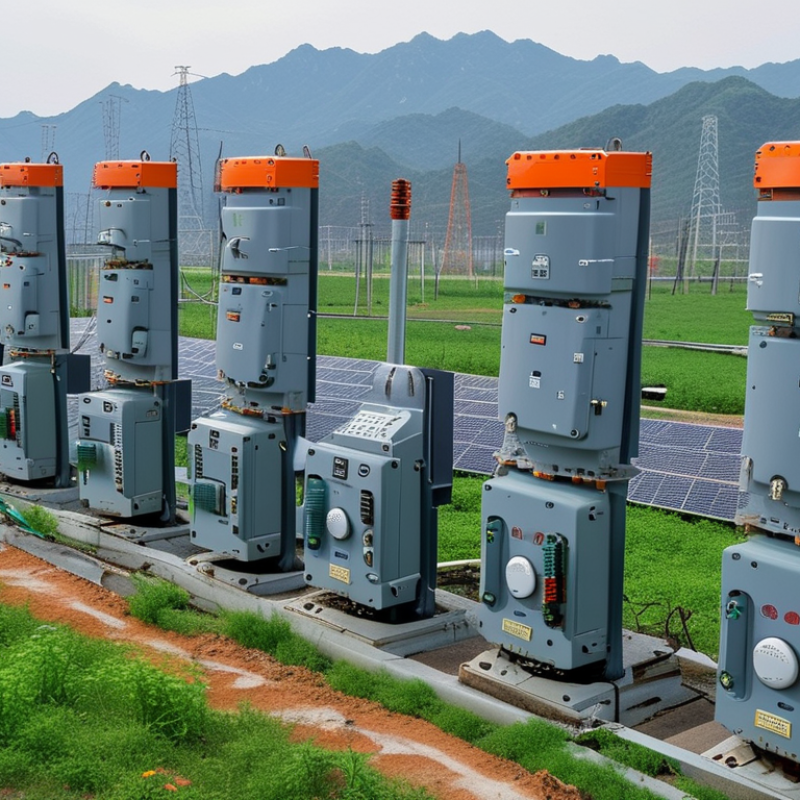
What Are DC Power Circuit Breakers and How Do They Work?
DC power circuit breakers protect direct-current systems from overloads, short circuits, and dangerous fault currents. Unlike alternating current, DC does not naturally cross zero during each cycle. An electric arc can therefore continue after the contacts separate. Arc control is critical.
When a fault occurs, the breaker’s sensing mechanism detects excessive current and releases the contacts. The thermal element responds to sustained overloads, while the magnetic element reacts quickly to severe short circuits. Inside the breaker, arc chutes, magnetic blowout fields, or sealed interruption chambers stretch and cool the arc. The breaker then isolates the damaged circuit.
Correct selection depends on voltage, continuous current, interrupting capacity, polarity, and installation conditions. A 500-volt DC breaker cannot automatically replace a lower-rated device. Cable length also matters because resistance changes fault behavior. In field inspections, loose terminals and incorrect polarity remain practical concerns. Small errors can create heat.
A reliable design checks the source, wiring, load, and expected fault current together. Battery banks, solar arrays, rail systems, and industrial controls may require different interruption methods. Coordination between upstream and downstream breakers helps isolate only the affected section. Still, coordination is not guaranteed by appearance alone. A neat panel can hide a poor calculation. This is where specifications deserve a second look.
Key Selection Criteria for China’s DC Circuit Breaker Manufacturers
Selecting China’s DC circuit breaker manufacturers requires more than comparing prices and catalog ratings. Start with the operating conditions: system voltage, continuous current, short-circuit current, ambient temperature, and installation altitude.
A breaker rated for 1,000 V DC may still fail if its breaking capacity is too low. Check polarity requirements, arc-extinguishing design, insulation distance, and suitability for battery, solar, rail, or industrial systems.
Technical evidence matters. Ask for test reports, routine inspection records, and compliance with relevant standards such as IEC 60947-2.
Confirm whether the reported breaking capacity applies to DC, not only AC. Review temperature-rise data at the actual current.
In factory evaluations, inspect contact materials, assembly control, calibration equipment, and traceability from raw materials to finished units. Request samples for repeated switching tests. A clean datasheet is not proof.
Reliable manufacturers explain limitations clearly. They should provide drawings, response times, replacement guidance, and practical support after delivery.
Evaluate their experience with similar voltage levels and load profiles, rather than relying on export volume alone. Communication quality is another useful signal. Slow answers may reveal weak engineering coordination.
Cost reduction can also hide thinner contacts or limited testing. I have seen projects focus too heavily on unit price and later absorb wiring changes, delays, and replacement costs.
The selection process is rarely perfect. Recheck assumptions before signing.
Profiles of the Top 10 Chinese DC Circuit Breaker Manufacturers
China Top 10 DC Power Circuit Breaker Manufacturers
Profiles of the Top 10 Chinese DC Circuit Breaker Manufacturers
The leading ten Chinese DC circuit breaker manufacturers serve different application needs. Some focus on miniature breakers for control cabinets and communication equipment. Others produce molded-case breakers for battery storage, rail systems, and industrial distribution. Several specialize in photovoltaic protection, offering high-voltage DC designs with stronger arc-control structures. A few manufacturers build marine-grade or customized breakers for demanding environments. Their product ranges often include thermal-magnetic, hydraulic-magnetic, and electronic protection technologies.
Technical capability matters more than factory size. Experienced manufacturers usually provide rated current data, short-circuit capacity, temperature-rise results, and endurance testing. Reliable suppliers also maintain traceable production records and clear inspection procedures. Buyers should review current certificates, laboratory reports, enclosure ratings, and installation instructions before selection. Field experience shows that a breaker may perform well in a test room but struggle in a hot, dusty cabinet. That detail is easy to miss.
Tips: Match the breaker to the system voltage, load current, polarity, and expected fault level. Confirm whether the device supports reverse current or battery discharge conditions. Ask for samples and test them under realistic cable lengths and ambient temperatures. Do not rely on appearance alone. A compact housing is not proof of better protection. Even experienced engineers can overlook derating, especially in tightly packed enclosures.
Product Comparison: Ratings, Technologies, Certifications, and Applications
China Top 10 DC Power Circuit Breaker Manufacturers
Product Comparison: Ratings, Technologies, Certifications, and Applications
A practical comparison starts with rated voltage, continuous current, and interruption capacity. These figures must match the actual DC system, not only the catalog headline. A 1,000 VDC breaker may perform differently under battery fault conditions. Check short-circuit ratings carefully. They matter most.
Modern designs may use magnetic-hydraulic trips, electronic protection, or polarized arc chambers. Magnetic-hydraulic mechanisms suit stable industrial loads. Electronic units offer adjustable overload settings and communication functions. Arc-control technology affects contact wear, cabinet size, and switching speed. For photovoltaic strings, battery storage, rail systems, and data centers, application conditions change the best choice.
Certification evidence should include current test reports, factory quality records, and traceable model numbers. Common references include IEC 60947-2, IEC 60947-1, and relevant regional requirements. Certification scope matters. A certificate for one frame size cannot automatically cover every variant. Installation teams should also verify temperature derating, altitude limits, cable size, and auxiliary contact reliability.
Look beyond the brochure.
In technical evaluations, suppliers should explain test conditions, maintenance intervals, and replacement procedures. A lower-priced breaker may require larger enclosures or more frequent inspection. That difference is easy to miss. A ranking can guide research, but it cannot replace fault calculations and site testing. My own comparison would remain cautious where documentation is incomplete or test data lacks independent traceability.
China DC Power Circuit Breaker Market: Common Application Voltage Classes
This market-neutral chart shows common nominal DC system-voltage classes used when selecting DC circuit breakers. The values represent application voltage levels rather than manufacturer-specific product ratings.
Lower-voltage systems commonly use thermal-magnetic or electronic-trip protection, while high-voltage photovoltaic, storage, and traction systems may require magnetic arc control, polarized or non-polarized interruption, and higher DC breaking capacity. Applicable requirements are commonly evaluated against IEC 60947-2, IEC 60947-3, IEC 60077-2, UL 489, and relevant local conformity requirements such as CCC, CE, or UL, depending on the product and destination market.
How to Choose the Right Chinese Manufacturer for Your Project
China Top 10 DC Power Circuit Breaker Manufacturers
Choosing the right Chinese manufacturer requires more than comparing prices. Verify experience with DC circuit breakers, rated voltage, current, breaking capacity, poles, and trip curves. Ask for test reports, quality certifications, and product traceability. A reliable supplier should explain thermal-magnetic or electronic protection clearly. Avoid vague promises. Request samples and inspect terminals, labels, enclosure quality, and manuals. Small labeling errors can delay installation.
Evaluate engineering support and production consistency before signing a contract. Compare drawings, material tolerances, copper contacts, arc-control design, and operating-temperature data. Ask how incoming materials are inspected and how finished units are tested. Factory audits, either onsite or remote, can reveal process gaps. Review lead times, spare parts, warranty terms, and technical support. Require written acceptance criteria and change-control procedures. A low quotation may conceal retesting costs. No checklist is perfect.
Tips: Send a one-page project specification. Include system voltage, fault current, ambient temperature, installation method, and certification needs. Ask for three recent application references, then verify them independently. Start with a pilot batch before placing a large order. Confirm that factory test conditions match your actual installation. Keep technical communication in writing. If a supplier avoids discussing failure data, pause the evaluation. Even experienced buyers can overlook one detail.
China Top 10 DC Power Circuit Breaker Manufacturers - How to Choose the Right Chinese Manufacturer for Your Project
Anonymized technical benchmark for evaluating Chinese DC circuit-breaker suppliers; verify all specifications with current datasheets and test reports.
| Evaluation Profile | Typical DC Product Scope | Common Rated Voltage Range | Common Current Range | Typical DC Breaking-Capacity Range | Applicable Standards to Confirm | Key Evidence to Request | Best Project Fit |
|---|---|---|---|---|---|---|---|
| Profile 01 | Miniature DC circuit breakers for control, signal and auxiliary circuits | Up to 250 V DC per pole; higher voltage configurations require series-pole verification | 1–63 A | Typically 4.5–10 kA, depending on model and test configuration | IEC 60947-2; IEC 60898-2 where applicable; relevant Chinese GB standards | DC polarity diagram, trip curve, short-circuit test report and terminal temperature-rise data | Battery cabinets, telecom systems and industrial control panels |
| Profile 02 | Molded-case DC circuit breakers for distribution feeders | 250–750 V DC, subject to pole arrangement and insulation rating | 63–800 A | Typically 15–50 kA at the specified DC voltage | IEC 60947-2; GB/T 14048.2; applicable EMC and environmental requirements | Rated ultimate and service short-circuit capacity, derating curves and coordination tables | PV combiner systems, energy storage and industrial DC distribution |
| Profile 03 | High-current molded-case breakers with adjustable electronic trip units | Up to 1,000 V DC for approved configurations | 400–1,600 A | Approximately 25–65 kA, subject to voltage, poles and test circuit | IEC 60947-2; GB/T 14048.2; project-specific EMC requirements | Protection settings, communication protocol, selectivity study and thermal derating data | Large battery energy-storage systems and DC bus protection |
| Profile 04 | Air circuit breakers adapted for high-current DC applications | Up to 1,000 V DC, only with a dedicated DC rating | 630–6,300 A | Commonly 50–100 kA in low-voltage test systems; confirm exact DC test conditions | IEC 60947-2; GB/T 14048.2; installation and pollution-degree requirements | Type-test certificate, arc-extinction method, mechanical endurance and maintenance schedule | High-power rectifiers, data-center DC systems and industrial substations |
| Profile 05 | Photovoltaic DC breakers and switch-disconnector combinations | Up to 1,500 V DC for suitably rated PV applications | 16–630 A | Typically 5–25 kA at the declared PV voltage | IEC 60947-2; IEC 60947-3; IEC 60947-1; GB/T equivalents where applicable | PV-specific test report, polarity requirements, utilization category and IP rating | Rooftop, utility-scale and commercial photovoltaic installations |
| Profile 06 | Battery energy-storage DC breakers with auxiliary and shunt-trip options | 500–1,500 V DC, depending on battery architecture | 100–2,000 A | Commonly 20–65 kA; verify prospective battery short-circuit current | IEC 60947-2; GB/T 14048.2; applicable energy-storage and fire-safety requirements | BMS interface, pre-charge coordination, emergency-trip logic and temperature derating | Containerized and cabinet-based battery storage projects |
| Profile 07 | Railway and transit DC feeder breakers | 750 V DC, 1,500 V DC or project-defined traction voltage | 630–4,000 A | Often 25–100 kA, subject to traction-network fault calculations | IEC 60947-2; IEC 60077 series where applicable; railway project specifications | High-speed interruption data, reverse-current behavior and transit-system references | Metro, light rail, railway substations and traction power systems |
| Profile 08 | Marine and offshore DC circuit breakers | 24–1,000 V DC, with marine approvals required for classified installations | 10–1,600 A | Typically 10–50 kA, depending on vessel battery and distribution design | IEC 60947-2; IEC 60092 where applicable; classification-society rules | Marine certificate, vibration and salt-mist test results, enclosure and corrosion data | Ships, offshore platforms and marine battery systems |
| Profile 09 | Fast DC breakers for battery, traction and semiconductor-protection applications | Up to 1,500 V DC, depending on the interruption technology | 100–4,000 A | Approximately 20–100 kA, with interruption time being application-critical | IEC 60947-2 and relevant product-specific technical requirements | Total clearing time, let-through energy, waveform records and repeated-fault performance | Fast-fault-clearing systems and high-value power-electronics installations |
| Profile 10 | Customized DC breakers for OEM panels and export projects | Project-specific; commonly 24–1,500 V DC | Application-specific, commonly 10–3,200 A | Must be established from the actual system fault-current calculation | IEC 60947-2; GB/T 14048.2; destination-market certification requirements | Design drawings, samples, factory acceptance test, quality plan and spare-parts commitment | OEM equipment, export control panels and engineered low-volume projects |