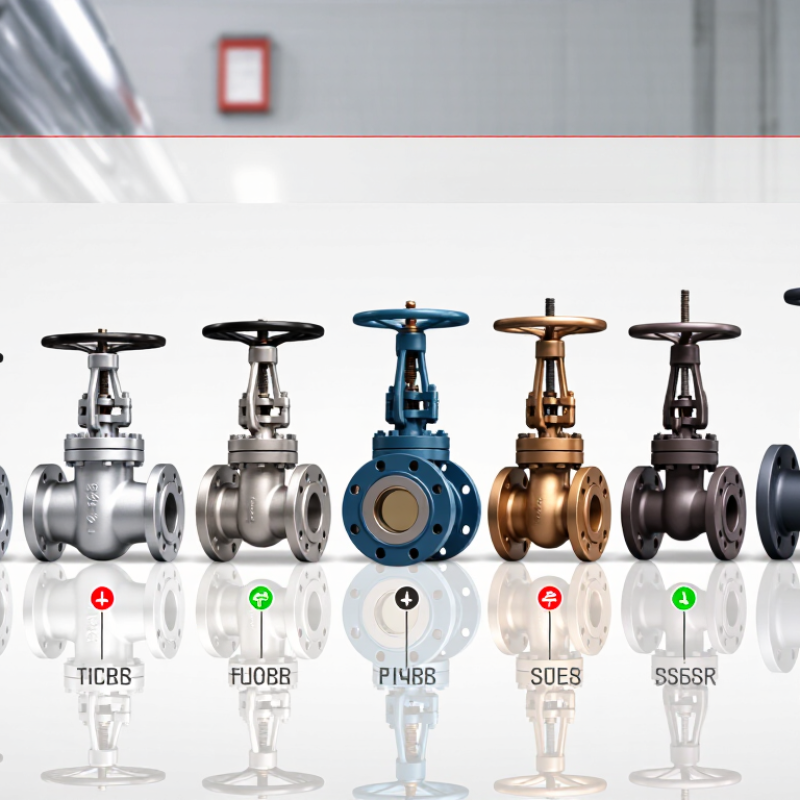
Top 10 Gate Valve Types for Global Buyers?
Choosing a gate valve is not simply a matter of matching pipe diameter. Global buyers must examine pressure, temperature, fluid behavior, installation space, and maintenance access.
This guide presents ten important gate valve types used across water treatment, oil and gas, power generation, mining, and industrial processing. It compares wedge gate valves, slab gate valves, expanding gate valves, parallel slide valves, knife gate valves, resilient-seated designs, and related configurations. Each type behaves differently under real operating conditions. A valve that performs well in clean water may struggle with abrasive slurry or high-temperature steam.
Philip L. Skousen, author of Valve Handbook, emphasizes a practical principle: “The valve must be selected for the service, not merely for the line size.” That advice remains highly relevant. Buyers should review pressure ratings, body materials, seat construction, stem design, actuation, and applicable standards such as API 600, ASME B16.34, and ISO 5208.
Small details matter.
A heavy handwheel, for example, may signal difficult operation or poor sizing. A rising stem also needs visible clearance above the pipeline. These points are easy to miss in a specification sheet.
This overview aims to support informed purchasing, not replace project engineering. No catalog is perfect. Even experienced teams must question assumptions, verify supplier documentation, and consider lifecycle cost. The strongest choice is usually the gate valve that fits the application, maintenance plan, and operating risks—not merely the lowest-priced option.
Gate Valve Basics: Design, Function, and Key Terminology
Top 10 Gate Valve Types for Global Buyers?
Gate valves control flow by lifting a wedge or gate from the fluid path. They are designed mainly for full-open or full-closed service, not throttling. Common types include wedge, parallel slide, knife, resilient-seated, and expanding gate valves. Key parts include the body, bonnet, stem, gate, seats, and handwheel. A rising stem shows valve movement clearly. A non-rising stem saves space but hides position. OS&Y means “outside screw and yoke.” Full-bore designs reduce pressure loss.
Selection should match pressure, temperature, medium, and maintenance conditions. API 600 and ASME B16.34 define important design and pressure requirements for industrial valves. ISO 5208 addresses pressure testing and leakage rates.
The IEA’s World Energy Investment 2024 estimated global energy investment above 3 trillion dollars, including about 2 trillion dollars in clean energy. Water infrastructure also remains urgent. The WHO and UNICEF Joint Monitoring Programme reported that 2.2 billion people lacked safely managed drinking water in 2022. These projects need reliable isolation equipment.
Tips: Check the pressure class, end connection, seat material, and stem arrangement before ordering. Confirm whether the valve must handle abrasive solids, corrosive fluid, or clean water. I have seen specifications copied without checking actual temperature. That mistake can shorten service life. A gate valve may look suitable, yet its seat design could fail after repeated cycling. Verify testing documents, dimensions, and installation clearance. Small details matter.
The Top 10 Gate Valve Types and Their Distinctive Features
Top 10 Gate Valve Types for Global Buyers
The Top 10 Gate Valve Types and Their Distinctive Features
Gate valves isolate flow by lifting a gate from the passage. Solid wedge valves provide simple, rugged shutoff for water and general pipelines. Flexible wedge valves tolerate small body distortions and reduce seating problems under temperature changes. Split wedge valves use two segments, helping maintain contact when thermal expansion affects the system. Parallel slide valves use parallel discs and suit high-temperature service where reliable movement matters.
Slab gate valves contain a single flat plate and are common in long-distance pipelines. Expanding gate valves press their segments against both seats, creating firm mechanical sealing. Knife gate valves have a sharp-edged plate for slurries, fibers, and thick media. They are compact, but their exposed edges require careful inspection. Rising stem valves show stem movement clearly, making open-position checks easier. Non-rising stem valves save installation space, although hidden stem threads need protection and lubrication.
Cryogenic gate valves use extended bonnets and special materials for very low temperatures. Their design protects the stem packing from extreme cold. Selection should consider pressure class, temperature, fluid cleanliness, seat material, and operating frequency. A valve that works well on clean water may fail early with abrasive slurry. That mistake is common. Site access also matters. Manual handwheels may suit small lines, while actuators improve control on large or remote valves. Always verify test records, applicable standards, and installation orientation before approval.
Top 10 Gate Valve Types and Their Distinctive Features
Comparative view of typical application fit based on common gate valve design characteristics.
How to Compare Materials, Pressure Ratings, and End Connections
Choosing among the top ten gate valve types starts with the service, not a catalog photograph. Wedge, parallel-slide, slab, knife, expanding, and cryogenic designs behave differently under temperature changes and solids. Rising-stem valves show position clearly. Non-rising stems suit cramped rooms but hide travel. Resilient seats provide tight shutoff in clean water systems, while metal seats handle heat, pressure, and abrasive particles better. That distinction matters.
Match the body and trim materials to the fluid. Carbon steel is practical for many industrial lines. Stainless steel resists chloride-related corrosion, but its grade still needs verification. Ductile iron can reduce cost in moderate-pressure water service. Check stem, seat, and bonnet materials separately. They may not match. Pressure class is not a simple strength label. Review the pressure-temperature chart, test requirements, and corrosion allowance under recognized standards such as ASME B16.34 or API 600. A valve rated for high pressure at room temperature may require derating at 250°C.
End connections affect installation and future maintenance. Flanged ends allow removal with common tools and suit larger pipelines. Butt-weld ends reduce external leakage points but demand qualified welding and more downtime. Threaded ends work on smaller, lower-risk lines, although vibration can create trouble. Socket-weld connections offer compact joints but need careful heat control. Field checks often reveal an overlooked issue: the pipeline rating, gasket, bolts, and valve rating must agree. My comparison sheet is never perfect; actual fluid data and operating cycles can change the preferred choice.
Choosing Gate Valves for Different Industries and Operating Conditions
Choosing a gate valve starts with process conditions, not catalog popularity. In water treatment, resilient-seated wedge valves handle clean water and moderate pressure. Metal-seated wedge valves suit hotter, dirtier service, where particles may damage softer seats. Parallel-slide valves can perform reliably in steam lines, but thermal movement still needs review. Knife gate valves fit slurry, pulp, and dry solids. They are poor choices for precise throttling.
Rising-stem gate valves provide visible position feedback for operators. Non-rising-stem designs save space in underground chambers. Bolted-bonnet valves support practical maintenance in general industrial service. Pressure-sealed bonnet valves suit high-pressure, high-temperature systems, but installation quality remains critical. Expandable gate valves can isolate pipelines with uneven or contaminated sealing surfaces. Cryogenic gate valves require extended bonnets and materials that remain tough at very low temperatures.
Selection should also consider corrosion, pressure drop, actuation force, drainage, and inspection access. A valve suitable for clean water may fail early in abrasive slurry. That lesson is easy to overlook. Field teams should verify the fluid temperature at the valve, not only the design temperature. They should also check whether the valve will remain fully open or closed for most operations. Small mistakes in stem clearance or actuator sizing can delay maintenance and increase operating risk.
Global Buyer Checklist: Standards, Quality, and Supplier Evaluation
Top 10 Gate Valve Types for Global Buyers
Global buyers need more than a catalog list when selecting gate valves. The right choice depends on pressure, temperature, media, installation space, and maintenance access. Common options include wedge, parallel slide, resilient-seated, metal-seated, knife, slab, expanding, cryogenic, bellows-sealed, and rising-stem gate valves. For abrasive slurry, a knife gate valve may suit the service better. Cryogenic lines require carefully tested materials and extended bonnets. Type alone is not enough.
A reliable checklist should identify applicable standards, such as API 600, API 6D, ASME B16.34, ISO 5208, or EN 12266. Confirm the required standard with the project engineer. Ask for material certificates, pressure-test records, coating details, and dimensional drawings. Verify traceability from raw material to final inspection. Review pressure-temperature ratings at the actual operating conditions. Do not assume one standard fits every service.
Supplier evaluation should include factory capability, inspection equipment, machining control, and after-sales support. Request sample quality documents before placing a large order. Check whether the supplier can provide replacement seats, stems, packing, and technical guidance. A fast quotation proves little. Communication matters. I have seen complete-looking documents hide unclear test boundaries or missing material grades. One overlooked detail can delay installation. Buyers should challenge vague answers, even when the price appears attractive.
| No. | Gate Valve Type | Typical Design and Operation | Common Applications | Typical Size and Pressure Range | Key Standards | Critical Quality Checks | Supplier Evaluation Checklist |
|---|---|---|---|---|---|---|---|
| 1 | Resilient-Seated Wedge Gate Valve | A ductile or cast iron wedge is fully encapsulated with elastomer. The valve normally uses a non-rising stem and provides a tight shutoff for clean fluids. | Potable water, irrigation, municipal waterworks, fire-protection networks, and low-solids utility service. | Commonly DN 50–DN 1200; often supplied in PN 10, PN 16, Class 125, or Class 150 configurations. Limits depend on the body, seat, and elastomer. | EN 1074-2 EN 1171 AWWA C509/C515 ISO 5752 | Seat encapsulation, coating thickness, stem corrosion resistance, body-wall measurement, shell test, seat test, and operating torque. | Confirm drinking-water approvals where required, elastomer type and certification, coating process, sample test reports, dimensional drawings, and spare-part availability. |
| 2 | Metal-Seated Wedge Gate Valve | A solid or flexible wedge with metallic seating surfaces is used for higher temperature, abrasive, or demanding industrial service. | Steam, power generation, process piping, hydrocarbons, high-temperature water, and general industrial isolation. | Commonly DN 50–DN 1000; typically PN 16–PN 420 or ASME Class 150–2500, subject to material and temperature rating. | API 600 API 6D ASME B16.34 ISO 10434 | Seat and wedge material compatibility, wedge alignment, body and bonnet casting quality, pressure-boundary NDE, fugitive-emission performance, and low/high-pressure closure tests. | Review pressure-temperature charts, material certificates, heat-treatment records, NDE procedures, repair history, test calibration, and traceability from raw material to final valve. |
| 3 | Parallel Slide Gate Valve | Uses two parallel discs, often assisted by a spring or spreader. It is intended primarily for fully open or fully closed service and reduces wedging forces. | Steam systems, boiler feedwater, power plants, gas service, and process lines requiring low operating torque. | Commonly DN 50–DN 600; frequently available in ASME Class 150–1500, with pressure-temperature limits based on materials. | API 600 ASME B16.34 API 598 ISO 5208 | Disc parallelism, spring or spreader function, seat-face finish, stem straightness, internal bypass or pressure-relief arrangement, and closure leakage. | Ask for a sectional drawing, minimum differential-pressure requirements, cycle testing where applicable, packing details, and evidence of application-specific testing. |
| 4 | Slab Gate Valve | A single flat gate moves through the flow path. The full-bore design minimizes pressure drop and is commonly selected for pipeline isolation. | Oil and gas transmission, gathering systems, terminals, pipeline stations, and hydrocarbon process facilities. | Commonly DN 50–DN 1200 and above; often ASME Class 150–1500, with higher classes available for specialized pipeline service. | API 6D ISO 14313 ASME B16.34 API 598 | Full-bore dimensions, seat sealing in both flow directions, cavity-relief function, stem retention, anti-static continuity, fire-safe design, and fugitive-emission control. | Verify pipeline qualification, bidirectional sealing requirements, piggability, fire-safe and anti-static certificates, coating system, actuator interface, and maintenance procedures. |
| 5 | Expanding Gate Valve | A mechanically expanding gate creates positive contact with both seats, providing reliable double-block-and-bleed capability when correctly specified. | Pipeline isolation, wellhead and Christmas-tree systems, high-pressure oil and gas, and applications requiring cavity isolation. | Commonly DN 50–DN 600; frequently specified in ASME Class 600–2500 and API wellhead pressure ratings. | API 6D ISO 14313 API 6A ASME B16.34 | Gate expansion mechanism, seat contact, body cavity pressure behavior, bidirectional sealing, high-pressure gas testing, anti-static continuity, and fire-safe performance. | Confirm DBB requirements, qualification pressure, sour-service materials where applicable, NACE compliance, cycle testing, seal replacement method, and detailed failure-mode data. |
| 6 | Knife Gate Valve | A thin, sharp-edged gate cuts through slurry or suspended solids. Designs may be unidirectional or bidirectional and may use resilient or metal seats. | Mining slurry, wastewater, pulp and paper, ash handling, bulk solids, and low-pressure abrasive service. | Commonly DN 50–DN 1600; pressure ratings vary widely, often from approximately PN 6 to PN 25 or equivalent low-pressure classes. | MSS SP-81 EN 1171 ISO 5208 API 598 | Gate thickness and hardness, wear allowance, seat retention, packing adjustment, body alignment, slurry-cycle testing, and leakage direction. | Provide media solids concentration, particle size, temperature, pressure, flow direction, and cycle frequency. Check abrasion data, actuator sizing, and replacement-seat design. |
| 7 | Cryogenic Extended-Bonnet Gate Valve | An extended bonnet keeps the stem packing away from extremely cold media and supports vapor-space management. Materials and seals are selected for cryogenic temperatures. | Liquefied natural gas, liquid oxygen, liquid nitrogen, liquid argon, and other cryogenic storage or transfer systems. | Commonly DN 15–DN 600; often supplied in ASME Class 150–600, with temperature limits depending on material and service. | BS 6364 ISO 28921-1 ASME B16.34 API 598 | Material impact properties, bonnet length, stem extension, seat and packing compatibility, cryogenic leakage, vacuum-jacket interfaces where required, and thermal-cycle performance. | Request cryogenic test records, material impact-test results, oxygen-cleaning evidence when applicable, allowable heat leak, packing specification, and approved installation orientation. |
| 8 | Bellows-Sealed Gate Valve | A welded metal bellows isolates the process fluid from the stem packing, reducing fugitive emissions and protecting sensitive media from external contamination. | Toxic, hazardous, volatile, ultra-clean, vacuum, high-temperature, and emission-controlled process services. | Commonly DN 15–DN 300; pressure and temperature ratings vary according to bellows material, body construction, and number of convolution cycles. | EN 1984 DIN 3352 ASME B16.34 ISO 15848-1 | Bellows weld integrity, cycle-life testing, stem alignment, pressure testing, external leakage, packing backup arrangement, and bellows fatigue calculation. | Evaluate design life in cycles, bellows material, weld qualification, helium or equivalent leak testing, emission class, spare-bellows availability, and documented maintenance limits. |
| 9 | Forged Steel Gate Valve | A compact forged body is commonly used in small-bore, high-pressure service. Bolted-bonnet, union-bonnet, and welded-bonnet constructions are available. | Refineries, chemical plants, steam lines, instrumentation headers, high-pressure utility systems, and compact process piping. | Commonly DN 15–DN 100; frequently ASME Class 800–4500, with ratings controlled by the applicable material and design standard. | API 602 ASME B16.34 API 598 ISO 15761 | Forging quality, grain-flow and heat-treatment records, wall thickness, trim hardness, stem-to-gate connection, bonnet joint integrity, and shell and seat tests. | Confirm end connections, bore configuration, pressure class, material grade, NACE requirements where applicable, PMI records, dimensional compliance, and spare trim availability. |
| 10 | Through-Conduit Gate Valve | The gate and seats create a smooth, continuous bore with minimal obstruction. The design is suitable for pipeline systems requiring low pressure drop and pig passage. | Transmission pipelines, gas processing, storage terminals, metering stations, and systems using cleaning or inspection pigs. | Commonly DN 50–DN 1200 and above; often ASME Class 150–1500, with larger sizes and higher ratings available by design. | API 6D ISO 14313 ASME B16.34 API 598 | Full-bore continuity, pig clearance, seat pocket geometry, double-block-and-bleed function, cavity relief, stem sealing, fire-safe performance, and gas testing. | Check bore dimensions, pigging requirements, line-size compatibility, bidirectional isolation, actuator thrust or torque, coating and corrosion protection, and site-service references without relying on brand claims. |