Top CNC Machinery Parts Suppliers for Global Buyers?
Choosing reliable CNC machinery parts suppliers is a practical decision with costly consequences. A delayed shaft, inaccurate gear, or poorly finished bracket can interrupt an entire production line. For global buyers, the challenge extends beyond price. Material traceability, machining tolerance, inspection records, packaging, and communication all deserve careful attention.
This guide examines leading suppliers of Machinery Cnc Parts for international purchasing teams. It considers their manufacturing experience, equipment capacity, quality systems, and ability to support different industries. Buyers may need aluminum housings for automation equipment, hardened steel components for heavy machinery, or small precision parts with tight dimensional requirements. Clear drawings matter. So do realistic lead times.
A strong supplier should provide measurable evidence, not broad promises. Useful evidence may include sample inspection reports, calibrated measuring equipment, ISO certifications, and documented process controls. However, certification alone does not guarantee consistent production. A supplier may meet formal requirements yet struggle with urgent revisions or difficult materials. That weakness is easy to overlook.
No supplier is perfect. Even experienced manufacturers can face tooling wear, shipping delays, or communication gaps. The better question is how openly they identify risks and correct problems. Buyers should compare technical replies, prototype quality, production samples, and after-sales support before signing a long-term agreement. This approach encourages informed decisions and reduces avoidable surprises across borders. Practical judgment still matters most.
What Are CNC Machinery Parts and Why Do Global Buyers Need Them?
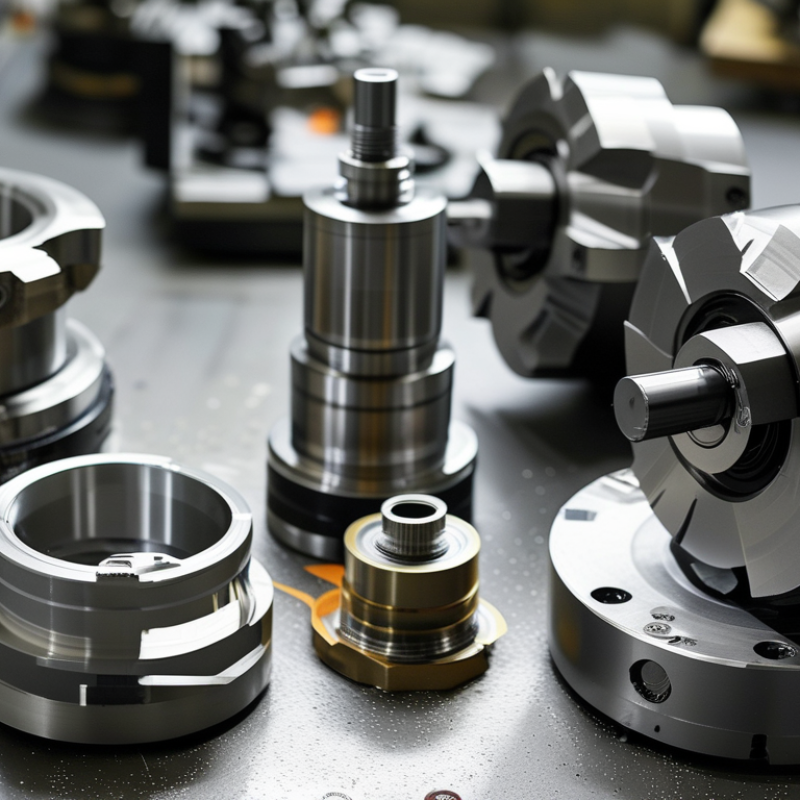
CNC machinery parts are the replaceable and supporting components used in computer-controlled machine tools. They include cutting tools, tool holders, collets, spindle assemblies, linear guides, ball screws, bearings, sensors, and coolant fittings. Each part affects accuracy, speed, safety, or service life. A worn ball screw may create visible dimensional errors. A damaged collet can leave uneven tool marks on an aluminum workpiece.
Global buyers need these parts because production lines rarely operate under identical conditions. A workshop in a humid coastal area may require corrosion-resistant materials. A high-volume factory may prioritize heat control and repeatable tolerances. During sourcing, experienced buyers check drawings, material grades, interface dimensions, runout limits, and inspection records. They also confirm packaging quality, because a precise component can arrive damaged after careless shipping. Supplier reliability matters as much as price. Clear traceability, practical technical support, and consistent lead times reduce costly downtime.
One detail is often missed. “Compatible” does not always mean interchangeable. Buyers may match a spindle part by appearance, then discover a different taper or connector. That mistake can delay installation for days. Asking for samples, dimensional reports, and replacement guidance is safer. Specifications may still be incomplete, so buyers should question their own assumptions before ordering. Good sourcing means proving that the part fits the machine, process, and working environment.
Which Types of CNC Machinery Parts Are Commonly Supplied Worldwide?
Global CNC machinery parts suppliers commonly provide spindle assemblies, servo motors, drives, encoders, ball screws, linear guides, bearings, tool holders, collets, coolant pumps, and control boards. These parts support milling, turning, grinding, and multi-axis machining systems. Replacement demand is especially strong for wear-sensitive items, including guideways, seals, bearings, and cutting-tool interfaces.
The International Federation of Robotics reported 541,302 industrial robots installed worldwide in 2023. That figure reflects broader factory automation growth, where CNC equipment often depends on compatible motors, sensors, controllers, and safety components. Industry reports from Grand View Research also identify automotive, aerospace, and general manufacturing as major CNC machine users. Their production needs explain the steady global supply of high-precision transmission and control parts.
Experienced buyers usually check dimensional tolerances, material certificates, heat-treatment records, and controller compatibility. A part may look identical but fail after several hours of vibration. That mistake is expensive. Suppliers therefore need traceable inspection records and stable packaging for long-distance transport. ISO 9001 certification can support reliability, but it does not replace actual inspection evidence. This point is often overlooked. Pricing data alone cannot show whether a spindle bearing, encoder, or ball screw will survive real shop-floor conditions.
What Standards and Services Should International Buyers Expect?
International buyers should expect CNC machinery parts suppliers to prove quality with records, not confident promises. A reliable supplier can explain material grades, heat treatment, dimensional tolerances, and surface finishes. Each batch should have traceable material certificates and inspection reports. Coordinate measuring machines, calibrated gauges, and documented sampling plans add useful evidence. Standards such as ISO 9001, ISO 2768, and relevant safety requirements may support production, but certification alone cannot guarantee good parts.
Clear technical communication matters across languages and time zones. Suppliers should review drawings, geometric tolerances, thread specifications, and critical surfaces before quoting. They should identify unclear dimensions instead of guessing. That small habit prevents expensive rework. Buyers should also expect prototype support, first-article inspection, process control, and corrective-action reports when defects appear. Photos of packed parts, measured dimensions, and production-stage updates make remote purchasing less uncertain.
Export service is part of the product. Confirm packaging, labeling, customs documents, insurance options, and agreed Incoterms before production begins. Corrosion protection and shock-resistant crates may be necessary for heavy steel components. Response times should be realistic, not artificially impressive. No supplier handles every material or tolerance equally well. Even experienced buyers sometimes overlook inspection access or replacement procedures. A dependable partner will admit those limits, suggest practical alternatives, and keep written records of every approved change.
Top CNC Machinery Parts Suppliers for Global Buyers: Standards to Expect
This chart highlights selected international standards relevant to CNC machinery parts manufacturing, including quality management, environmental management, occupational safety, dimensional tolerancing, geometrical tolerancing, and surface texture. The values represent the publication year of the referenced edition, not a supplier ranking. International buyers should also request inspection reports, material certificates, traceability records, and technical documentation aligned with the applicable standards.
How to Select the Right CNC Machinery Parts Supplier for Your Needs
Choosing the right CNC machinery parts supplier starts with your machine, not a sales catalog. Record the part number, material, dimensions, tolerance, and operating environment. A supplier should confirm these details before quoting. They should also explain compatible alloys, surface treatments, and expected service life.
Ask for inspection reports, material certificates, and clear dimensional drawings. Reliable suppliers usually maintain traceability from raw material to final shipment. Their quality process may include coordinate measuring machines, hardness testing, and sample approval.
Request a prototype when the part affects spindle accuracy or machine safety. A low price can hide poor fit, unstable tolerances, or repeated downtime.
Communication matters during real production problems. I once accepted a supplier’s promise without checking packaging standards. Several edges arrived scratched, and the replacement schedule became unclear. That mistake changed my evaluation process. I now ask about protective wrapping, labeling, delivery tracking, and corrective actions. Response speed is useful, but technical accuracy matters more. A supplier who admits a limitation may be more dependable than one who promises everything. Still, I sometimes overvalue complete documentation and underestimate practical assembly feedback. Test the part under controlled conditions, record the result, and compare actual performance with the supplier’s claims.