2026 Best CNC Precision Machining Companies Worldwide
Choosing a reliable CNC Precision Machining company requires more than comparing websites or counting listed machines. Manufacturers must prove how they turn digital designs into accurate, repeatable components. This guide examines leading companies worldwide for the 2026 market.
The evaluation considers machining capabilities, dimensional tolerances, material experience, inspection systems, and production capacity. It also reviews certifications, engineering support, prototype handling, and communication during complex projects. A capable supplier should explain its process clearly, from fixture planning to final measurement. Details matter. A clean inspection report can reveal more than polished marketing language.
The selected companies serve demanding industries, including aerospace, medical equipment, automotive, robotics, and industrial automation. Their strengths may differ. One supplier may excel at five-axis work, while another delivers better support for high-volume production. Buyers should compare those differences against their own drawings, materials, delivery schedules, and quality requirements.
This is not a permanent ranking. Capabilities change with equipment, leadership, workloads, and regional conditions. Some information may also become outdated sooner than expected. That limitation deserves attention. A strong reputation does not guarantee every project will succeed. Readers should request current certificates, sample inspection records, realistic quotations, and clear quality agreements before making a final decision.
Experience remains important, but it should be supported by measurable evidence. The companies discussed here are considered through that practical lens, helping engineers, procurement teams, and business owners identify partners with dependable technical foundations. Accuracy is the goal. Perfect certainty is not.
Definition and Scope of CNC Precision Machining
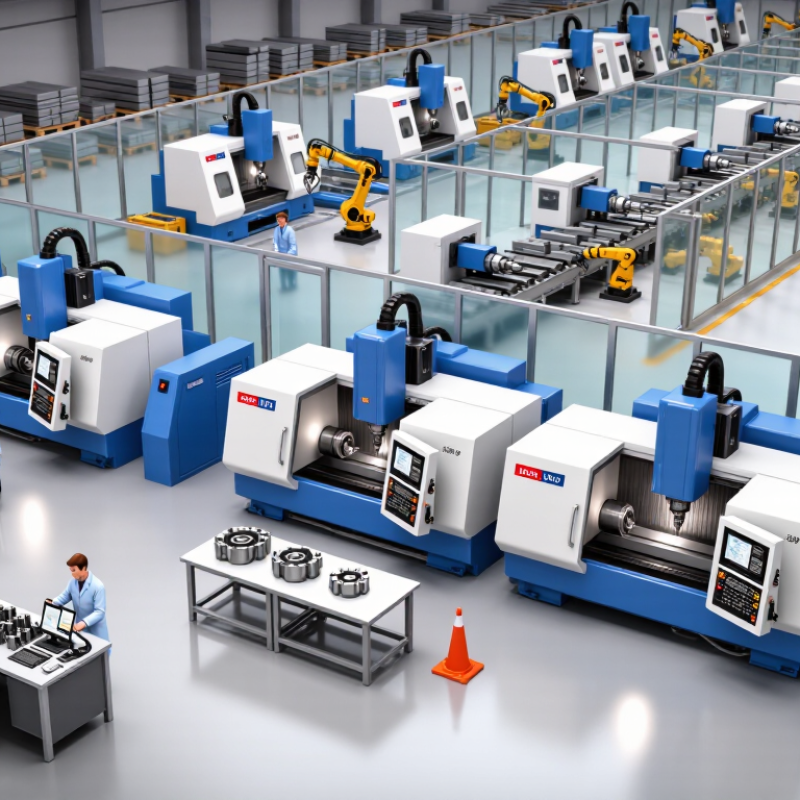
CNC precision machining is the computer-controlled production of metal, polymer, or composite parts. It uses programmed movements to remove material with mills, lathes, grinders, and multi-axis equipment. The scope includes aerospace structures, medical components, energy hardware, automotive parts, and high-accuracy tooling. It covers programming, workholding, cutting, inspection, and process documentation.
Precision is not simply a small number on a drawing. A machined hole may require a controlled diameter, surface finish, position, and repeatability after temperature changes. ISO 230-2 defines methods for testing positioning accuracy in machine tools. ASME Y14.5 supports clear geometric dimensioning and tolerancing practices. In real workshops, operators also check tool wear, coolant condition, vibration, and burr formation. Tolerance is the proof.
Industry demand supports this wider definition. Grand View Research estimated the global CNC machine market at about USD 88 billion in 2023, with continued growth projected through 2030. The International Federation of Robotics reported more than 541,000 industrial robots installed worldwide in 2023, showing how machining increasingly connects with automated handling and inspection. However, market forecasts differ by research method and product category. A machine’s advertised accuracy also does not guarantee every finished part. Material distortion, fixture pressure, and inspection quality can change the result. This is where practical experience matters: a stable process must be verified on the shop floor, not only described in software.
Leading CNC Precision Machining Companies Worldwide in 2026
Leading CNC Precision Machining Companies Worldwide in 2026 are judged by more than machine counts. They combine tight tolerances, stable processes, digital inspection, and dependable delivery across multiple regions. On a shop floor, real capability appears in small details: calibrated CMM reports, controlled coolant, clean datum surfaces, and tool-wear records.
Grand View Research estimated the global CNC machine market at about US$83.99 billion in 2023, with strong growth projected through 2030. Fortune Business Insights reported a different market baseline, reflecting varied research definitions and coverage. The difference matters. Market size alone cannot identify reliable machining partners.
Practical evaluation should include ISO 9001 quality systems, sector-specific process controls, five-axis capacity, and documented first-article inspection. Strong suppliers also explain material certifications, surface-finish results, and corrective actions without hiding uncertainty. Fast quoting helps. Repeatable production matters more.
On-time delivery is measurable.
Companies serving aerospace, medical, energy, and industrial equipment markets increasingly use automated probing and real-time production data. These tools reduce setup errors, but they do not replace experienced machinists. That point is sometimes overlooked. A perfect dashboard cannot rescue poor fixturing or unclear drawings.
In 2026, leading global providers will likely be those that balance engineering judgment with connected manufacturing. Rankings remain imperfect because customer requirements differ. A prototype specialist may outperform a high-volume supplier on difficult aluminum parts. Buyers should review recent inspection samples, audit records, capacity evidence, and communication practices before making a final decision.
2026 Best CNC Precision Machining Companies Worldwide
Material density benchmarks commonly used when planning CNC precision machining projects worldwide.
Density is shown in grams per cubic centimeter at approximately room temperature. These engineering reference values help estimate material weight, cutting behavior, tooling requirements, and shipping costs; actual alloy grades may vary.
Technologies and Services Offered by Top CNC Machining Firms
2026 Best CNC Precision Machining Companies Worldwide
Leading CNC machining firms now sell more than cutting capacity. They combine five-axis milling, Swiss turning, wire EDM, and robotic loading. These technologies support complex parts with fewer setups and tighter repeatability.
A 2024 report from the International Federation of Robotics recorded 4.28 million industrial robots operating worldwide in 2023. This growth explains why advanced machining suppliers increasingly connect CNC equipment with inspection systems and automated material handling. High-performing firms also use CAD/CAM simulation, digital twins, and in-process probing. These tools can reduce collision risks and reveal tool wear before a batch fails. Their services often include rapid prototyping, design-for-manufacturing reviews, heat treatment coordination, surface finishing, and full dimensional inspection. Coordinate measuring machines generate useful evidence, not just attractive paperwork.
Still, technology alone does not guarantee precision. A rushed setup can damage an expensive alloy within minutes. Some suppliers promise unrealistic tolerances, and buyers should question them. Grand View Research’s 2024 market analysis projects strong growth for the global CNC machine sector through 2030, but growth may encourage uneven quality.
Tips: Request sample inspection reports, material certificates, and process capability data. Ask how operators manage thermal drift during long runs. Confirm tolerance requirements before requesting prices. A practical supplier should explain limitations clearly, even when that answer risks losing the order.
Industry Applications and Selection Considerations for Buyers
2026 Best CNC Precision Machining Companies Worldwide
CNC precision machining supports aerospace brackets, medical housings, automotive shafts, and robotic joints. Each application demands different evidence. Aerospace buyers may prioritize lightweight alloys, documented traceability, and stable five-axis production. Medical components require disciplined contamination controls and repeatable inspection. Automotive programs often need fast cycle times, consistent batches, and competitive pricing.
The 2024 World Robotics report recorded 541,302 new industrial robots installed worldwide in 2023. This growth increases demand for accurate gears, mounts, and end-effectors. Buyers should ask whether a supplier controls tolerances across long production runs. A 0.01 mm claim means little without measurement records. Request sample inspection reports, calibration dates, material certificates, and process capability data. Ask for evidence.
Supplier selection should also examine equipment condition, programming expertise, and corrective-action speed. A modern machine cannot fix poor process planning. The ISO Survey of Management System Standard Certifications 2023 reported more than 1.26 million ISO 9001 certificates globally, but certification alone does not guarantee precision. Visit the inspection area when possible. Check whether operators use calibrated CMMs, surface testers, and clear revision control. Pricing deserves scrutiny too. An unusually low quotation may exclude finishing, inspection, packaging, or tooling.
I would not rank suppliers by machine count alone. That approach can fail. Review completed parts with similar materials, tolerances, and production volumes. Confirm capacity during peak periods, communication across time zones, and realistic lead times. A transparent supplier should explain limitations, not hide them.