Top Screw Pumps for Global Buyers in 2026 What to Know
Screw pumps are critical components in various industries. They offer efficient fluid transfer solutions, especially in complex applications. As we look towards 2026, understanding the top screw pumps available globally is essential for buyers.
These pumps excel in handling viscous fluids, providing reliable performance. Factors such as efficiency, durability, and maintenance must be considered when selecting a screw pump. Buyers need insights into the latest technologies and market trends shaping this sector.
However, not all screw pumps meet the same standards. Some may struggle with specific fluid types or operating conditions. Evaluating each option is crucial to making informed purchasing decisions. By analyzing available options, buyers can secure the best screw pumps for their needs in the coming years. The future demands careful consideration and strategic planning in this ever-evolving industry.
Overview of Screw Pumps and Their Applications in Various Industries
Screw pumps are critical in various industries, notably in oil and gas, food processing, and wastewater management. Their design allows for consistent and efficient fluid transfer, making them highly sought after. With their ability to handle both viscous and non-viscous fluids, screw pumps cater to diverse operational needs. According to industry reports, the global screw pump market size is projected to reach $2 billion by 2026, indicating a robust demand for these systems.
In the oil and gas sector, screw pumps are often used for transporting crude oil and refined products. Their reliability minimizes downtime, which is crucial for maintaining supply chains. Moreover, their self-priming capabilities make them ideal for challenging environments. Data shows that screw pumps can achieve up to 90% volumetric efficiency, showcasing their effectiveness. In the food processing industry, they manage thick substances like sauces and syrups, ensuring smooth production flows. However, issues such as wear and maintenance are concerns that operators must address regularly.
For wastewater treatment, screw pumps play a vital role in moving sludge and airs. They provide a solution for dealing with solids, thanks to their robust design. Yet, technology gaps in monitoring and control can lead to inefficiencies. With continuous advancements, adopting smarter pump solutions could further enhance operational efficiency and reliability. The evolution of screw pumps exemplifies their significance across multiple sectors, driving innovative solutions in fluid management.
Top Screw Pumps for Global Buyers in 2026
| Pump Type |
Flow Rate (m³/h) |
Pressure (bar) |
Temperature Range (°C) |
Application |
| Twin Screw Pump |
10 - 300 |
0 - 25 |
-20 to 100 |
Oil & Gas, Food & Beverage |
| Single Screw Pump |
5 - 150 |
0 - 40 |
0 to 80 |
Chemical Processing, Water Treatment |
| Progressing Cavity Pump |
20 - 600 |
0 - 15 |
-10 to 120 |
Food & Beverage, Wastewater Management |
| Hygienic Screw Pump |
15 - 200 |
0 - 20 |
0 to 90 |
Pharmaceutical, Cosmetics |
Key Factors Driving Demand for Screw Pumps Globally in 2026
The demand for screw pumps is witnessing a significant rise globally. One primary factor driving this trend is the growing need for efficient fluid transfer solutions. Industries such as oil and gas, food and beverage, and wastewater treatment increasingly depend on these pumps. Their ability to handle viscous and abrasive fluids makes them ideal for various applications.
Another important factor is technological advancement. Innovations in screw pump design improve their efficiency and reduce maintenance costs. Buyers are attracted to pumps that offer better energy consumption and longevity. As markets expand, the pressure to provide reliable equipment grows. This can lead to some confusion about the best choices available.
Sustainability concerns are also becoming critical. Companies aim to reduce their environmental footprint. This drives interest in pumps made with eco-friendly materials. However, the transition can be challenging. Not all users understand the long-term benefits of these investments. As the industry evolves, ensuring that buyers are informed remains crucial.
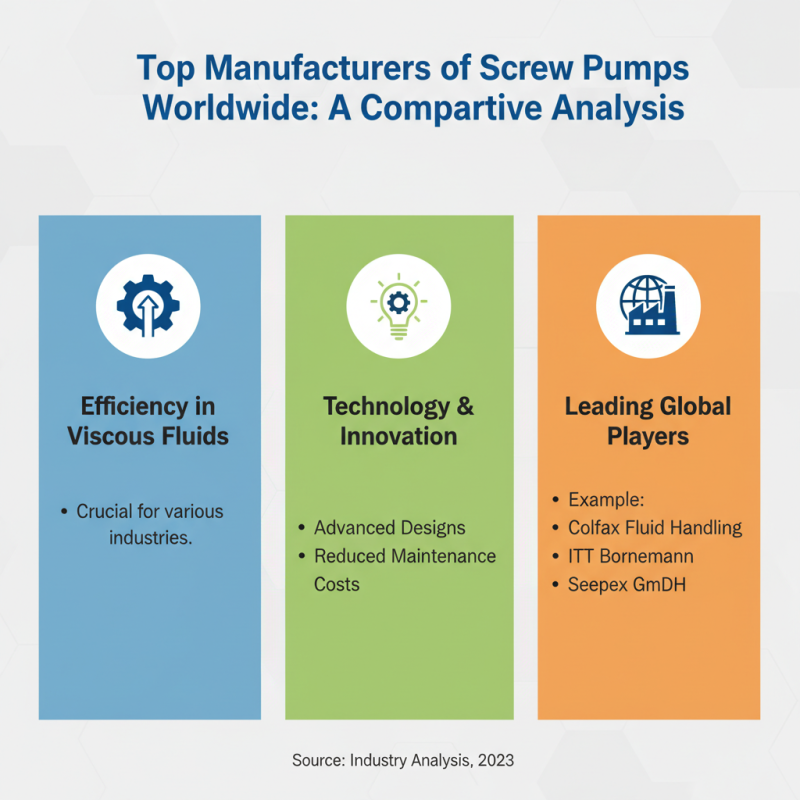
Top Manufacturers of Screw Pumps Worldwide: A Comparative Analysis
Screw pumps play a crucial role in various industries worldwide. Their efficiency in handling viscous fluids sets them apart. When considering top manufacturers, it is important to evaluate their technology and innovation. Key players often focus on improving design and reducing maintenance costs.
Manufacturers utilize diverse materials for screw pumps. This choice impacts durability and performance. Some use stainless steel, while others opt for high-strength composites. The right material can enhance pump life, but it may also lead to higher production costs. Understanding this trade-off is essential for buyers.
Market leaders typically prioritize customer feedback. They adapt their products according to user experiences, and that can be a double-edged sword. While this approach fosters innovation, it may also lead to inconsistencies. Buyers should investigate reviews and performance reports thoroughly before making decisions. Not all advancements are suitable for every application, and blind trust in newer technologies can result in unforeseen challenges.
Emerging Technologies in Screw Pump Design and Efficiency Enhancements
In 2026, screw pumps will likely witness significant advancements driven by emerging technologies. Industry reports indicate a growing demand for efficient fluid handling solutions. Innovations in material science are leading to the creation of more durable screw pump components. This enhances the longevity and performance of these pumps under varying operating conditions.
One key area of improvement is the design of pump geometry. Enhanced helical designs reduce energy consumption by up to 20%. Studies show that optimizing the rotor and stator configurations leads to increased flow rates while minimizing vibrations. However, as we push these designs to improve efficiency, manufacturers face challenges in balancing cost and performance.
Many manufacturers are now integrating IoT technologies into their screw pumps. This allows for real-time monitoring of performance metrics. Data analytics can offer insights into maintenance needs, potentially reducing downtime. Yet, adopting these technologies requires significant investment. Companies must weigh the long-term benefits against the initial costs. This ongoing evolution in screw pump technology creates both opportunities and complexities for global buyers.
Top Screw Pumps Efficiency Enhancements in 2026
Market Trends and Future Projections for Screw Pumps Through 2026
As the global demand for sustainable pumping solutions rises, screw pumps are gaining traction in various industries. The market for screw pumps is projected to grow significantly by 2026, with a compound annual growth rate (CAGR) of approximately 6.5%. This growth is driven by sectors like oil and gas, water treatment, and food processing. The versatility of screw pumps makes them ideal for handling viscous and abrasive fluids, a feature increasingly sought after in industrial applications.
Recent industry reports indicate that the Asia-Pacific region is expected to be the fastest-growing market for screw pumps. This expansion is largely due to rapid industrialization and infrastructure development. Countries like China and India are investing heavily in water and wastewater management systems, which enhances the demand for reliable pumping solutions. However, a gap in skilled labor for installation and maintenance may pose challenges, slowing down the growth potential in certain areas.
In terms of technological advancements, smart pumping solutions are on the rise. Integrating IoT capabilities allows for real-time monitoring and predictive maintenance. Yet, market players face difficulties in adopting these technologies due to initial costs and training requirements. Companies must reflect on these challenges to remain competitive. As they prepare for 2026, balancing innovation with operational efficiency will be crucial for success.