Why Choose Screw Pumps for Industrial Applications?
Industrial pumping is rarely about moving liquid from A to B. It is about maintaining flow, protecting product quality, and avoiding costly interruptions. Screw pumps are designed for these pressures. Their positive-displacement action delivers steady, low-pulsation flow, even when fluids become viscous, abrasive, or sensitive to shear. That matters when transferring polymers, edible oils, fuel, sludge, or chemical blends through long pipe runs.
The U.S. Department of Energy reports that pumping systems can represent significant industrial electricity use, making efficiency and lifecycle cost essential selection factors. The Hydraulic Institute also stresses that pump performance depends on correct sizing, installation, controls, and maintenance. A screw pump may handle demanding service well, but it is not automatically the right answer. Poor inlet design, dry running, or incorrect speed can quickly damage the rotor and stator.
Dr. Heinz P. Bloch, a recognized rotating-equipment authority, has repeatedly emphasized a practical principle: “Reliability is the result of proper design and maintenance.” That lesson fits screw pumps closely. Their compact geometry can reduce pulsation and simplify metering, while modern monitoring can track vibration, temperature, and power draw. MarketsandMarkets and Grand View Research both identify continuing growth in industrial pump demand, driven by water treatment, energy, chemicals, and food processing. The figures vary between reports. That is worth noticing. Market forecasts are useful, but plant conditions decide the real return. A well-selected screw pump can keep a thick fluid moving smoothly, shift after shift, with fewer surprises.
What Are Screw Pumps and How Do They Work?
Why Choose Screw Pumps for Industrial Applications?
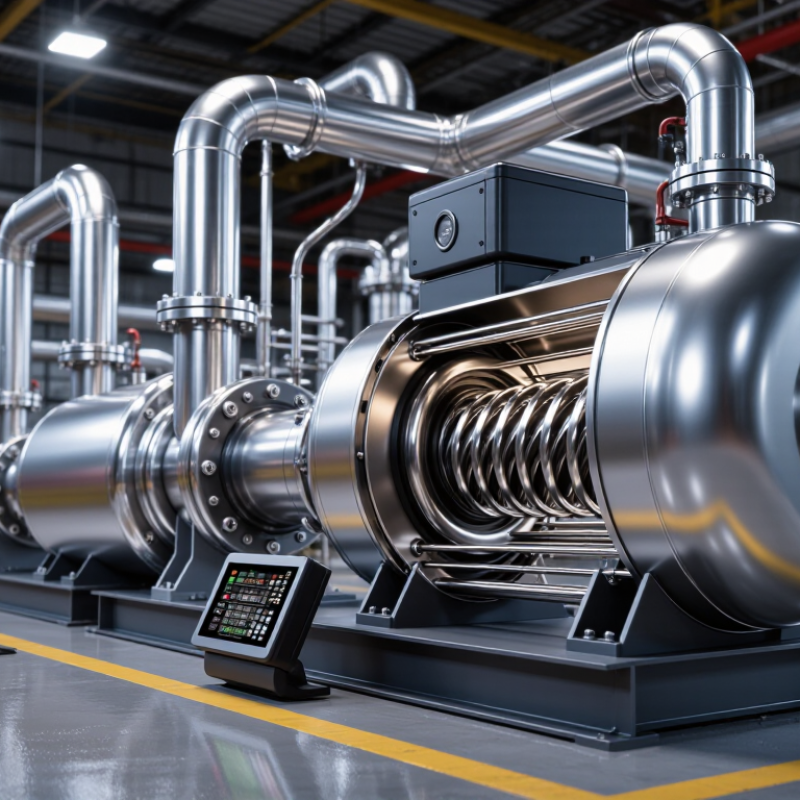
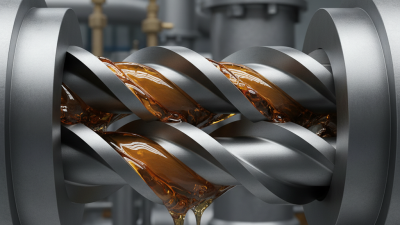
Screw pumps are positive-displacement machines that move liquid through rotating helical screws. As the screws turn, sealed cavities form and travel from the suction side to the discharge side. This action creates steady flow with limited pulsation. Twin-screw designs often use timing gears, keeping the rotors apart while they rotate. They can handle oils, polymers, fuels, and other viscous fluids when properly specified. The flow is gentle.
In industrial service, screw pumps are valued for reliable operation across changing temperatures and flow demands. Their compact structure can support continuous transfer through pipelines, filtration systems, and process equipment.
However, they are not a universal answer. Abrasive solids, poor lubrication, or incorrect clearances can cause rapid wear. A practical selection should examine viscosity, suction conditions, pressure, temperature, speed, and fluid compatibility. Real installations are less tidy than diagrams. Field measurements still matter.
Tips: Confirm the fluid’s viscosity at operating temperature, not room temperature. Check for dry-running risks and provide suitable protection. Review maintenance access before installation. Small design oversights can become expensive downtime.
Which Industrial Fluids Are Suitable for Screw Pumps?
Screw pumps suit industrial fluids that are viscous, shear-sensitive, or difficult to move with centrifugal equipment. Typical examples include lubricating oils, fuel oils, polymers, adhesives, syrups, bitumen, and certain wastewater sludges. Their rotating screws create steady, low-pulsation flow. This helps protect emulsions and reduces foaming during transfer. The U.S. Department of Energy reports that pumping systems can account for about 25% of industrial electricity use, so selecting the correct pump may reduce energy waste. However, efficiency depends strongly on viscosity, speed, pressure, and pipe design.
These pumps also handle fluids containing small amounts of entrained gas better than many conventional pump types. Some designs support multiphase duties in oil, chemical, and process industries. Still, abrasive solids can accelerate wear. Very thin liquids may also reduce internal sealing performance. Field experience shows that “suitable” is never a simple fluid label. Temperature changes can alter viscosity dramatically. A fluid that behaves well at 40°C may become difficult at 10°C. That detail is easy to overlook.
Tips: Check viscosity across the full operating temperature range. Confirm solids size, gas content, suction conditions, and required pressure. Use test data when the fluid is shear-sensitive or chemically reactive. Standards such as API 676 provide useful guidance for rotary positive displacement pump selection, but site conditions still require engineering review. An honest selection should include the uncomfortable possibility that another pump type may perform better.
What Advantages Do Screw Pumps Offer in Industry?
Screw pumps offer several practical advantages in demanding industrial environments. Their rotating screws move liquid smoothly, creating steady flow with limited pulsation. This helps protect hoses, meters, and downstream equipment from sudden pressure changes. Operators often notice quieter operation than with many reciprocating pump designs. Less vibration can also reduce fatigue around pipe supports and fittings.
These pumps handle a wide range of fluids, including oils, fuels, polymers, and liquids containing small suspended particles. Their strong suction capability supports reliable transfer from storage tanks, even when fluid levels fall. A screw pump can also maintain consistent performance across changing flow requirements. Variable-speed control makes adjustment easier without using restrictive valves. This may reduce energy waste during partial-load operation. Maintenance can be straightforward when technicians inspect seals, bearings, and screw clearances on schedule. Small details matter.
However, screw pumps are not the perfect answer for every process. Highly abrasive solids may wear internal surfaces faster than expected. Poor alignment, unsuitable materials, or dry running can cause expensive damage. Engineers should examine viscosity, temperature, pressure, particle content, and cleaning requirements before selecting a model. In real plants, installation quality often matters as much as pump design. A well-sized pump with careful monitoring can deliver dependable service, but rushed selection may create noise, heat, and unstable flow.
Why Choose Screw Pumps for Industrial Applications? - What Advantages Do Screw Pumps Offer in Industry?
| Evaluation Dimension | Screw Pump Capability | Industrial Advantage | Typical Industrial Uses |
|---|---|---|---|
| Flow Characteristics | Positive-displacement pumping provides a steady, nearly pulse-free flow over a broad operating range. | Improves metering consistency and reduces the need for pulsation dampeners in many systems. | Fuel transfer, chemical dosing, lubrication systems, and process-fluid circulation. |
| Viscosity Handling | Suitable for low-, medium-, and high-viscosity liquids, provided the pump is correctly selected and operated. | Maintains useful performance with fluids that can become difficult for many centrifugal pumps to handle. | Heavy fuel oil, bitumen, asphalt, polymers, resins, paints, and food products. |
| Pressure Capability | Can generate moderate to high discharge pressures; the achievable pressure depends on pump design, speed, and stages. | Supports long transfer lines, elevated discharge points, filtration systems, and process equipment with resistance. | Oil transfer, wastewater handling, hydraulic-fluid circulation, and industrial processing. |
| Flow Range | Common industrial models cover applications from small metering duties to very high flow rates; capacity is determined by screw diameter, pitch, speed, and number of screws. | Allows one pump technology to serve auxiliary systems, transfer duties, and large process installations. | Machine lubrication, marine fuel systems, tank unloading, and bulk-fluid transfer. |
| Low-Pulsation Operation | Rotating screws produce smoother flow than many reciprocating positive-displacement pumps. | Helps reduce vibration, noise, pipe stress, and product foaming when the system is properly designed. | Precision process lines, clean-fluid systems, fuel handling, and chemical transfer. |
| Shear Sensitivity | Generally provides gentle handling because the fluid moves axially through the screw channels at controlled shear levels. | Can help preserve the structure of shear-sensitive liquids and reduce unwanted emulsification or aeration. | Food ingredients, coatings, polymers, adhesives, and personal-care products. |
| Solid-Containing Fluids | Some twin- and multi-screw designs can handle suspended solids or soft particles, subject to clearances and material selection. | Offers greater flexibility for non-uniform process fluids than pumps intended only for clean liquids. | Wastewater sludge, sludge dewatering, drilling fluids, food mixtures, and industrial slurries. |
| Self-Priming Performance | Many screw pumps are self-priming within specified limits, although suction conditions and pump construction remain critical. | Can simplify installation where the pump is positioned above the liquid level or where the inlet line may contain air. | Tank emptying, bilge systems, fuel transfer, and mobile process equipment. |
| Speed Control | Flow can usually be adjusted by changing rotational speed, commonly through a variable-frequency drive. | Enables process control, soft starting, energy optimization, and adaptation to changing production requirements. | Batch processing, variable-demand transfer, chemical dosing, and automated production lines. |
| Energy Efficiency | Efficiency can remain favorable across changing viscosity and flow conditions when speed and clearances are correctly matched to the duty. | May reduce throttling losses and improve lifecycle energy performance in variable-flow applications. | Continuous-process plants, oil systems, wastewater facilities, and high-viscosity liquid transfer. |
| Noise and Vibration | Balanced rotary operation generally produces low pulsation and relatively smooth mechanical behavior. | Supports quieter installations and can reduce mechanical stress on connected piping and equipment. | Indoor process plants, marine systems, laboratories, and noise-sensitive production areas. |
| Maintenance Considerations | Routine inspection of seals, bearings, couplings, and wear surfaces is required; abrasive or dry-running service can accelerate wear. | A predictable maintenance program can reduce unplanned downtime, especially when operating conditions are monitored. | Process industries with preventive-maintenance programs and continuous-duty equipment. |
| Material Compatibility | Pump materials, coatings, elastomers, and seal designs can be selected for many corrosive, abrasive, hygienic, or high-temperature fluids. | Provides design flexibility for demanding chemical and sanitary applications. | Chemical processing, food and beverage production, pharmaceutical manufacturing, and petroleum handling. |
| Key Selection Limitations | Performance can be affected by dry running, abrasive particles, excessive temperature, incorrect speed, and insufficient inlet pressure. | Proper sizing, filtration where appropriate, seal selection, and protection against dry running are essential for reliable service. | All industrial installations requiring defined suction conditions, fluid compatibility, and operating controls. |
Note: Actual flow, pressure, efficiency, temperature, viscosity, and solids-handling limits vary by screw-pump configuration and operating conditions. Final selection should be based on the fluid properties, duty point, suction conditions, materials, and applicable safety requirements.
How Do Screw Pumps Compare with Other Pump Types?
Why Choose Screw Pumps for Industrial Applications?
How Do Screw Pumps Compare with Other Pump Types?
Screw pumps move liquid through rotating screws, producing steady flow with limited pulsation. That matters when a dosing line feeds a filter or a filling valve. Centrifugal pumps often suit clean, low-viscosity liquids and high flow rates. Their performance can decline when viscosity rises or suction conditions change.
Screw pumps usually handle viscous fluids more comfortably, including oils, polymers, and some slurries. The Hydraulic Institute’s positive displacement pump guidance identifies this operating principle as suitable for controlled flow under changing pressure. Field experience still matters. A badly selected screw profile can overheat the fluid or increase maintenance costs.
Against gear pumps, screw pumps generally create smoother discharge and lower mechanical impact on sensitive liquids. Gear pumps may be compact and economical, but tight clearances can suffer with abrasive particles. Diaphragm pumps tolerate difficult chemicals and intermittent service, yet their pulsating flow may require dampeners. They can also consume more compressed air. Not always better.
Energy deserves attention. The U.S. Department of Energy reports that pumping systems can represent 25% to 50% of industrial electricity use. This figure includes the whole system, not only the pump.
A screw pump may reduce throttling losses when flow control is properly designed. However, positive displacement pumps require relief protection. Oversizing remains a common mistake.
Engineers should compare viscosity, solids content, pressure, speed, seal arrangement, and cleaning requirements using measured operating data, not catalogue curves alone. Even experienced teams sometimes underestimate start-up torque in cold conditions.
What Factors Guide the Selection of an Industrial Screw Pump?
Selecting an industrial screw pump starts with the fluid, not the pump catalogue. Measure viscosity at operating temperature, because cold oil can behave very differently from heated oil. Flow rate and discharge pressure also matter. A pump handling 40 m³/h at 6 bar may require a different rotor profile than one serving a high-pressure transfer line. Small errors here become expensive.
Solids content deserves close attention. Sludge, polymers, and abrasive particles can change wear rates quickly. Ask for particle size, concentration, and shape. Temperature affects seal materials, clearances, and lubrication. Stainless steel may suit corrosive fluids, while hardened components can better resist abrasive service. The installation environment matters too. Limited floor space may favor a compact vertical arrangement, but access for seal replacement must remain practical.
Energy use and control range should guide the drive selection. Variable-speed control can match demand, though it may perform poorly when the pump is oversized. In practice, the first selection is rarely perfect. Field readings often reveal unexpected viscosity changes or trapped air. That is why experienced engineers compare laboratory data with real operating conditions. Maintenance teams should review spare-part access, inspection intervals, and dry-run protection before approval. A quiet pump is useful, but stable flow, predictable wear, and safe servicing matter more.
Why Choose Screw Pumps for Industrial Applications?
Screw pumps are commonly selected when an application requires steady, low-pulsation flow, gentle fluid handling, and reliable transfer of viscous liquids. The chart summarizes the main selection factors using a relative engineering priority scale.
Relative engineering priority: 1 = low importance, 5 = very high importance. Actual pump selection should also consider flow rate, differential pressure, viscosity, temperature, solids content, materials, speed, and dry-run conditions.
Related Posts
-
What Are the Best Screw Pumps from China?
-
5 Essential Tips for Choosing the Right Screw Pumps for Your Business
-

2025 How to Choose the Best Screw Pumps for Your Industrial Applications
-
What is a Screw Pump and How Does It Work?
-

Top Screw Pumps for Global Buyers in 2026 What to Know
-
What is a Screw Pump and How Does It Work?