What Is a Submersible Mixer and How Does It Work?
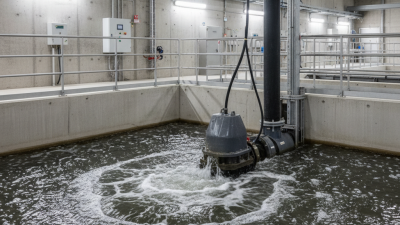
A submersible mixer is a compact machine designed to move and blend liquid beneath the surface. It commonly operates in wastewater tanks, sludge basins, agricultural lagoons, and industrial process vessels. Unlike surface agitators, it works inside the liquid, where its propeller creates a controlled flow pattern.
Wastewater process engineer Dr. John Bratby once emphasized, “Good mixing depends on movement, not merely motion.” This principle explains why a powerful motor alone cannot guarantee effective performance. The mixer must direct liquid through settled zones, maintain solids suspension, and avoid creating dead areas near walls or tank corners.
Here is the practical picture. A sealed electric motor turns an underwater propeller. The blades accelerate surrounding liquid and form a circulation path. That flow carries suspended solids across the tank, helping distribute oxygen, chemicals, temperature, or biological material more evenly. In a circular basin, the mixer may create a slow rotational current. In a long channel, it may push liquid forward.
Small details matter. Propeller diameter, blade angle, installation depth, tank shape, and liquid density all influence the result. A mixer installed too high may leave sludge at the bottom. One installed too low may disturb settled material excessively or increase energy use.
The process is not always perfect. Real tanks contain uneven solids, changing water levels, and hidden flow resistance. Therefore, selecting a submersible mixer requires more than comparing motor power. This guide explains its main components, working principle, installation requirements, and performance limits in clear, practical terms.
What Is a Submersible Mixer?
A submersible mixer is an electric mixing device designed to operate below the liquid surface. It combines a motor, shaft, propeller, and protective housing. Unlike surface agitators, it creates movement inside the tank, basin, or lagoon. This helps prevent solids from settling on the bottom. It also keeps liquids more evenly blended during treatment or storage.
The mixer is installed at a selected depth and angle. When powered, the motor turns the propeller and produces a controlled flow. That flow moves liquid horizontally, vertically, or in a circular pattern. Operators often use these mixers in wastewater tanks, manure storage, industrial process vessels, and equalization basins. Proper placement matters greatly. A poorly positioned mixer may stir only one area while leaving dead zones elsewhere. I have found that visible surface turbulence can be misleading. Strong movement above the liquid does not always mean complete mixing below it.
Performance depends on tank shape, liquid viscosity, solids content, and required circulation distance. Engineers should check thrust, power consumption, corrosion resistance, and access for maintenance. The mixer must also match the liquid depth and operating conditions. Oversizing can waste energy and disturb delicate biological processes. Undersizing may allow sediment to accumulate. Real installations often require adjustment after observation, because calculations cannot capture every site condition. Small changes in angle or height can noticeably improve circulation. Safety remains essential, especially during inspection, cleaning, and electrical servicing.
Key Components and Their Functions
What Is a Submersible Mixer and How Does It Work?
Key Components and Their Functions
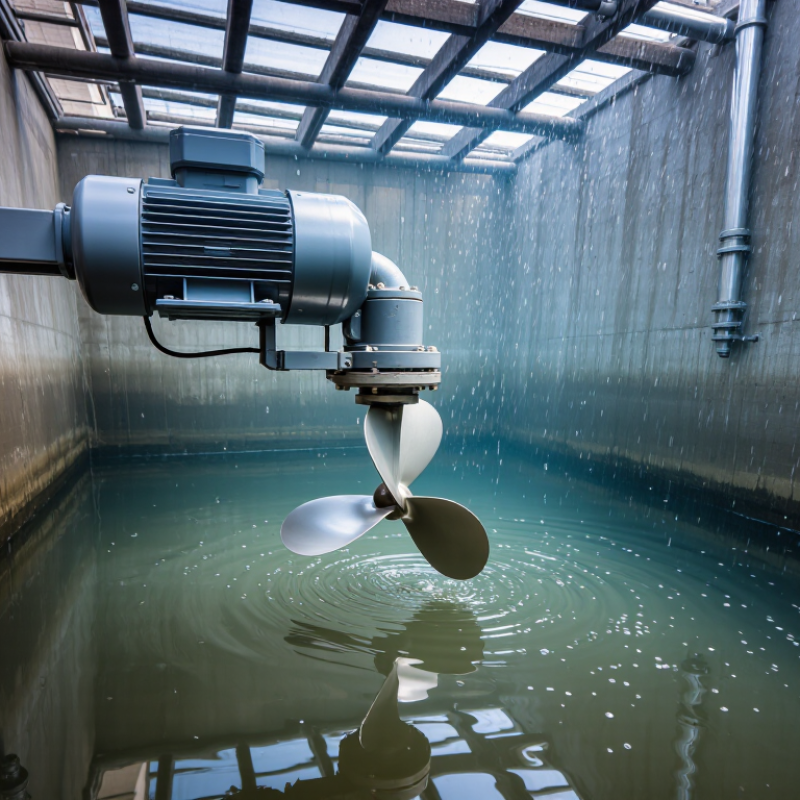
A submersible mixer is an electrically powered machine installed directly inside a tank, basin, or treatment channel. Its motor turns an impeller underwater, creating controlled flow instead of simply aerating the liquid. This movement keeps solids suspended, blends chemicals, and reduces stagnant zones. The motor housing protects internal electrical parts from moisture and pressure. Mechanical seals provide another barrier around the rotating shaft. If a seal weakens, liquid may reach the motor, causing costly damage.
The impeller determines how efficiently the mixer moves fluid. Its blade shape, diameter, and rotation speed affect thrust and turbulence. A mounting frame or guide rail holds the unit at the correct angle and depth. The power cable must resist abrasion, chemicals, and repeated movement. Control equipment manages starting, stopping, overload protection, and operating speed. In field inspections, poor positioning often causes uneven mixing, even when the motor works normally. That detail is easy to overlook.
Tips: Check the seal condition, cable jacket, mounting bolts, and impeller before operation. Remove stringy debris carefully, because it can wrap around the shaft. Match mixer thrust to tank volume and liquid viscosity. Do not rely only on sound; vibration and unusual current readings may reveal hidden problems. Maintenance records should include inspection dates, measured current, and observed flow patterns. A practical test with colored tracer liquid can expose dead zones, although results may vary with temperature and solids concentration.
How a Submersible Mixer Operates
A submersible mixer is an electrically powered device installed beneath the liquid surface. It keeps wastewater, sludge, or process fluids moving. Unlike surface equipment, it works directly inside the tank. This position reduces splashing and supports more even circulation.
How a Submersible Mixer Operates
The process begins when the motor receives power through a sealed electrical connection. The motor turns a propeller or impeller at a controlled speed. Its rotating blades pull nearby liquid into the mixing zone. The blades then push that liquid outward, creating a strong horizontal flow. This movement breaks up stagnant areas and keeps solids suspended. It can also improve contact between wastewater and treatment chemicals. Direction matters. A poorly aimed mixer may circulate liquid without reaching the tank’s corners.
Installation depth, tank shape, fluid thickness, and solids content all affect performance. Operators usually check these conditions before selecting speed and operating time. A timer may run the mixer continuously or in programmed cycles. Continuous operation is not always necessary. It can increase energy use and accelerate wear. Regular inspections should examine cable seals, mounting hardware, vibration, and unusual motor noise. Small changes can reveal larger problems.
In real facilities, the best setting often requires adjustment. Laboratory calculations provide guidance, but field behavior may differ. Heavy sludge can resist the expected flow. Sediment may collect behind supports or beneath equipment. That is easy to overlook. Safe isolation and qualified maintenance remain essential whenever the mixer is removed or serviced.
Common Applications in Industrial and Wastewater Systems
What Is a Submersible Mixer and How Does It Work?
A submersible mixer is a sealed motor and propeller assembly installed directly inside a tank. Its propeller produces controlled axial flow, keeping liquids, sludge, and suspended solids moving. The goal is simple. Prevent settling and improve process consistency. In wastewater plants, operators adjust mixer angle, speed, and placement to reduce dead zones. Poor placement can leave corners stagnant, even when the surface appears active.
Common applications include equalization basins, activated sludge tanks, anaerobic digesters, and industrial process-water reservoirs. In equalization tanks, mixers distribute fluctuating pollutant loads before treatment. In biological systems, they maintain contact between microorganisms and wastewater without adding unnecessary oxygen. Digesters also rely on mixing to spread heat and organic material. According to the U.S. Environmental Protection Agency’s Energy Data Management Guide, wastewater treatment can represent 30–40% of municipal energy use. Efficient mixing may therefore support lower aeration demand, although savings depend on tank geometry and operating control.
Industrial facilities use submersible mixers in food processing, chemical manufacturing, and pulp production. These sites often handle high solids or changing viscosities. A mixer must resist corrosion and avoid fiber wrapping. It must also allow safe maintenance access. The UN World Water Development Report 2017 estimated that over 80% of global wastewater was discharged without treatment. That figure shows the scale of the challenge. Still, mixing is not a complete solution. Overmixing wastes power, while undermixing creates hidden sediment layers. Field verification remains essential.
| Data Dimension | Typical Information | How It Works or Why It Matters | Common Industrial or Wastewater Use |
|---|---|---|---|
| Definition | A submersible mixer is a motor-driven mixing device designed to operate while fully or partially submerged in liquid. | The submerged propeller or impeller transfers motor power into liquid movement without requiring a dry-mounted shaft or external drive assembly. | Wastewater treatment tanks, equalization basins, sludge storage tanks, process vessels, and industrial liquid-holding basins. |
| Main Operating Principle | An electric motor rotates a propeller or impeller, creating axial or radial liquid flow. | The resulting circulation distributes solids, temperature, dissolved chemicals, and microorganisms throughout the tank. | Suspension of solids, biological treatment, chemical blending, and prevention of sediment accumulation. |
| Installation Position | Usually mounted on a guide rail, support frame, bracket, or adjustable lifting system below the liquid surface. | Positioning influences flow direction, circulation pattern, mixing intensity, and the area reached by the generated flow. | Rectangular tanks, circular tanks, oxidation ditches, anaerobic digesters, and open process basins. |
| Typical Motor Power | Approximately 0.5 to 30 kW for many municipal and industrial mixing duties; larger installations may require more. | Required power depends on tank volume, liquid viscosity, solids concentration, desired circulation, and equipment arrangement. | Small equalization tanks may use less than 5 kW, while large digesters and treatment basins may require multiple higher-power units. |
| Typical Propeller Speed | Common operating speeds are approximately 100 to 1,000 revolutions per minute, depending on mixer design and duty. | Lower speeds are often selected for gentle circulation and reduced shear, while higher speeds can provide stronger local turbulence. | Low-speed mixing for activated sludge and digesters; higher-speed mixing for blending and smaller process tanks. |
| Liquid Flow Pattern | Axial-flow mixers move liquid mainly parallel to the shaft; radial-flow mixers discharge liquid outward from the impeller. | Axial flow is commonly used for bulk circulation, while radial flow is useful where stronger localized mixing is needed. | Axial flow for large basins and suspension; radial or mixed flow for compact process vessels and chemical blending. |
| Solids Suspension | Can maintain suspended solids when the mixer is correctly sized and positioned for the tank geometry. | Continuous circulation reduces settling by keeping particles moving above the tank floor and distributing solids through the liquid. | Primary sludge holding, waste activated sludge storage, grit-related processes, and industrial slurry tanks. |
| Mixing Intensity | Usually selected as gentle, moderate, or intensive according to process requirements rather than using one universal value. | Excessive intensity can increase energy consumption, shear-sensitive biomass stress, or unwanted air entrainment. | Gentle mixing for anaerobic digestion; moderate mixing for equalization; intensive mixing for rapid chemical dispersion. |
| Tank Volume Range | Applications may range from small process tanks of several cubic meters to large basins exceeding 10,000 m³. | Tank volume, shape, depth, and liquid properties determine the number, power, and placement of mixers required. | Industrial process tanks, municipal equalization basins, oxidation ditches, and sludge digesters. |
| Liquid Temperature | Many systems are designed for approximately 0 to 40 °C, although the allowable range depends on motor insulation, seals, and process conditions. | Temperature affects viscosity, biological activity, motor cooling, seal performance, and material selection. | Municipal wastewater, food-processing effluent, chemical wastewater, and temperature-controlled process liquids. |
| Solids Concentration | Suitable concentration limits vary widely; wastewater and sludge duties may involve total suspended solids from low levels to several percent by mass. | Higher solids concentration increases viscosity and mixing resistance, which may require greater thrust, larger propellers, or multiple mixers. | Activated sludge, return sludge, waste sludge, digested sludge, and industrial slurry applications. |
| Oxygen-Free Mixing | Submersible mixers can circulate liquid without intentionally introducing air or oxygen. | This makes them suitable for anoxic and anaerobic processes where oxygen transfer would interfere with biological treatment. | Denitrification zones, anaerobic digesters, fermentation tanks, and oxygen-sensitive process stages. |
| Energy Consideration | Energy demand is commonly evaluated using motor power, operating hours, and mixing performance per unit of tank volume. | Correct propeller selection, positioning, and control strategy can reduce unnecessary circulation and operating costs. | Facilities may use variable-frequency drives to adjust speed according to flow, solids loading, or treatment demand. |
| Materials of Construction | Common materials include coated carbon steel, stainless steel, and corrosion-resistant alloys or coatings. | Material selection depends on chloride content, pH, abrasive solids, temperature, and chemical exposure. | Stainless or specially protected components are often considered for corrosive industrial wastewater and chemical processes. |
| Sealing and Protection | Submersible units normally use mechanical seals, sealed cable entries, and a watertight motor housing. | These components protect the motor and electrical connections from liquid penetration during continuous immersion. | Permanent or intermittent operation in wastewater tanks, sludge basins, and submerged process environments. |
| Maintenance Requirements | Routine checks may include inspection of seals, cables, bearings, propeller condition, mounting hardware, and motor current. | Removing fibrous debris and identifying vibration, overheating, or abnormal noise early can reduce unplanned downtime. | Municipal treatment plants, industrial wastewater facilities, and process plants with continuous-duty mixing. |
| Key Selection Factors | Tank dimensions, liquid depth, viscosity, solids concentration, required circulation, temperature, corrosion conditions, and available power supply. | Proper selection ensures adequate mixing while avoiding excessive shear, energy use, cavitation risk, or insufficient bottom coverage. | Used during equipment sizing and process design for new installations, upgrades, and replacement projects. |
Note: The numerical values shown are typical planning ranges rather than universal specifications. Final mixer selection should be based on site-specific hydraulic calculations, liquid properties, tank geometry, process objectives, and applicable electrical and safety requirements.
Factors to Consider When Choosing a Submersible Mixer
A submersible mixer works below the liquid surface, creating movement through rotating blades or an impeller. Its sealed motor drives the impeller and pushes liquid through the tank. Mounted at a calculated angle, the unit reduces settling and supports more even mixing. The result depends on flow direction, tank shape, and liquid behavior.
Choosing one requires more than checking motor power. Tank geometry matters. Measure diameter, depth, corners, and outlet locations. Liquid depth affects installation height and circulation patterns. A mixer positioned too high may leave solids near the floor. One positioned too low may create unnecessary turbulence.
Viscosity and solids content also guide selection. Thick liquids need stronger thrust, while abrasive particles demand durable wetted materials. Fibrous solids can wrap around unsuitable impellers. That detail is easy to miss. Check temperature, corrosion risk, and expected operating hours before purchasing. Electrical protection and lifting access deserve equal attention. Maintenance becomes difficult when technicians cannot remove the mixer safely. In practice, site measurements often reveal assumptions that drawings hide. No mixer fits every tank. A small field trial can expose dead zones before full installation. Even experienced engineers should review their calculations when the liquid changes seasonally. Performance is not always perfect; monitoring vibration, current, and mixing time can reveal problems early.
What Is a Submersible Mixer and How Does It Work?
Typical process conditions to review when choosing a submersible mixer
A submersible mixer uses a motor-driven propeller to create axial flow and keep solids suspended. The operating ranges shown above are representative municipal and industrial wastewater conditions. Mixer selection should consider total suspended solids, temperature, viscosity, tank geometry, required circulation, motor power, corrosion resistance, and the need for reliable solids suspension.
Related Posts
-
How to Choose the Right Submersible Mixer for Your Water Treatment Needs
-
8 Best Sewage Treatment Plant Processes to Optimize Waste Management Efficiency
-

Top Waste Water Systems for Efficient Water Management Solutions?
-
2026 Best Waste Water Treatment Process Techniques for Sustainable Solutions?
-
Essential Tips for Optimizing STP Plant Process Efficiency?
-
Understanding the Essential Steps in the Wastewater Treatment Plant Process