What Are the Top China Sewer Treatment Plant Suppliers?

Choosing among China’s top sewer treatment plant suppliers requires more than comparing equipment prices. A reliable supplier must understand influent variation, local discharge requirements, energy use, and long-term maintenance. A plant may look impressive during a factory visit, yet perform poorly after seasonal flow changes. That risk deserves careful attention.

Professor Mark van Loosdrecht, a leading wastewater treatment researcher, has stated, “Wastewater is a resource, not a waste.” His view reflects a major industry shift. Modern suppliers increasingly recover biogas, reuse treated water, and reduce excess sludge. However, not every supplier delivers these benefits consistently. Buyers should examine process design, material quality, automation systems, commissioning records, and after-sales support. Ask for operating data from comparable projects. Numbers matter.

The strongest China sewer treatment plant suppliers usually offer adaptable solutions, including MBR, SBR, MBBR, and conventional activated sludge systems. Each process has different energy demands, operator requirements, and tolerance for fluctuating loads. Site conditions also matter. A coastal plant may face corrosion, while a remote facility may need simpler controls and local spare parts. These details are easy to overlook.

There is no universal “top” supplier. Rankings can become misleading without project context. A cheaper quotation may hide higher aeration costs or difficult sludge disposal. Buyers should compare lifecycle performance, not only purchase cost. Reviewing independent testing, client references, and warranty terms can reveal weaknesses early. Even experienced purchasers may miss them. That is why this guide evaluates leading suppliers through practical, evidence-based criteria rather than marketing claims.

What Are the Top China Sewer Treatment Plant Suppliers?

China’s Sewer Treatment Plant Supplier Market Overview

China’s sewer treatment plant supplier market is large, competitive, and increasingly engineering-driven. The Ministry of Housing and Urban-Rural Development reported an urban sewage treatment rate of about 98.1% in its 2022 Urban Construction Statistical Yearbook. This high figure hides uneven regional demand. Coastal cities often seek advanced nitrogen removal and reclaimed water systems, while smaller counties need compact plants, simple controls, and reliable sludge management.

Top suppliers should therefore be assessed by project evidence, not catalogue size. Strong candidates usually provide activated-sludge, MBBR, or MBR solutions, supported by hydraulic calculations and verified discharge results. Buyers should request energy data per cubic metre, equipment service records, and at least three comparable references. The China Environment Protection Industry Association has identified rising demand for intelligent monitoring, energy efficiency, and resource recovery in recent industry reports. Sensors matter. So does maintenance access.

Pricing remains difficult to compare. A lower quotation may exclude sludge disposal, laboratory testing, civil works, or operator training. That is not always obvious. Research and Markets’ China wastewater treatment outlook also links market growth with stricter environmental standards and infrastructure upgrades. However, market forecasts are not guarantees. Site conditions can change everything, especially influent toxicity, seasonal flow, and limited technical staff. A careful tender should include performance guarantees, spare-part availability, commissioning support, and transparent operating costs. Supplier rankings remain imperfect without independently verified, long-term plant data.

What Are the Top China Sewer Treatment Plant Suppliers? - China’s Sewer Treatment Plant Supplier Market Overview

Market Dimension China Market Reference Common Supplier Capability Buyer Evaluation Focus
Primary Market Segments Municipal wastewater, industrial wastewater, rural domestic sewage, reclaimed-water systems, and sludge treatment. EPC contractors, process-equipment manufacturers, modular-system integrators, and operation-and-maintenance providers. Relevant project experience, process expertise, local service coverage, and lifecycle support.
Main Treatment Processes Activated sludge, oxidation ditch, sequencing batch reactor, membrane bioreactor, anaerobic treatment, and biological nutrient removal are widely used in China. Process selection based on influent quality, discharge limits, land availability, energy use, and operating conditions. Guaranteed effluent quality, energy consumption, footprint, process stability, and ease of maintenance.
National Discharge Standard GB 18918-2002 Class 1-A limits include COD ≤50 mg/L, BOD5 ≤10 mg/L, suspended solids ≤10 mg/L, total nitrogen ≤15 mg/L, and total phosphorus ≤0.5 mg/L. Designs treatment trains capable of meeting national, provincial, or project-specific discharge requirements. Contractual performance guarantees, laboratory testing, commissioning results, and compliance records.
Municipal Project Scale Projects range from small decentralized facilities serving villages or industrial sites to large urban plants serving hundreds of thousands of residents. Scalable designs covering packaged units, containerized systems, prefabricated modules, and large civil-engineering plants. Hydraulic capacity, peak-flow handling, expansion planning, redundancy, and construction schedule.
Rural and Decentralized Treatment Decentralized treatment is important for dispersed settlements where centralized sewer networks are difficult or costly to build. Prefabricated and packaged systems with remote monitoring, simplified operation, and low sludge production. Installation speed, low operator dependence, winter performance, maintenance access, and total operating cost.
Industrial Wastewater Applications Food processing, chemicals, pharmaceuticals, textiles, electronics, mining, and manufacturing require specialized pretreatment and biological or advanced treatment. Custom process engineering for high organic loading, toxic compounds, salinity, oil, heavy metals, or difficult-to-degrade pollutants. Pilot testing, influent characterization, process guarantees, corrosion resistance, and hazardous-waste handling.
Water Reuse and Advanced Treatment Reuse applications commonly require filtration, disinfection, activated carbon, ultrafiltration, nanofiltration, or reverse osmosis depending on the end use. Integrated tertiary-treatment systems for industrial reuse, municipal landscaping, cooling, and other non-potable applications. Product-water quality, membrane fouling control, concentrate management, recovery rate, and replacement costs.
Digital Monitoring and Automation Online monitoring of flow, pH, dissolved oxygen, suspended solids, ammonia, chemical oxygen demand, and other parameters is increasingly used for process control. PLC/SCADA integration, remote alarms, automated aeration, dosing control, data logging, and predictive maintenance functions. Data accuracy, cybersecurity, interoperability, cloud access, alarm response, and availability of technical support.
Energy and Sludge Management Aeration is typically the largest electricity-consuming process in conventional biological treatment, while sludge handling affects both cost and compliance. High-efficiency blowers, fine-bubble aeration, variable-frequency drives, sludge thickening, dewatering, digestion, and odor control. Specific energy consumption, sludge yield, disposal route, odor performance, spare parts, and operating labor.
Compliance and Certification Projects normally require compliance with applicable Chinese environmental standards, construction requirements, safety rules, and local permitting conditions. Documented quality-management procedures, equipment test records, engineering drawings, commissioning plans, and environmental compliance documentation. Valid certifications, reference projects, factory inspection, third-party testing, warranty terms, and after-sales response time.
Commercial Delivery Models Common arrangements include equipment supply, design-build, EPC, turnkey delivery, operation and maintenance, and public-private partnership projects. Flexible contracting, equipment procurement, civil-work coordination, installation supervision, commissioning, and long-term operation. Scope clarity, payment milestones, performance guarantees, liability allocation, spare-parts availability, and service-level commitments.
Regional Supplier Coverage Supplier capabilities are concentrated around major manufacturing and engineering regions, while projects are distributed across urban, industrial, coastal, and inland markets. Regional engineering teams, local installation partners, domestic logistics, and multilingual export-support departments. Distance to project site, local response time, export experience, documentation quality, and availability of replacement components.

Reference framework: China’s national urban wastewater discharge requirements are primarily associated with GB 18918-2002, while project-specific provincial, municipal, industrial, and reclaimed-water standards may impose stricter limits.

Key Types of Sewer Treatment Plants and Treatment Technologies

What Are the Top China Sewer Treatment Plant Suppliers?

The strongest China-based suppliers are not defined by equipment alone. They are judged by process design, commissioning records, local compliance, and after-sales support. Buyers should compare centralized municipal plants, decentralized package plants, and industrial wastewater systems separately. Each serves a different hydraulic and pollution profile. The UN-Water World Water Development Report estimates that more than 80% of global wastewater is discharged without treatment. That figure shows why reliable sewer infrastructure remains essential, especially in fast-growing towns.

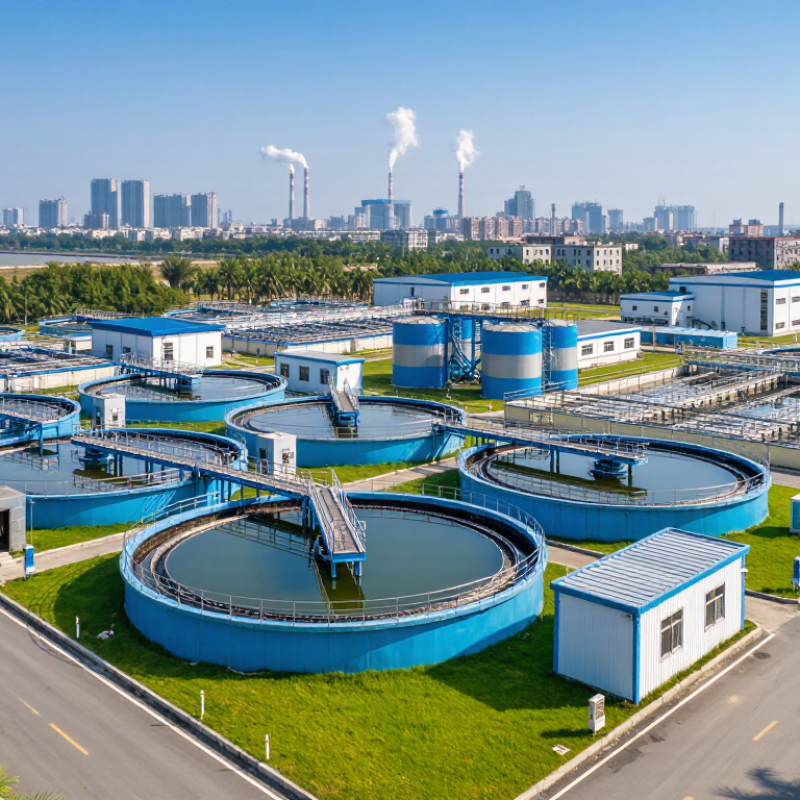
Treatment technology must match the influent. SBR systems suit plants with fluctuating flows and limited space. MBR systems produce high-quality effluent, but membrane cleaning and energy use require careful budgeting. MBBR offers flexible biological treatment with relatively simple operation. Oxidation ditches are practical for stable municipal flows, although they may need larger footprints. Anaerobic treatment can reduce sludge and energy demand for high-strength industrial wastewater. China’s urban construction statistics show continued expansion in wastewater treatment capacity, but capacity alone does not guarantee performance.

Look beyond brochures.

A credible supplier should provide laboratory testing, process guarantees, sludge management plans, and operator training. Ask for data on ammonia removal, total nitrogen, phosphorus, energy consumption, and sludge yield. Site visits reveal details that drawings often hide, such as odors, wet-well access, and maintenance space. No single process is universally superior. In practice, poor influent data can undermine even excellent engineering. That uncomfortable point deserves more attention. Supplier selection should therefore combine reported data, independent testing, and verified operating experience.

Leading China Sewer Treatment Plant Suppliers and Their Specialties

China’s leading sewer treatment plant suppliers differ by engineering specialty, not just price. Integrated contractors often design municipal plants, industrial wastewater systems, and long-distance pipelines. Equipment-focused suppliers usually provide MBR, SBR, dissolved air flotation, and sludge dewatering units. Smaller modular specialists serve factories, resorts, and rural communities where fast installation matters.

China Urban Construction Statistical Yearbook 2022 reported an urban sewage treatment rate above 98%. This scale demands dependable pumps, aeration systems, control panels, and odor management. Suppliers with ISO 9001 systems and documented testing records deserve closer review. Their strongest proposals include influent analysis, process guarantees, energy estimates, and commissioning support. Vague capacity figures are not enough.

The best supplier for industrial sites may specialize in heavy metals, high salinity, or food-processing wastewater. Municipal projects need stable biological treatment and strong flood resilience. According to the UN World Water Development Report 2024, agriculture accounts for about 70% of global freshwater withdrawals, increasing interest in treated-water reuse. Reuse-ready suppliers should show membrane recovery rates and laboratory results. I would still question optimistic energy claims. Operating conditions change. A site visit, independent sample testing, and references from comparable facilities reveal more than polished brochures. Some suppliers remain strong technically but weak in after-sales response, which can turn a minor sensor fault into several days of disruption.

How to Evaluate Supplier Quality, Compliance, and Project Experience

China’s wastewater market is large, but capacity alone does not prove supplier quality. The Ministry of Housing and Urban-Rural Development reported continued growth in urban sewage treatment capacity in its Urban and Rural Construction Statistical Yearbook. Buyers should inspect actual operating records, not only brochures. Ask for influent data, effluent results, energy use, and equipment failure logs. Small details matter.

Compliance must be checked against the project’s discharge permit and applicable standards, including GB 18918-2002 where relevant. A credible supplier should provide traceable testing, documented process calculations, and certificates aligned with ISO 9001, ISO 14001, and ISO 45001. The World Bank’s wastewater research estimates that more than 80% of global wastewater is released without adequate treatment. This highlights the cost of weak supervision. Certificates alone are not enough.

Project experience requires evidence. Request commissioning reports from facilities with similar flow, influent strength, climate, and sludge conditions. Visit at least one operating plant, if possible. Operators should explain automation alarms, chemical dosing, odor control, and emergency bypass prevention in clear language. I would also check spare-part availability and response times. Many evaluations overlook lifecycle maintenance. That is a mistake. A supplier may present excellent design drawings yet perform poorly after handover. Independent laboratory results and verified client references can expose that gap.

Purchasing, Installation, and After-Sales Support Considerations

Selecting China sewer treatment plant suppliers requires more than comparing equipment prices. Purchasing teams should review treatment capacity, influent quality, discharge targets, energy use, and maintenance access. Request process drawings, factory test records, material specifications, and references from similar municipal or industrial projects. Details matter.

A reliable supplier should provide a site-specific design, not a recycled quotation. Confirm tank dimensions, electrical standards, control-panel requirements, and spare-parts availability before signing. Installation planning should include foundation checks, pipe alignment, lifting access, and operator training. A small measurement error can delay commissioning. In practice, buyers sometimes focus heavily on the equipment package and underestimate civil works. That oversight can increase costs and create avoidable disputes.

After-sales support should be written into the contract. Define response times, remote troubleshooting procedures, warranty boundaries, and technician availability. Ask whether manuals include clear maintenance intervals and fault codes. During commissioning, record flow rates, sludge production, chemical consumption, and outlet-water results. These records establish a practical performance baseline. Keep it practical.

A capable technical team should explain problems in plain language, especially during alarms or unstable biological treatment. However, no supplier can replace disciplined local operation. Operators need routine inspections, cleaning schedules, and documented adjustment procedures. One weakness deserves attention: projected operating data may differ from actual seasonal conditions. Reviewing performance after three and six months can reveal that gap early.