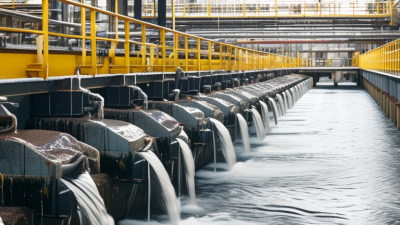
How to Choose Industrial Wastewater Treatment Systems?
Choosing the right industrial waste water treatment systems begins with understanding the wastewater itself. Its color, temperature, flow rate, pH, oil content, and biological load can change daily. A system that performs well in a food-processing plant may fail in a metal-finishing facility. Small differences matter.
Dr. David Jenkins, a respected wastewater treatment researcher, is often credited with saying, “There is no such thing as a standard wastewater treatment plant.” That observation remains practical today. Engineers must examine sampling records, production cycles, discharge targets, available space, energy costs, and operator skills before recommending equipment. Laboratory testing should guide the decision, not attractive brochures or unverified performance claims. Experience helps here. A cloudy jar test can reveal more than a polished sales presentation.
This guide explains how to compare biological, physical, chemical, membrane, and advanced treatment options. It also considers sludge handling, automation, maintenance access, expansion capacity, and total lifecycle cost. The cheapest purchase price may create expensive problems later. Pumps wear out. Sensors drift. Operators need clear controls.
No system is perfect.
A reliable design should protect receiving waters, support regulatory compliance, and remain stable during changing production conditions. However, even careful planning can miss an unusual contaminant or seasonal shock load. That possibility deserves honest attention. The best industrial waste water treatment systems are not simply powerful. They are properly matched, measurable, maintainable, and adaptable. This article offers a practical framework for making that choice with greater confidence.
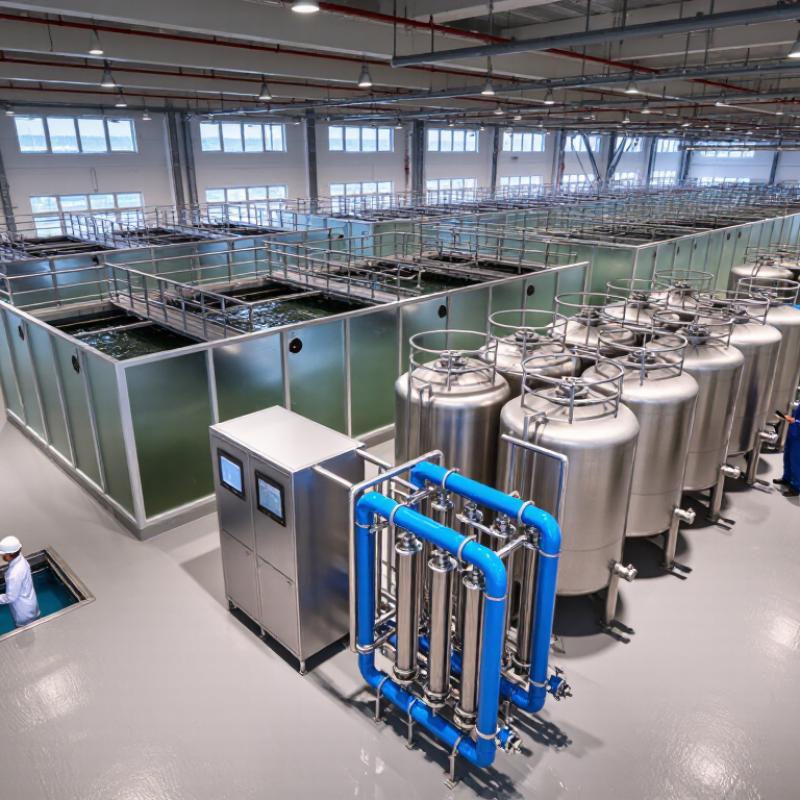
Define Wastewater Characteristics and Treatment Objectives
Choosing an industrial wastewater treatment system starts with defining the water, not selecting equipment. Experienced engineers collect samples from each process area, because one combined sample can hide important differences. Record flow rates during production, cleaning, shutdowns, and peak discharge periods. Measure pH, temperature, conductivity, COD, BOD, TSS, oil, nutrients, and relevant metals. Some pollutants appear only during specific batches. That detail matters.
Look for variation. A wastewater stream that seems stable on Monday may change sharply after maintenance or raw-material delivery. Composite sampling can reveal average conditions, while grab samples capture sudden spikes. Laboratory results should include detection limits and sampling times. Otherwise, the numbers may look precise but support weak decisions. I have seen projects fail because operators tested only one “normal” day. That was not representative.
Treatment objectives must be equally specific. The goal may involve meeting discharge limits, protecting a municipal sewer, recovering water, or reducing sludge volume. Each objective changes the process design and monitoring plan. Confirm local permit requirements and identify limits for flow, pH, temperature, toxicity, and residual pollutants. Define acceptable operating ranges, not only final targets. A useful design also considers space, energy, chemical storage, maintenance skills, and future production changes. No test plan is perfect. Review it after the first operating month, compare predictions with actual results, and adjust the treatment strategy when the evidence disagrees.
Assess Regulatory Requirements and Discharge Standards
How to Choose Industrial Wastewater Treatment Systems?
Regulatory requirements should guide system selection before equipment is specified. Identify the discharge destination first: a municipal sewer, surface water, or an internal reuse line. Each route may impose different limits and monitoring duties. Review the applicable permit, local pretreatment rules, and discharge standards with the responsible authority. Do not rely on general industry assumptions.
Build a pollutant profile from representative samples. Test pH, temperature, flow, suspended solids, BOD, COD, nutrients, metals, oils, and process-specific chemicals. One sample is not enough. Production changes can alter wastewater significantly. A washdown drain may carry a short, concentrated load, while routine flow appears harmless. Compare measured results with permitted limits, sampling frequency, and daily mass limits. Confirm whether limits apply at the final outlet or an internal process point.
Choose treatment stages that match both current and expected conditions. Equalization can reduce shock loads, while pH control, biological treatment, filtration, or advanced polishing may address specific pollutants. Include safe access for sampling, calibration, sludge handling, and maintenance. Use qualified laboratories and documented chain-of-custody procedures. Automated monitoring can improve response, but sensors still drift and require verification. A sophisticated system can fail through poor records or neglected calibration. Review compliance data regularly, test abnormal scenarios, and leave capacity for production changes. Regulatory interpretations can change, so maintain direct communication with local regulators and qualified environmental professionals.
How to Choose Industrial Wastewater Treatment Systems?
Assess Regulatory Requirements and Discharge Standards
Reference: U.S. EPA, 40 CFR Part 133.102, Secondary Treatment Standards. BOD₅ and TSS values are in mg/L.
Compare Industrial Wastewater Treatment Technologies
Choosing an industrial wastewater treatment system starts with comparing technologies, not copying a nearby plant. The UN World Water Development Report 2017 estimated that over 80% of global wastewater is released without treatment. Industrial facilities therefore need measurable removal targets, stable operation, and traceable monitoring.
Conventional activated sludge suits biodegradable organic loads and offers familiar controls. It can, however, require large tanks and produce considerable sludge. Dissolved air flotation removes suspended solids, oils, and grease before biological treatment. Membrane bioreactors produce clearer effluent in a smaller footprint, but membranes need regular cleaning and careful pretreatment. Anaerobic treatment can reduce energy demand while recovering biogas from concentrated organic wastewater. Its performance may weaken with toxic compounds or sudden flow changes. Reverse osmosis achieves high salt removal, although concentrate disposal remains a serious design issue.
Fit matters more than fashion. The U.S. EPA’s industrial pretreatment guidance emphasizes pollutant-specific control and source reduction before centralized treatment. The International Energy Agency reports that wastewater treatment can consume substantial electricity, especially where aeration dominates plant demand. A practical comparison should examine flow variation, temperature, pH, toxicity, sludge handling, energy use, and operator skill. Pilot testing is valuable. Laboratory results can mislead when real wastewater changes hourly. Some designs still overpromise. Engineers should challenge vendor claims, verify mass balances, and budget for maintenance, spare membranes, sampling, and future discharge limits.
How to Choose Industrial Wastewater Treatment Systems? - Compare Industrial Wastewater Treatment Technologies
| Technology | Primary Treatment Objective | Typical Applications | Typical Pollutant Removal | Typical Effluent Capability | Relative Footprint | Energy Demand | Main Advantages | Main Limitations |
|---|---|---|---|---|---|---|---|---|
| Primary Clarification | Remove settleable solids, floating matter and part of the suspended solids load | Most industrial wastewater streams as a pre-treatment step | Approximately 50–70% TSS; approximately 25–40% BOD, depending on wastewater characteristics | Usually insufficient for direct discharge where strict organic or nutrient limits apply | Medium to high | Low | Simple operation; protects downstream biological and membrane units; low energy use | Limited removal of dissolved pollutants; requires sludge handling |
| Dissolved Air Flotation (DAF) | Separate suspended solids, emulsified oils, fats and grease using fine air bubbles | Food processing, meat processing, metal finishing, petrochemical and manufacturing wastewater | Commonly 70–95% TSS and oil & grease; chemical conditioning can improve performance | Good pre-treatment; dissolved organic compounds generally remain | Low to medium | Medium | Compact; fast separation; effective for low-density solids and oils | Chemical consumption; produces float sludge; performance depends on pH and coagulation control |
| Activated Sludge | Biological oxidation of biodegradable organic matter and, when designed accordingly, nitrogen removal | Biodegradable industrial wastewater with relatively stable flow and loading | Approximately 85–95% BOD; approximately 80–95% TSS with effective clarification; nitrogen removal requires dedicated zones | Often suitable for discharge after clarification and disinfection, subject to local limits | Medium to high | Medium to high | Proven biological process; flexible nutrient-removal configurations; suitable for many organic wastewaters | Sensitive to toxic shocks, salinity and load variations; produces excess biological sludge |
| Sequencing Batch Reactor (SBR) | Time-sequenced biological treatment, settling and decanting in the same reactor | Small to medium industrial facilities with intermittent or variable flows | Typically 85–95% BOD and TSS removal; nitrogen removal is possible with appropriate cycle programming | Can achieve high-quality secondary treatment when cycles and loading are well controlled | Medium | Medium to high | No separate secondary clarifier required; adaptable to variable flow; relatively simple process layout | Batch operation; requires reliable controls and adequate equalization for continuous high flows |
| Moving Bed Biofilm Reactor (MBBR) | Attached-growth biological oxidation using suspended carriers | Industrial plants requiring compact biological treatment or capacity upgrades | Commonly 80–95% BOD removal; nitrification is possible with sufficient media area and oxygen | Good secondary treatment; a downstream solids separation step is normally required | Low to medium | Medium to high | Compact; tolerates load fluctuations better than some suspended-growth systems; easy to retrofit | Requires aeration and media retention screens; does not by itself remove dissolved salts or metals |
| Membrane Bioreactor (MBR) | Combine biological treatment with membrane filtration for low suspended solids effluent | Water reuse, space-constrained sites and applications requiring high-quality treated water | Typically >95% BOD and TSS removal; strong reduction of bacteria and particulate matter | Permeate commonly has very low TSS and turbidity; further treatment may be required for salts, nutrients or trace contaminants | Low to medium | High | Excellent solids separation; compact footprint; consistent effluent quality | Higher capital and energy costs; membrane fouling and cleaning require careful management |
| Anaerobic Treatment | Convert high-strength biodegradable organics into biogas under oxygen-free conditions | Breweries, distilleries, food processing, pulp and paper, and other high-COD wastewater streams | Approximately 60–90% COD removal, depending on reactor type, temperature and wastewater biodegradability | Usually requires aerobic polishing or another downstream process before final discharge | Low to medium | Low net energy demand; biogas may offset energy use | Low aeration requirement; lower sludge production; potential renewable energy recovery | Slow start-up; sensitive to toxic compounds, temperature changes and low-strength wastewater |
| Reverse Osmosis (RO) | Remove dissolved salts, ions, many metals and numerous dissolved organic compounds through a membrane barrier | High-purity process water, wastewater reuse, boiler feedwater and zero-liquid-discharge trains | Often 95–99% dissolved solids rejection, subject to membrane type, operating pressure and feedwater quality | Suitable for high-quality reuse after appropriate pre-treatment and post-treatment | Low | High | Highly effective dissolved-solids removal; reliable product-water quality when properly operated | Concentrate disposal is required; scaling and fouling control are essential; not a substitute for biological treatment of high COD |
| Ion Exchange | Exchange selected dissolved ions to soften water or remove specific contaminants | Demineralization, polishing, hardness reduction and selective removal of specific ions | High removal of targeted ions when resin capacity and selectivity are appropriate | Can produce low-hardness or demineralized water; normally used as a polishing step | Low to medium | Low to medium | Selective treatment; relatively compact; effective for polishing applications | Resin regeneration produces a concentrated waste stream; suspended solids and oils can rapidly foul resin |
| Advanced Oxidation Processes (AOP) | Oxidize persistent, toxic or poorly biodegradable organic contaminants | Pharmaceutical, chemical, textile, landfill and specialty industrial wastewater polishing | Performance is contaminant-specific; effective for selected trace organics, color and refractory compounds | Useful for polishing or toxicity reduction; complete mineralization may require substantial energy and chemical input | Low to medium | Medium to high | Targets compounds that conventional biological processes may not remove effectively | Higher operating cost; requires careful dose and contact-time control; may form oxidation by-products |
Size Equipment and Plan System Integration
How to Choose Industrial Wastewater Treatment Systems?
Sizing equipment starts with measured conditions, not catalogue capacity. Record average, peak, and batch flows for several production cycles. Test COD, BOD, TSS, oil, pH, temperature, salinity, and toxicity. One laboratory sample can mislead. A weekly profile is safer.
The UN World Water Development Report 2017 estimated that over 80% of global wastewater enters the environment without adequate treatment. This highlights why reliable system integration matters. Equalization tanks should absorb production surges before biological or membrane stages. Size pumps for peak hydraulic demand, but avoid excessive oversizing. Large pumps may cycle poorly and consume unnecessary energy. In practice, a 20% design margin is common, yet the correct margin depends on process variability.
Aeration often dominates operating costs. The U.S. Environmental Protection Agency reports that aeration may consume 45–75% of wastewater plant energy. Therefore, integrate dissolved oxygen controls, variable-speed blowers, and dependable online sensors. Provide sampling points between major treatment stages. Leave access space around screens, tanks, valves, and membranes. Operators need to inspect equipment without dismantling half the plant.
System integration also requires a clear hydraulic profile. Confirm pipe elevations before installation. Coordinate electrical loads, control signals, alarms, sludge handling, and chemical storage early. The IFC Environmental, Health, and Safety Guidelines recommend matching treatment design with pollutant characteristics and receiving-water requirements. That sounds obvious. It is often missed. A perfect process model can still fail when operators lack training, spare parts, or simple bypass procedures.
Evaluate Operating Costs, Maintenance, and Long-Term Performance
Industrial wastewater treatment selection should begin with actual operating costs, not purchase price. Request at least twelve months of flow, pollutant, temperature, and production data. Design around peak loads, not only average samples. A cheap quote can age badly. Compare electricity, chemicals, sludge handling, laboratory testing, labor, and disposal costs. Ask suppliers to state each assumption clearly. Missing assumptions often become your expense.
Maintenance determines whether performance survives busy production periods. Inspect pumps, blowers, membranes, sensors, and dosing lines during a site visit. Can technicians reach them without shutting down the entire plant? Check service intervals, spare-part availability, operator training, and technical support. Simple access matters. During plant assessments, reliable equipment has sometimes underperformed because clogged screens were difficult to remove. That is a design weakness, but also an operating lesson.
Long-term performance needs measurable evidence. Review pilot results using wastewater similar to yours, including seasonal variation and cleaning requirements. Ask for documented results from comparable facilities, then speak with their operators. Set targets for discharge quality, energy use, uptime, and sludge production. Include alarms and sampling points that operators can actually use. Do not trust perfect projections. Influent chemistry changes when production changes. Build flexibility into tanks, controls, and treatment stages. Revisit the cost model annually, because labor shortages and chemical prices can change the practical choice.
Related Posts
-
7 Tips for Choosing Industrial Wastewater Treatment Systems
-
How to Choose Waste Water Treatment Equipment?
-
Top Industrial Waste Water Treatment Systems Worldwide?
-
2026 Top Industrial Waste Water Treatment Technologies
-
Top 10 China STP Plant Process Suppliers
-
How to Choose a Sewer Treatment Plant Supplier?