What Are the Top Types of Wastewater Package Plants?
A wastewater package plant is a compact treatment system built for sites that cannot rely on large municipal facilities. It can serve a hotel, housing development, factory, or remote community. The U.S. EPA’s 2022 Clean Watersheds Needs Survey estimated $630 billion in nationwide wastewater infrastructure needs over 20 years. That figure is not a package-plant market estimate. It does show why fit-for-site treatment deserves careful attention.
The main types differ in how they handle biological treatment. Extended-aeration plants are familiar and relatively straightforward to operate. Sequencing batch reactors treat wastewater in timed cycles, often within one tank. Moving-bed biofilm reactors use plastic carriers to support treatment microbes. Membrane bioreactors add filtration for cleaner effluent, but require more attention to membranes and energy use. Oxidation ditches offer another option where land and steady operation are available. The details matter.
UNESCO’s 2017 World Water Development Report estimated that more than 80% of global wastewater was released without adequate treatment. Local conditions vary, so that global statistic cannot select a plant for a particular site. Wastewater-treatment researcher Bruce Rittmann’s work promotes a useful principle: wastewater can be viewed as a resource, not merely a waste stream. That is a guiding idea, not a plant-selection rule. Flow swings, operator capacity, discharge targets, and maintenance access still shape the choice. A compact footprint can look attractive on a drawing; daily operation may tell a different story. These comparisons set the stage for the top wastewater package plant types and their practical trade-offs.
What a Wastewater Package Plant Is and Where It Is Used
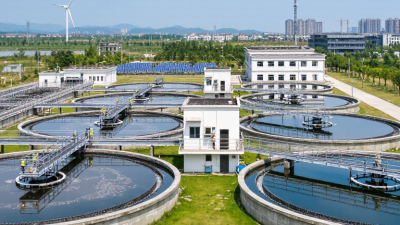
A wastewater package plant is a compact treatment system assembled from tanks, pumps, screens, and process equipment. It treats sewage close to where it is produced, rather than sending it to a large central facility. Common designs use extended aeration, sequencing batch reactors, moving-bed biofilm reactors, or membrane filtration. Each approach manages solids and organic matter differently. Small footprint. Careful operation still matters.
These plants serve places with limited sewer access or changing wastewater volumes. Examples include rural communities, construction camps, schools, resorts, and some industrial sites. A resort may see heavy flows on weekends, while a remote work camp may need treatment for a defined operating period. The right system depends on flow, wastewater strength, discharge goals, available land, and operator skills. A compact unit is not automatically the simplest choice; maintenance access can be overlooked during planning.
Tips: Measure actual daily and peak flows before selecting capacity. Ask how sludge will be removed and where treated water will go. Check access to pumps, filters, and controls. Leave room for future growth. Estimates can be wrong, especially when occupancy changes, so allow a sensible operating margin.
What Are the Top Types of Wastewater Package Plants?
Package plants are compact, pre-engineered systems used to treat wastewater at sites such as small communities, resorts, schools, and remote facilities. The chart compares the number of unit operations in simplified treatment-train examples—not treatment performance or plant capacity.
Common types: Extended aeration is often used for small communities and facilities with relatively steady flows. Sequencing batch reactors (SBRs) treat wastewater in timed batches and can suit sites with variable flows. Moving bed biofilm reactors (MBBRs) use attached-growth media and are used in compact or upgrade projects. Membrane bioreactors (MBRs) combine biological treatment with membrane separation, making them useful where a small footprint and high-quality effluent are priorities. Actual layouts vary by design and site requirements.
How a Wastewater Package Plant Treats Wastewater
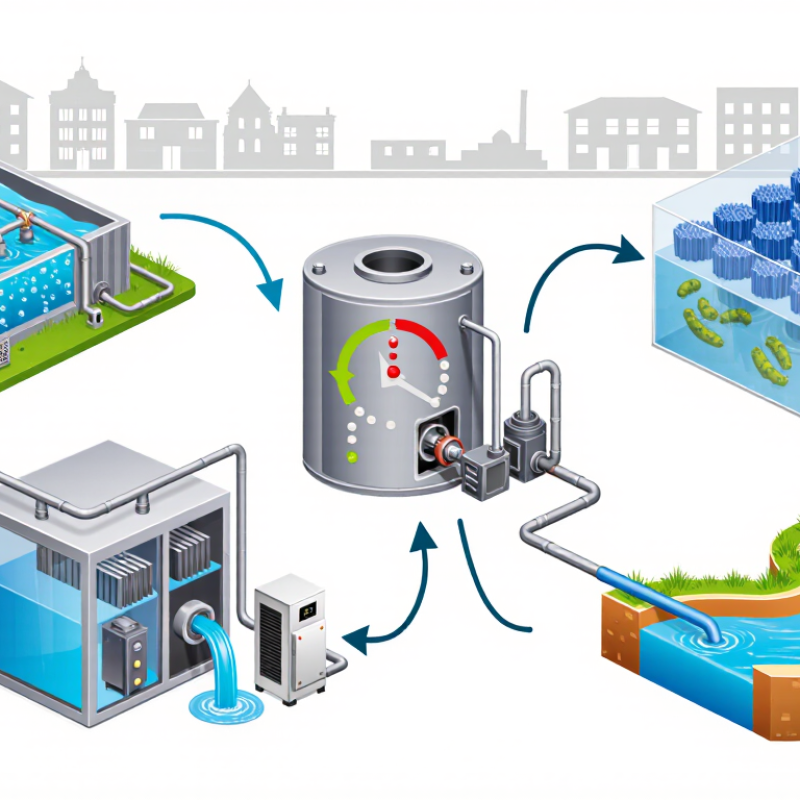
A wastewater package plant treats incoming sewage through a series of compact, connected processes. A bar screen catches wipes, plastic, and other debris before they clog pumps. Grit settles out. It is a small step, but skipping it can create larger maintenance problems.
The wastewater then enters an equalization tank, where flow and strength are balanced. This matters when morning use sends a sudden surge through the system. In an aeration chamber, air supports microorganisms that break down much of the organic waste. Operators monitor oxygen, mixing, and treatment conditions; too little air can slow the process, while excess aeration wastes energy. Biology is useful, but it is not instant.
Next, a clarifier lets biological solids settle, or a membrane system separates them from the treated water. Some of the settled sludge returns to the treatment stage; excess sludge needs separate handling. Disinfection may follow, depending on the intended discharge or reuse.
The exact sequence varies with wastewater quality, site conditions, and required performance. Package plants are compact, not maintenance-free. A blocked screen or neglected sludge removal can affect the whole process, and real-world inflow rarely behaves as neatly as a design estimate.
Extended-Aeration Package Plants
What Are the Top Types of Wastewater Package Plants?
Extended-Aeration Package Plants
Extended-aeration package plants are compact activated-sludge systems often used by small communities, schools, and isolated facilities. They hold wastewater in the aeration basin longer than conventional systems, giving microbes more time to consume organic matter. U.S. EPA’s Wastewater Technology Fact Sheet: Package Plants (2000) describes package-plant applications spanning roughly 0.002 to 0.5 million gallons per day. Actual sizing still depends on peak flows, wastewater strength, and seasonal conditions.
EPA design guidance describes extended-aeration systems with about 18–36 hours of hydraulic retention and 20–40 days of sludge age. These longer operating periods can help buffer changing loads and support nitrification when conditions allow. The trade-off is steady energy demand: blowers must keep the basin mixed and supplied with oxygen. Operators should watch dissolved oxygen, sludge settling, and alarm records, not just the control panel’s green light.
The layout usually combines screening, aeration, clarification, and return-sludge pumping in a factory-built unit. That can simplify installation, but it does not make maintenance disappear. A school’s morning surge or a cold winter week can shift performance. Design tables look reassuring; real inflow is less tidy. Allow room for sludge handling, safe sampling, and service access. A neglected diffuser can quietly reduce oxygen transfer before the effluent looks obviously different.
SBR, MBBR, and MBR Package Plants
Package wastewater plants commonly use sequencing batch reactors (SBR), moving bed biofilm reactors (MBBR), or membrane bioreactors (MBR). An SBR treats wastewater in timed cycles inside one tank: fill, aerate, settle, and draw. The U.S. EPA’s 1999 SBR fact sheet reports typical effluent BOD₅ and suspended solids below 10 mg/L. SBRs suit sites with variable flows, but cycle timing and controls need careful attention.
MBBR systems grow treatment microbes on small plastic carriers that tumble through aerated tanks. The moving biofilm provides treatment surface without a separate sludge-return loop, though screens must keep carriers inside the reactor. MBR plants combine biological treatment with membrane filtration. The EPA’s 2007 MBR fact sheet reports typical effluent BOD below 5 mg/L and suspended solids below 1 mg/L. That quality can support reuse applications, but membranes need cleaning and replacement planning. Compact does not mean maintenance-free.
Tip: Match the process to peak flow, operator capacity, and discharge limits—not just the smallest footprint. Ask for performance data under similar wastewater conditions, and check what happens during power loss or membrane cleaning. One often-overlooked detail: a tidy equipment layout can still leave poor access for routine sampling and repairs.
How to Compare and Select Package Plant Types
Comparing wastewater package plants starts with the wastewater, not the equipment label.
Measure average and peak flows, then check how sharply daily loads change. Extended-aeration activated sludge can suit steady domestic flows, but it needs reliable aeration and routine sludge removal. Sequencing batch reactors treat flow in timed cycles and can handle variable inflow, provided storage and controls match the site. Timing matters. Moving-bed biofilm systems use carrier media to support biomass and can save space; media retention and screening still need attention.
Membrane bioreactors can produce low suspended-solids effluent in a compact layout, yet membranes add energy demand, cleaning, and replacement costs. Compare more than purchase price. Request performance data at the same design flow and influent strength, including power use, sludge production, and expected effluent quality.
Ask how each system responds to cold weather, weekend lows, and short-term surges. Have site-specific influent data reviewed by a qualified wastewater professional. Visit a similar installation if possible; a neat drawing can hide awkward access to blowers or tanks.
Operators’ time is easy to underestimate. The smallest footprint may not be the simplest plant to run.