China Top Wastewater Treatment Plant Manufacturers?

China’s wastewater treatment plant manufacturers serve municipalities, factories, and communities facing very different water-quality challenges. Choosing a supplier takes more than comparing quoted prices. Buyers need to examine treatment performance, equipment materials, automation, energy use, and long-term technical support.

The need is substantial. UNESCO’s 2017 World Water Development Report estimated that over 80% of global wastewater was discharged without adequate treatment. WHO and UNICEF reported that 3.5 billion people lacked safely managed sanitation in 2022. These figures describe a global gap, not a guarantee that any single technology will solve it. Site conditions matter. So does reliable operation.

Professor Mark van Loosdrecht, an environmental biotechnologist known for work on resource-efficient treatment, is often associated with this guiding principle: “Wastewater is a resource, not a waste.” That perspective helps explain why modern plants may recover water, nutrients, or energy alongside removing pollutants. Yet recovery claims deserve careful checking. A brochure cannot prove stable results in cold weather, under variable inflows, or with limited maintenance staff.

This guide examines China’s leading manufacturers through practical questions: What processes do they offer? Can they provide relevant project references, clear performance data, and dependable after-sales service? Are designs modular enough for the site, without making operation unnecessarily complex? No ranking can replace a site-specific assessment. The details can be less tidy than the sales language. That is worth remembering.
China Top Wastewater Treatment Plant Manufacturers?

China’s Wastewater Sector: 98.2% Urban Treatment Rate in 2023

China Top Wastewater Treatment Plant Manufacturers?

China’s Wastewater Sector: 98.2% Urban Treatment Rate in 2023

China’s urban wastewater treatment rate reached 98.2% in 2023, according to the Ministry of Housing and Urban-Rural Development’s China Urban Construction Statistical Yearbook. That is substantial progress. Yet the percentage measures treatment coverage, not whether every plant consistently meets effluent targets or operates efficiently. The distinction matters. High citywide coverage can coexist with aging pipes, uneven flows, and facilities facing different operating conditions. The figure is a system-level indicator, not a plant-by-plant quality score.

For wastewater treatment plant manufacturers, this scale highlights demand for reliable biological treatment, pumps, aeration, sludge dewatering, and monitoring systems. But procurement should begin with local influent data, seasonal flow changes, discharge requirements, energy costs, and operator capacity—not headline coverage alone. The ministry’s statistical series offers a useful national benchmark, but one rate can hide substantial differences between cities and facilities. Still, gaps remain. In practice, a compact plant with stable controls may outperform a larger unit that is poorly maintained. That detail is easy to overlook.

How Leading Chinese Manufacturers Serve Municipal and Industrial Projects

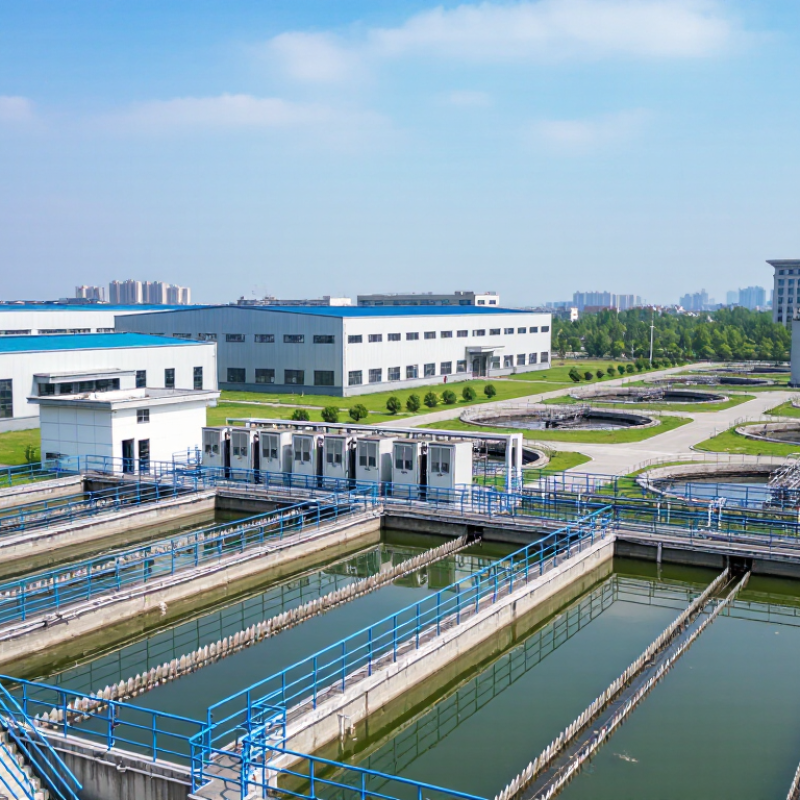
Chinese wastewater treatment manufacturers serve municipal projects by adapting process designs to influent quality, available land, and seasonal flow changes. For a town, this could mean a compact treatment line with clear access for routine maintenance. Engineers assess flow rates, pollutant loads, discharge targets, and future capacity before selecting equipment. The drawings matter. One assumption can be wrong: average flow rarely tells the whole story.

Industrial projects need closer attention to production schedules and changing wastewater composition. A food plant may produce strong organic wastewater during cleaning shifts, while metal-processing wastewater can contain suspended solids and variable acidity. Treatment trains may combine screening, biological processes, chemical dosing, and filtration. The right combination depends on testing, not a standard package. Not every site.

Leading suppliers support projects beyond equipment delivery. They can help coordinate process design, installation, commissioning, and operator training. During commissioning, teams check pumps, sensors, aeration, and sludge handling under real operating conditions. Operators need practical instructions, not just control screens. Still, equipment selection can receive more attention than maintenance access. A narrow walkway may seem minor on a drawing, but it can complicate daily inspection and repairs.

Comparing MBR, A²/O, and SBR for Capacity, Effluent Quality, and Operation

China Top Wastewater Treatment Plant Manufacturers?

Comparing MBR, A²/O, and SBR for Capacity, Effluent Quality, and Operation

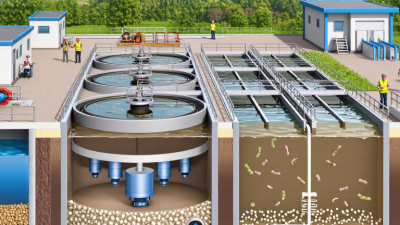
Selecting a treatment process starts with the wastewater, not a brochure. Membrane bioreactors combine biological treatment with membrane filtration. They can produce clear effluent with low suspended solids in a compact footprint. That matters. However, membranes need regular cleaning, and aeration can make energy use significant. A plant’s actual performance depends on influent quality, design, and operating discipline.

A²/O uses anaerobic, anoxic, and aerobic zones to support nutrient removal. It can suit facilities with steady flows and nitrogen or phosphorus targets. Internal recycling and available carbon affect results, so process control matters. The layout may need more space than an MBR. One detail is easy to overlook: changing influent loads can disrupt nutrient removal if operators do not adjust the process.

SBR treats wastewater in timed batches, typically using fill, react, settle, and decant phases. Cycle timing can adapt to variable flows, but peak inflows still need careful capacity checks. Controls and equalization are important. Not effortless. Comparing options means reviewing daily and peak flow, effluent limits, sludge handling, energy, and staff capacity together. Even a sound design may need adjustment after real operating data comes in.

GB 18918-2002 Class 1A Benchmarks: COD 50, BOD₅ 10, and SS 10 mg/L

GB 18918-2002 Class 1A sets clear effluent benchmarks: COD at or below 50 mg/L BOD₅ at or below 10 mg/L and suspended solids at or below 10 mg/L.

These are discharge limits, not guarantees for every sample. When comparing wastewater treatment plant manufacturers, check seasonal results, influent variation, and sampling locations. Numbers matter. China’s Ministry of Housing and Urban-Rural Development reported a 98.1% urban wastewater treatment rate in its 2022 Urban-Rural Construction Statistical Yearbook. With treatment so widespread, reliable performance is a daily operating need, not just a brochure claim.

The Ministry of Ecology and Environment’s 2023 China Ecological Environment Status Bulletin reported that 89.4% of monitored surface-water sections met Class I–III quality levels. Treatment plants are only one factor in river quality, but stable effluent still matters.

One uncomfortable point: a passing grab sample can hide weak overnight control. Ask for independently verified COD, BOD₅, and SS records, alongside commissioning and process-control data. Review sludge handling, equipment redundancy, and energy use, too. These details help show whether a plant can maintain the 50/10/10 mg/L benchmarks during real operating swings.

How to Assess Manufacturers by Design Capacity, Energy Use, and After-Sales Support

A wastewater plant’s stated design capacity means little unless it matches real flow and pollution loads. Ask manufacturers for average and peak-flow calculations, influent assumptions, and performance guarantees for the required effluent quality. UN-Water’s Progress on Wastewater Treatment 2024 reports that 42% of household wastewater worldwide was not safely treated in 2022. That gap makes reliable treatment—not just a large nameplate capacity—essential. Paper capacity can flatter a proposal. Request operating records from comparable installations, including seasonal changes and periods of heavy inflow.

Compare energy use in kilowatt-hours per cubic meter, with the same treatment targets and operating conditions. EPA guidance places water and wastewater services at roughly 3% of U.S. electricity use, making inefficient equipment a costly detail. Ask for blower, pump, and aeration data, plus the assumptions behind any savings estimate. A low figure may rely on ideal conditions. It deserves a second look.

After-sales support should be measurable. Check commissioning hours, operator training, spare-parts availability, remote diagnostics, and response times for urgent faults. Ask who handles troubleshooting after handover, and whether support covers the full process train. Get these commitments in writing. A capable plant can still struggle when a sensor fails on a weekend and replacement parts are far away. That is easy to overlook.