How to Choose the Best Package Wastewater Treatment Plant?

Choosing the best package wastewater treatment plant is not a matter of picking the smallest unit or the most impressive brochure. It is a site-specific engineering decision. The system must match actual wastewater flows, pollutant loads, discharge requirements, available land, and the skills of the people who will operate it. The stakes are substantial. UN-Water’s 2024 Progress on Wastewater Treatment report found that 42% of household wastewater worldwide was not safely treated in 2022. It also estimated that 113 billion cubic metres of household wastewater were released without adequate treatment or safe reuse. These figures describe a global challenge, not the conditions at every project site. Still, they show why treatment performance matters.

A sound selection begins with data: average and peak flows, seasonal changes, influent characteristics, and the intended discharge or reuse. The U.S. Environmental Protection Agency’s guidance for small wastewater systems emphasizes comparing treatment options against site conditions, performance needs, and long-term operation and maintenance. A compact plant may suit a remote lodge, housing development, or factory with limited space. But a small footprint does not guarantee low operating costs. Operators still need access to spare parts, reliable power, clear alarms, and practical maintenance instructions. Details matter. No single process wins everywhere. A vendor’s performance figures deserve careful review, especially when they omit test conditions or operating assumptions. This guide explains how to compare treatment technologies, capacity, lifecycle costs, and service support, so buyers can choose a package wastewater treatment plant that fits the real site—not merely the sales drawing.
How to Choose the Best Package Wastewater Treatment Plant?

Define Treatment Goals and Regulatory Requirements

Before comparing package wastewater treatment plants, define what the treated water must achieve. List the expected flow per day, peak flows, and the wastewater sources, such as kitchens, laundry, or process drains. These details matter. A plant sized only for average flow may struggle during a busy morning or seasonal surge. Note likely changes too; forecasts are useful, but they are not guarantees.

Then confirm the applicable discharge or reuse requirements with the relevant local authority. Limits may cover suspended solids, organic matter, nutrients, pathogens, and sampling frequency. Do not rely on a supplier’s general performance figures alone. Ask how results are measured, under what operating conditions, and what happens when influent quality varies. Keep written copies of permits, design assumptions, and monitoring obligations. Small details count.

Treatment goals should reflect the receiving environment and the intended use of the effluent. Water for landscape irrigation may require different safeguards from water discharged to a sensitive stream. Check whether seasonal restrictions, disinfection, sludge handling, or operator reporting apply. Requirements can change, and unclear wording deserves clarification before equipment is selected. A practical checklist helps, though it can still miss something; have a qualified wastewater professional review the site data and confirm the design basis.

Analyze Wastewater Flow and Characteristics

Before comparing package plant designs, measure actual wastewater flow across weekdays, weekends, and peak-use periods. The USGS report Estimated Use of Water in the United States in 2015 puts average public-supply domestic use at 82 gallons per person daily. That is a useful screening figure, not a wastewater-flow guarantee. Irrigation, leaks, water-saving fixtures, and seasonal occupancy all change what reaches the plant. Count people and operating hours. Check the meter, too.

Flow is only half the picture. Collect representative samples and test biochemical oxygen demand, suspended solids, fats, oils, and grease, plus pH and temperature. Kitchen discharge may carry visible grease; a laundry outlet can create short, concentrated surges. EPA’s Wastewater Technology Fact Sheet: Package Plants reports typical package-plant flow capacities from 0.002 to 0.5 million gallons per day. That broad range shows why capacity labels alone are not enough. Two sites with equal daily flow may need different treatment when their wastewater strength or discharge pattern differs.

Use several weeks of flow records and repeated samples where operations vary. Record unusual washdowns or production cycles. One sample can mislead. I would also revisit assumptions after occupancy changes; small sites often grow quietly, and that is easy to overlook. Size for observed average flow, credible peak flow, and measured pollutant loading, with documented assumptions that an operator can verify.

Compare Suitable Treatment Processes and Plant Configurations

A package wastewater treatment plant should match daily flow, wastewater strength, operator skill, and the final discharge or reuse target.

Sequencing batch reactors suit variable flows because treatment and settling occur in timed cycles.

Moving-bed biofilm systems handle load swings with less dependence on precise settling.

Membrane bioreactors produce finely filtered effluent, but membranes need cleaning and replacement. The U.S. EPA’s 2007 Membrane Bioreactors fact sheet reports typical membrane pore sizes around 0.03–0.4 microns. That is useful filtration, not a substitute for checking the required effluent limits.

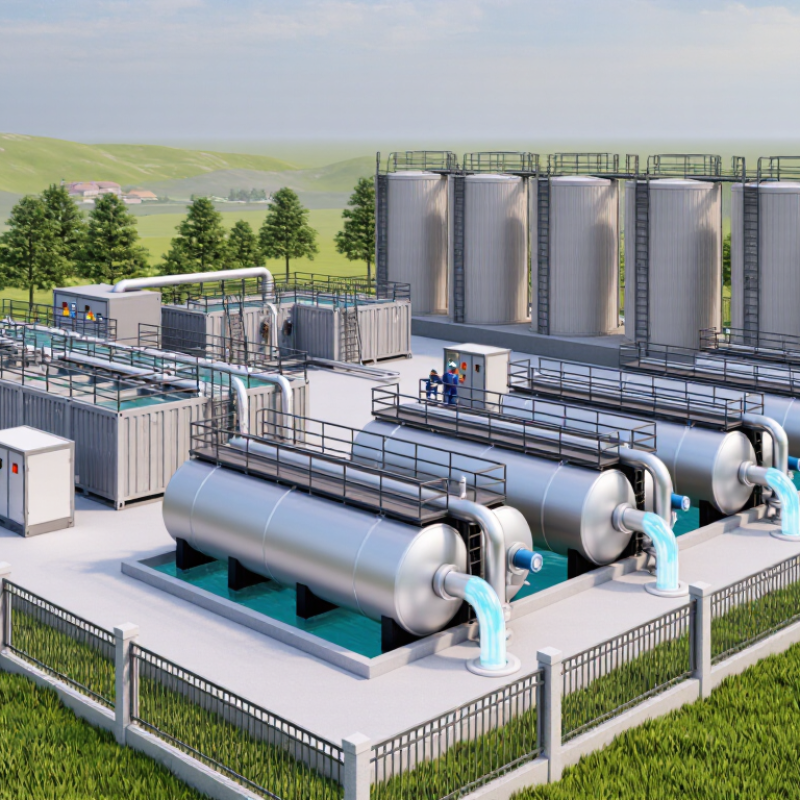
Plant configuration matters as much as process. A containerized unit can simplify transport and installation, while buried tanks may suit sites with limited visible space. Modular trains allow capacity to grow, but only if pumps, controls, and spare treatment capacity are planned too.

The U.S. EPA’s Onsite Wastewater Treatment Systems Manual notes that more than one in five U.S. homes relies on decentralized wastewater treatment. For remote sites, that makes dependable local operation a practical design concern. A compact layout can still be awkward to service.

Tips

Compare lifecycle costs, not just purchase price. Ask for performance data under seasonal peak flows, a clear sludge-removal plan, and space around equipment for maintenance. Check the noise near bedrooms. Small details are easy to overlook. A process that looks efficient on paper may disappoint when staffing is thin.

Assess Site Conditions, Capacity, and Lifecycle Costs

How to Choose the Best Package Wastewater Treatment Plant?

Assess the site before comparing equipment. A compact plant may fit on paper but need more room for trucks, maintenance access, and future expansion. Check soil stability, groundwater level, flood exposure, and the route for buried pipes. A site visit can reveal awkward details, such as a narrow gate or a long discharge line. These details affect installation cost and daily operation.

Estimate both average and peak wastewater flows. A restaurant, school, or seasonal facility may produce sharp morning or weekend surges. Ask an engineer to review flow records and wastewater strength, not just the number of people served. Undersizing can cause trouble during peaks; oversizing may waste energy and money. I’ve seen tidy estimates miss seasonal use. It’s easy to overlook.

Tips: Compare lifecycle costs, not just the purchase price. Include power, routine testing, sludge removal, parts, and operator time. Ask for realistic maintenance intervals and performance data under similar flows. Leave room for uncertainty; actual use rarely matches a perfect spreadsheet.

Evaluate Suppliers, Operations, and Maintenance Support

When comparing package wastewater treatment plant suppliers, look beyond quoted capacity and equipment lists. Ask for references from sites with similar flows, wastewater characteristics, and seasonal conditions. Request process guarantees, design assumptions, and clear limits on what the supplier covers. A polished proposal is not proof of reliable support. Ask who responds when alarms occur at night.

Review operations with the people who will run the plant. Can operators read the control screen quickly? Are sampling points reachable without moving pipes or lifting heavy covers? Ask for training plans, operating procedures, and a realistic estimate of routine labor. Request examples of alarm logs or commissioning records, with sensitive details removed. Small details count. A confusing interface can turn a minor issue into hours of downtime.

Maintenance support deserves equal scrutiny. Confirm spare-parts availability, delivery expectations, and whether remote troubleshooting is included. Clarify service hours, response targets, and which tasks require a technician on site. Check whether pumps, blowers, and membranes can be serviced with ordinary tools and safe access. Compare the full support plan, not just its price. A low-cost package may leave gaps in operator training or long-term parts supply. Even after a strong site visit, keep asking questions; one good day cannot show how a plant handles a wet-weather surge or a staffing change.

How to Choose the Best Package Wastewater Treatment Plant? - Evaluate Suppliers, Operations, and Maintenance Support

Evaluation Area Criterion What to Verify Practical Evaluation Guidance Weight Score (0–5)
Treatment Performance Permit and discharge compliance Ask for a process design basis showing influent assumptions, treatment steps, expected effluent quality, and how the design relates to the site’s discharge permit. Compare the proposal with the actual permit limits and applicable local requirements. Effluent limits are site- and jurisdiction-specific; do not rely on generic claims. 15% _____
Treatment Performance Influent characterization Check whether the design considers average and peak flows, organic loading, suspended solids, temperature, pH, and any relevant industrial or commercial contaminants. Confirm that the design assumptions are supported by sampling, records, or a clearly documented estimate, and that unusual or variable loads are addressed. 8% _____
Treatment Performance Capacity and flow variation Review average-day and peak-flow design values, equalization provisions, and how the system responds to seasonal or intermittent flows. Match capacity to the site’s measured or forecast flows. Ask how short-duration peaks and low-flow periods affect treatment stability. 8% _____
Supplier Capability Relevant operating references Request references for installations with comparable flow, wastewater characteristics, climate, discharge requirements, and operating conditions. Where possible, speak with operators about actual performance, downtime, support responsiveness, and maintenance demands—not just installation completion. 8% _____
Supplier Capability Process and equipment documentation Review process flow diagrams, equipment lists, design calculations, operating instructions, control descriptions, and as-built documentation commitments. Documentation should identify equipment duties, operating limits, routine checks, alarms, and the procedures required for safe operation. 6% _____
Supplier Capability Design adaptability and site integration Confirm civil, electrical, access, utility, drainage, odor-control, and installation requirements, including interfaces with existing systems. Request a clear list of owner-supplied work, site conditions, exclusions, and assumptions before comparing proposals. 5% _____
Operations Automation, alarms, and monitoring Check which parameters are monitored, what alarms are provided, how alarms are communicated, and what records can be exported for operations and reporting. Verify that alarms are actionable and that operators can access the information needed to identify process upsets and equipment failures. 7% _____
Operations Staffing and operator skill requirements Ask for expected routine operating tasks, inspection frequency, training requirements, and the level of operator coverage assumed in the design. Compare the stated workload with available on-site staffing and local operator qualification requirements. 6% _____
Operations Energy and chemical use Request estimated energy and chemical consumption with the flow, loading, and operating assumptions used to calculate them. Compare proposals using the same assumptions. Ask how energy demand changes with actual loading and which chemicals, if any, require routine handling. 6% _____
Operations Residuals and sludge management Review expected sludge or residuals production, storage needs, dewatering arrangements, handling procedures, and disposal responsibilities. Confirm the proposed approach is practical and compliant with local requirements, and identify which party arranges sampling, transport, and disposal. 5% _____
Maintenance Support Preventive maintenance plan Request a maintenance schedule identifying inspections, service tasks, recommended intervals, and any specialist work. Check that the plan covers mechanical, electrical, instrumentation, and process-related tasks and can be followed by the site team. 7% _____
Maintenance Support Spare parts and equipment availability Ask for a recommended critical-spares list, parts lead times, replacement compatibility, and procedures for obtaining technical support. Identify long-lead or failure-critical components and decide whether essential spares should be kept on site. 6% _____
Maintenance Support Training and service response Confirm commissioning support, operator training, remote assistance availability, field-service coverage, and the proposed response process. Record service hours, escalation contacts, response commitments, and any additional charges in the service agreement. 6% _____
Lifecycle Cost and Risk Total cost of ownership Compare purchase and installation costs with expected energy, chemicals, labor, residuals handling, maintenance, and replacement parts. Use a consistent evaluation period and operating assumptions. Separate included costs from exclusions and optional services. 7% _____
Lifecycle Cost and Risk Warranty, guarantees, and exclusions Review warranty coverage, performance-test conditions, remedies, exclusions, owner responsibilities, and the process for addressing nonconformance. Ensure commitments are measurable and consistent with the design basis, permit requirements, and actual operating conditions. 10% _____
Total Weight 100% _____

Scoring guide: Score each criterion from 0 to 5 (0 = no evidence or unacceptable; 1 = major gaps; 2 = below requirements; 3 = meets requirements; 4 = strong evidence; 5 = well-supported and exceeds requirements). Weighted score = criterion score ÷ 5 × criterion weight. Treat the guidance as a comparison framework, and confirm all design targets, permit conditions, and service commitments for the specific site.