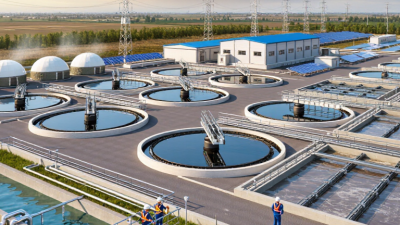
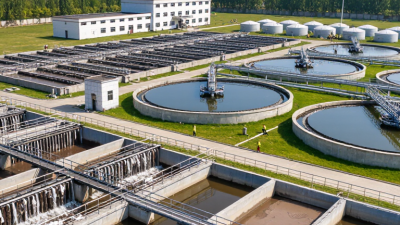
Top Waste Water Treatment Systems for Global Buyers

Global buyers are under pressure to choose wastewater treatment systems that protect water, control operating costs, and remain reliable across changing climates. UN-Water’s World Water Development Report 2024 estimates that 2.2 billion people lacked safely managed drinking water in 2022. Around 3.5 billion lacked safely managed sanitation. UNEP’s report, Wastewater: The Untapped Resource, also states that more than 80% of wastewater is discharged without adequate treatment in many regions. These figures make treatment capacity an urgent infrastructure decision.

The strongest systems are not always the most expensive. Membrane bioreactors can deliver high-quality effluent in compact footprints. Moving bed biofilm reactors often provide practical upgrades for overloaded plants. Sequencing batch reactors can suit communities with variable flows. Dissolved air flotation supports difficult industrial wastewater. Reverse osmosis may be necessary for reuse, but its energy demand deserves careful review. As George Tchobanoglous wrote in Metcalf & Eddy’s Wastewater Engineering, “Wastewater treatment is both a science and an art.” That sentence remains useful.

Real purchasing decisions need more than brochure claims. Buyers should examine influent tests, seasonal temperatures, sludge handling, spare parts, automation, and operator training. A containerized system may look ideal at a trade exhibition. Field conditions can disagree. This is where many comparisons become imperfect. Reported removal rates may depend on laboratory water, stable loading, and excellent maintenance. The better choice balances verified performance, lifecycle cost, local service, and future regulation. No single technology wins everywhere. A careful selection process protects both investment and public health.
Top Waste Water Treatment Systems for Global Buyers

Wastewater Treatment Systems: Purpose, Scope, and Core Functions

Wastewater treatment systems protect public health, waterways, and industrial operations by removing pollutants before discharge or reuse. Their purpose is practical: reduce suspended solids, organic matter, nutrients, pathogens, and selected chemicals to acceptable levels. A clear treatment objective should guide every equipment decision. Reuse water for cooling may need different quality than irrigation water.

The system scope usually covers collection, screening, equalization, biological treatment, clarification, filtration, disinfection, sludge handling, and monitoring. Each stage has a defined role.

Screens catch plastics and coarse debris. Aeration tanks support microorganisms that consume biodegradable matter. Clarifiers separate biological solids from treated water.

Membranes or filters can improve clarity, but they also require careful cleaning and pressure control.

Reliable selection begins with measured flow and contaminant data, not optimistic estimates. Daily flow can vary sharply between a food plant, hotel, and municipal district.

Operators should examine peak flow, temperature, pH, seasonal changes, maintenance access, energy use, and spare-part availability.

A compact system may save space but create difficult maintenance work. That trade-off is easy to underestimate.

Good systems include alarms, sampling points, automatic controls, and simple manual checks.

Performance records should track chemical oxygen demand, suspended solids, nitrogen, disinfectant residual, and sludge volume.

Local discharge rules still matter, even when equipment meets a supplier’s technical sheet. No design is perfect. Field conditions change, and operating teams must adjust settings through documented testing rather than guesswork.

Major System Types and Their Treatment Processes

Wastewater treatment systems differ according to flow, pollutants, land, and discharge requirements. Screening removes rags, plastics, and larger solids before pumps receive heavy loads. Grit chambers then separate sand and small stones. These simple stages protect downstream equipment.

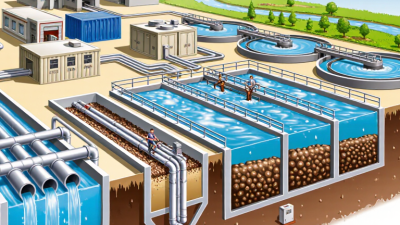
Biological systems treat dissolved organic matter with microorganisms. Activated sludge uses aeration tanks and secondary clarifiers. Moving-bed biofilm reactors provide a compact alternative for variable industrial flows. Membrane bioreactors combine biological treatment with membrane filtration, producing clearer effluent in limited spaces. Anaerobic reactors can reduce sludge production while recovering biogas from concentrated organic wastewater. For oily wastewater, dissolved air flotation lifts suspended oil and solids to the surface. Tertiary systems may add sand filtration, activated carbon, ultraviolet disinfection, or reverse osmosis. Each process solves a different problem. No system fits every site.

Tips: Buyers should request recent laboratory data, including COD, BOD, TSS, nitrogen, oil, salinity, and peak flow. Pilot testing is valuable when wastewater changes by season or production batch. Check cleaning access, spare parts, operator training, and sludge handling before purchase. A small footprint can look attractive, but it may require tighter control and more energy. I have seen projects underestimate sludge storage and chemical consumption. That mistake becomes expensive. Verify the proposed discharge limits with qualified local specialists. Performance claims should include testing conditions, not only ideal removal percentages.

Key Performance Factors for Comparing Global Suppliers

Global buyers should compare wastewater suppliers through measured performance, not attractive capacity figures. The 2024 United Nations World Water Development Report notes that agriculture represents about 70% of global freshwater withdrawals. This pressure makes reliable reuse and stable effluent quality increasingly important.

Request verified results for BOD, COD, total nitrogen, phosphorus, pathogens, and suspended solids. Compare each result with local discharge permits and reuse targets. Ask for seasonal data, not only laboratory results from ideal conditions. Energy use matters too. Require kWh per cubic meter, chemical consumption, sludge production, and recovery rates. WHO and UNICEF’s 2023 Joint Monitoring Programme reported that 2.2 billion people lacked safely managed drinking water in 2022. Treatment systems must therefore support resilience, not merely meet a design-day load.

Look closely at supplier experience in similar climates. A system tested in a cool, stable region may perform differently under tropical heat, high salinity, or irregular inflow. Check commissioning records, operator training, spare-part lead times, and remote monitoring practices. Short warranties can hide long-term risks. Total lifecycle cost is more useful than purchase price. Include maintenance labor, membrane replacement, aeration power, and sludge disposal. The comparison is imperfect. Data quality often varies between suppliers. Buyers should request independent verification, repeat sampling, and clear assumptions before signing.

Site, Regulatory, and Climate Requirements by Region

Top Waste Water Treatment Systems for Global Buyers

Site, Regulatory, and Climate Requirements by Region

Selecting a wastewater treatment system begins with the site, not a catalog. A coastal food plant may face salty air, limited land, and variable organic loads. Inland factories may need freeze protection, dust control, and reliable water reuse. In humid tropical zones, high temperatures accelerate biological activity and equipment corrosion. Small details matter. Walk the site.

Regional permits define discharge limits, sampling frequency, sludge handling, and reporting duties. European projects often require documented energy performance and nutrient removal. North American buyers may face separate federal, state, or provincial conditions. In parts of Asia, regulators may prioritize industrial pretreatment and water reuse near stressed rivers. Requirements can change during construction. A local environmental engineer should verify the permit path before equipment selection. Treat supplier claims as evidence to check, not final authority.

Climate resilience affects uptime and operating cost. Flood-prone sites need raised electrical cabinets, protected pumps, and emergency storage. Arid facilities benefit from low-water cleaning and carefully designed evaporation control. Cold regions require insulated tanks, heat tracing, and winter startup procedures. Field reviews regularly reveal failures caused by average-weather planning. That assumption deserves challenge. Pilot testing with representative wastewater can expose foaming, scaling, or shock-load problems before full installation. Keep spare parts locally. Train operators in their daily working language.

Top Wastewater Treatment Systems for Global Buyers

Regional planning priorities based on site conditions, regulatory intensity, water reuse needs, and climate resilience requirements.

Higher scores indicate greater procurement importance, not a universal legal limit. MBBR and MBR are commonly selected where land is limited or effluent quality and reuse standards are demanding; SBR and activated sludge remain practical for flexible municipal applications, while anaerobic treatment is valuable for high-strength industrial wastewater and energy recovery.

Regional context reflects widely documented wastewater priorities from EU Urban Wastewater Treatment requirements, US EPA discharge and reuse frameworks, WHO reuse guidance, water-stress assessments, and IPCC climate-resilience findings.

Procurement, Installation, Operation, and Maintenance Considerations

Selecting a wastewater treatment system begins with measured data, not catalogue capacity. Test flow, pH, temperature, suspended solids, and seasonal contaminants across several operating days. A system sized only for average flow may fail during storms or production peaks. Procurement teams should compare lifecycle cost, energy demand, consumables, spare parts, and local technical support. Request commissioning records and references from facilities with similar wastewater characteristics. Confirm discharge limits, site permits, and worker-safety requirements with qualified local professionals.

Installation requires more than placing tanks and connecting pipes. Survey soil conditions, drainage, access routes, electrical supply, and space for future expansion. Keep sampling points accessible. During commissioning, verify pump direction, instrument calibration, chemical dosing, alarms, and emergency shutdowns. Operators need practical training using real valves, control screens, and sampling bottles. A clear startup procedure can prevent expensive mistakes.

Yet drawings may not match site reality. That happens. Allow controlled adjustments, document every change, and obtain approval before altering critical process settings.

Operation depends on disciplined monitoring. Record flow, pH, turbidity, dissolved oxygen, sludge condition, energy use, and chemical consumption. Inspect screens, pumps, blowers, membranes, and tanks according to risk-based maintenance schedules. Calibrate sensors regularly; a false reading can trigger unnecessary dosing or hide process failure. Keep critical spares dry, labeled, and available before a breakdown occurs. Review trends weekly, not only when limits are exceeded.

Maintenance plans often look complete on paper. Field teams may still miss small leaks, blocked lines, or unusual odors. Use independent audits when performance becomes uncertain, and revise assumptions after each operating season.