China Top 10 Sewage Treatment Plant Process Suppliers?

Reliable wastewater treatment is a public-health and infrastructure priority. Yet treatment capacity alone does not guarantee clean water. UN-Water’s Progress on Wastewater Treatment: 2024 Update reports that 42% of household wastewater worldwide was not safely treated in 2022. That equals roughly 113 billion cubic metres. The gap is real. Plant operators need processes that perform consistently, not just impressive equipment lists.

China’s sewage treatment market includes engineering firms, equipment manufacturers, and integrated solution providers. Their capabilities differ in biological treatment, membrane systems, sludge handling, automation, and project commissioning. For buyers, the right sewage treatment plant process depends on influent quality, discharge requirements, land limits, energy costs, and operator skills. A compact membrane system may suit a constrained site, while a conventional biological process may be easier to maintain elsewhere. There is no universal answer.

This guide examines ten China-based suppliers and the process expertise they present. It is not a substitute for technical due diligence. Company claims should be checked against project references, design documents, operating records, and independently verifiable certifications. Ask how a process handles seasonal flow changes, sludge production, and equipment downtime. Those details matter. Supplier rankings can simplify a complex market, but they may not reflect suitability for a specific plant. Use them as a starting point, then compare each option against site data and lifecycle costs.
China Top 10 Sewage Treatment Plant Process Suppliers?

How Sewage Treatment Plant Processes Work in China

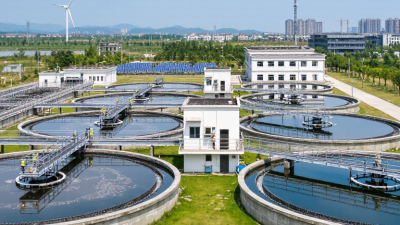
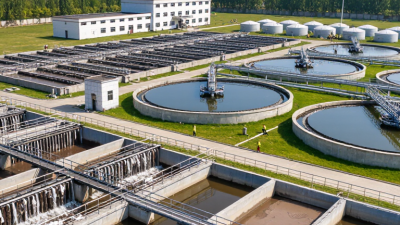
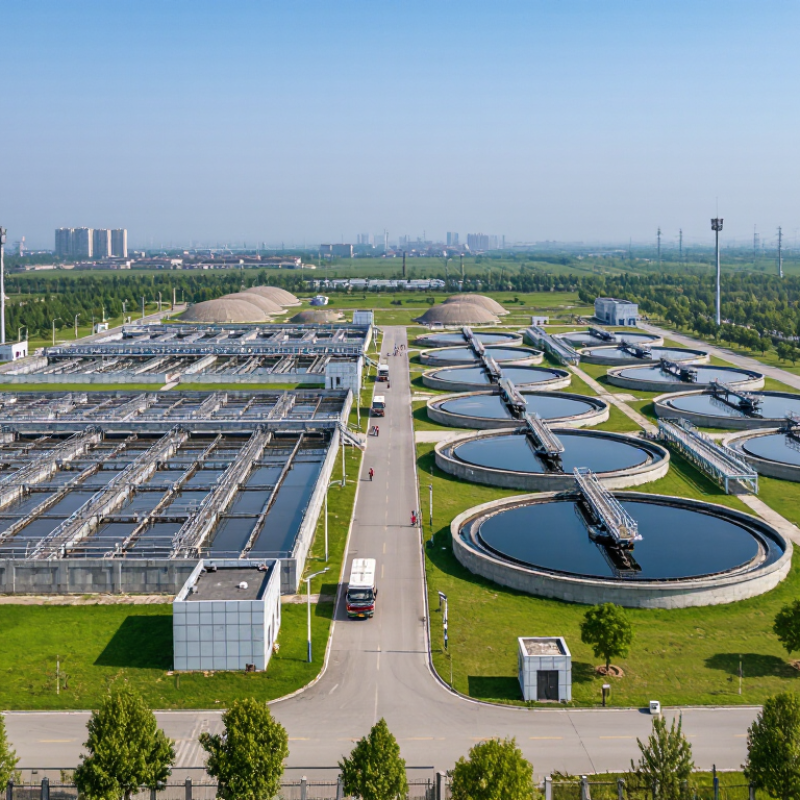
In China, a sewage treatment plant usually begins with coarse screens that catch rags and plastic, followed by grit removal and settling. These steps protect pumps and remove heavy solids. In the biological stage, aeration tanks mix wastewater with microorganisms. The microbes consume organic matter; anoxic zones can also support nitrogen removal. A secondary clarifier then separates the sludge from treated water. Disinfection follows where required. The sequence looks simple on paper. Real wastewater is less predictable.

China’s 2022 Urban Construction Statistical Yearbook reported an urban wastewater-treatment rate of 98.1%. That figure describes broad coverage, not the performance of every plant or every pollutant. Where local discharge targets call for deeper nutrient removal, plants may add filtration or chemical treatment. Sludge also needs attention: operators thicken and dewater it before further treatment or disposal. A practical detail matters: rain can dilute incoming sewage, while industrial flows may disrupt biological treatment. Operators monitor flow, dissolved oxygen, and sludge settling daily. One weak point remains: equipment data cannot replace careful sampling and experienced staff.

Criteria for Ranking China’s Sewage Treatment Process Suppliers

A credible comparison of China’s sewage treatment process suppliers should start with project fit, not sales claims. Review whether each proposed process matches the wastewater’s flow, temperature, and pollutant profile. Ask for design assumptions, expected effluent quality, and performance data from projects with similar operating conditions. A large plant reference may tell little about a smaller facility. Details matter.

Engineering capability should be judged through process design, equipment integration, and practical operating demands. Request a clear process-flow diagram and check how sludge handling, odor control, and seasonal load changes are addressed. Compare energy use, chemical consumption, maintenance intervals, and the availability of replacement parts. These figures affect long-term costs. Also examine commissioning plans, operator training, technical support, and documented quality controls. Where possible, speak with facility operators rather than relying only on case studies. Their observations can reveal recurring alarms or difficult cleaning tasks. A polished proposal is not proof of reliable operation. Scoring criteria should be published and applied consistently, with references checked and assumptions recorded. No single metric settles the choice; weighting cost too heavily can obscure operational weaknesses. Some evidence will remain incomplete, and that uncertainty deserves explicit attention.

China Sewage Treatment Process Suppliers: Compliance Benchmarks for Evaluation

A useful supplier evaluation starts with the effluent quality a process must achieve. The chart shows selected Class 1A pollutant limits under China’s GB 18918-2002 standard; it compares regulatory benchmarks, not supplier performance or rankings.

Limits shown: COD 50, BOD₅ 10, suspended solids 10, total nitrogen 15, and ammonia nitrogen 5 mg/L. The ammonia nitrogen limit is 8 mg/L when the wastewater temperature is at or below 12°C. Reference: GB 18918-2002, Class 1A.

Profiles of China’s Top 10 Sewage Treatment Process Suppliers

China’s sewage-treatment suppliers are not a uniform group. A useful profile looks beyond equipment catalogs and asks what problems each team can solve. Some focus on municipal plants using activated-sludge processes; others design compact systems for rural communities or industrial wastewater. Site conditions matter. A process that performs well in a laboratory may behave differently when influent quality changes after a storm.

A practical comparison of ten supplier profiles might cover biological nutrient removal, membrane bioreactors, high-strength wastewater, chemical treatment, advanced oxidation, sludge dewatering, water reuse, modular equipment, plant upgrades, and engineering integration. These are areas of specialization, not a verified ranking.

Ask for process-flow diagrams, operating records, and results from projects with similar water quality. Useful details include daily flow, inlet and outlet measurements, energy use, and sludge production.

Real numbers help.

Some suppliers provide a complete plant; others supply selected process units and rely on local partners. Clarify who handles commissioning, operator training, and troubleshooting. Ask how the design responds to seasonal changes or equipment downtime.

A polished proposal is not proof of stable performance. Even good data can leave gaps, so review the measurement period and testing method.

That part is easy to overlook.

Key Technologies and Applications Compared

Comparing sewage treatment process suppliers in China requires more than checking equipment lists. The key question is how each process fits the wastewater, site, and operating team. Conventional activated sludge is familiar and adaptable, but it needs careful aeration control and space. Sequencing batch reactors combine treatment stages in one tank, making them useful where land is limited. Yet batch timing can become difficult when inflow changes sharply.

Moving-bed biofilm systems add protected surfaces for microorganisms and can handle load swings with a compact footprint. Membrane bioreactors produce clear effluent for reuse, though membrane cleaning and replacement add operating demands. No process wins everywhere.

For food-processing wastewater, high organic loads may call for anaerobic treatment before biological polishing. Municipal plants may instead compare oxidation ditches, SBRs, and MBRs against energy use and discharge targets. Details matter.

Supplier capability shows in practical choices: blower sizing, sludge handling, odor control, and accessible sampling points. Ask for performance data from wastewater with similar temperature and pollutant levels, not just a design-flow promise. Pilot testing can expose foaming, scaling, or seasonal variation before construction.

It is easy to underestimate operator workload. A technically advanced process may still struggle if local staff lack training or spare parts arrive slowly. Compare lifecycle costs, commissioning support, and measured effluent quality alongside the headline technology.

How to Evaluate and Select a Supplier for a Project

China Top 10 Sewage Treatment Plant Process Suppliers?
How to Evaluate and Select a Supplier for a Project

Supplier selection should begin with the wastewater, not the equipment catalogue. Obtain seasonal influent data, including flow, temperature, suspended solids, and pollutant loads. Ask bidders to explain how their process handles peak flows and changing water quality. The UN-Water SDG 6 Progress Update 2024 reports that 42% of household wastewater worldwide was not safely treated in 2022. That figure highlights the importance of dependable treatment performance, not just a low purchase price.

Check design assumptions against site conditions. Request mass balances, process diagrams, power estimates, sludge quantities, and a clear list of exclusions. Ask for performance guarantees tied to measurable sampling methods and operating conditions. Aeration can be a major electricity load; the U.S. EPA’s Energy Efficiency in Water and Wastewater Facilities guide recommends examining energy use across treatment operations. Compare lifecycle costs over the same period, including maintenance, replacement parts, operator training, and disposal. The cheapest quotation can become expensive.

Look for relevant project records with comparable capacity and wastewater characteristics. Ask how the supplier handled commissioning problems, equipment downtime, and performance deviations. A site visit can reveal practical details: safe access to tanks, clear instrument labels, and space for routine maintenance. A polished presentation is not proof. One uncomfortable detail: project data may be incomplete, so record what cannot be verified. Require a written commissioning plan, operator training, and a realistic schedule for corrective work.

China Top 10 Sewage Treatment Plant Process Suppliers? - How to Evaluate and Select a Supplier for a Project

Technology-based procurement comparison, not a ranking of named companies. The options below are established wastewater-treatment process configurations; suitability depends on influent characteristics, discharge requirements, site conditions, and lifecycle cost.

No. Process Package or Supplier Expertise Typical Project Fit Key Advantage Main Design or Operating Consideration Evidence to Request from the Supplier
1 Conventional activated sludge Municipal plants with steady flows, available land, and established operator capacity. Well-established biological treatment with broad design and operating experience. Requires reliable aeration, sludge separation, return-sludge control, and management of excess sludge. Process design basis, oxygen and energy calculations, clarifier design, sludge production estimate, and operating references for comparable influent.
2 Oxidation ditch Small to medium municipal facilities where a robust extended-aeration process is appropriate. Long biological retention can support stable operation and may simplify process control. Land and aeration-energy requirements can be significant; performance depends on ditch hydraulics and oxygen transfer. Hydraulic profile, aeration equipment data, expected energy use, sludge-age assumptions, and references at similar scale.
3 Sequencing batch reactor (SBR) Facilities with variable flows, phased construction, or a preference for treatment and settling in one tank. Filling, aeration, settling, and decanting occur in timed cycles, offering flexible operating modes. Cycle timing, equalization, decanter reliability, and peak-flow management require careful design. Cycle schedule, peak-flow strategy, decanter specifications, control-system description, and performance data across operating conditions.
4 Moving bed biofilm reactor (MBBR) Plant upgrades or compact facilities needing additional biological capacity within existing tanks. Biofilm carriers provide protected surface area for biomass and can increase treatment capacity without conventional media backwashing. Carrier retention screens, aeration or mixing, media fill fraction, and downstream solids separation must be properly designed. Carrier specifications, design surface-area assumptions, screen design, mixing and aeration calculations, and full-scale references.
5 Integrated fixed-film activated sludge (IFAS) Existing activated-sludge plants that need increased biological capacity while retaining suspended-growth treatment. Combines attached-growth biomass with suspended activated sludge in a shared reactor. Media retention, aeration distribution, solids handling, and integration with existing tanks are important retrofit issues. Existing-plant assessment, retrofit drawings, media and screen details, process guarantees, and commissioning plan.
6 Membrane bioreactor (MBR) Sites requiring a compact footprint and high-quality, low-solids effluent for discharge or reuse applications. Membrane separation replaces secondary clarification and produces a low-suspended-solids effluent. Membrane fouling control, cleaning, replacement cost, energy demand, and qualified maintenance are essential lifecycle considerations. Membrane design flux, cleaning protocol, expected replacement assumptions, energy estimate, effluent guarantee, and local service plan.
7 A2/O biological nutrient removal Municipal wastewater projects with nitrogen and phosphorus removal objectives. Uses anaerobic, anoxic, and aerobic zones to support biological phosphorus removal and nitrogen conversion. Performance depends on influent carbon availability, internal recycle control, dissolved oxygen management, and sludge handling. Nutrient mass balances, recycle and aeration controls, design assumptions for influent carbon, and guarantees for nitrogen and phosphorus limits.
8 UASB with aerobic polishing Suitable wastewater applications with sufficient biodegradable organic strength, subject to temperature and effluent requirements. Anaerobic treatment can reduce organic loading and may produce biogas for appropriate systems. Low-temperature performance, start-up, gas safety, odor control, and the need for downstream treatment must be evaluated. Influent-strength and temperature criteria, biogas handling and safety design, start-up plan, sludge management, and polishing-stage guarantees.
9 Trickling filter or other attached-growth treatment Projects seeking a comparatively simple biological stage, particularly where land and suitable hydraulic design are available. Attached-growth biomass can provide stable biological treatment with established operating principles. Hydraulic distribution, ventilation, recirculation, media condition, and potential nuisance issues need site-specific assessment. Media and distributor specifications, hydraulic loading calculations, recirculation design, maintenance requirements, and comparable references.
10 Constructed wetland treatment Appropriate for some small communities or decentralized projects where land is available and site conditions permit. Can use natural treatment processes with relatively simple mechanical equipment requirements. Land area, seasonal conditions, pretreatment, hydraulic short-circuiting, and long-term vegetation and media management affect performance. Site-specific loading design, land-area calculation, pretreatment requirements, seasonal performance data, and maintenance responsibilities.